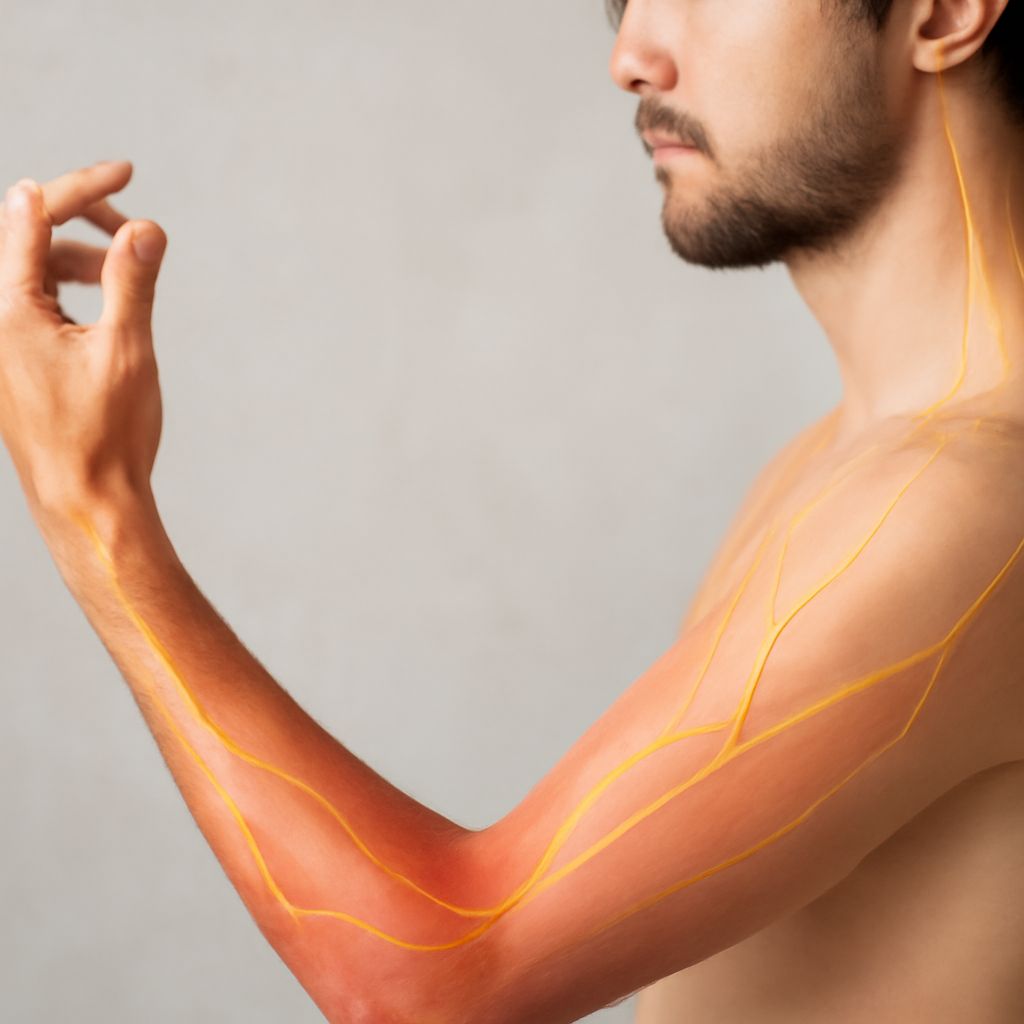
A strained muscle between the ribs can cause pain when the chest moves, including during a deep breath, cough, or turn in bed. Care for an injured intercostal muscle may involve adjusting painful activities and finding a comfortable position to rest. Chest or rib pain has several possible causes, however, and the sensation alone cannot confirm a strain.
New or unexplained chest pain should be assessed. Call 911 for chest pressure or pain with shortness of breath, sweating, nausea, faintness, or pain spreading to the arm, back, neck, or jaw. Sudden severe breathing difficulty also needs emergency help.
What happens to a muscle between the ribs?
The intercostal muscles run between the ribs and help the chest wall move during breathing. A strain occurs when muscle fibers are stretched or torn. A forceful twist, an unfamiliar movement, heavy lifting, or repeated coughing may be associated with this type of injury. The history of how pain began can help a clinician assess it, although a remembered movement does not prove the cause.
A rib muscle strain may make a small movement unexpectedly uncomfortable because the chest wall moves throughout the day. Reaching for a shelf and rolling over at night both use the trunk; even a cough moves the ribs. The intensity of discomfort varies with the injury and the activity.
Intercostal muscle strain symptoms may include localized tenderness and pain that increases with certain movements or a deep breath. Swelling or bruising can occur after an injury. The same symptoms can also appear with a rib injury or other chest conditions, so a clinician considers the complete pattern rather than relying on one sign.
Why chest pain needs context
Chest discomfort can arise from muscles, ribs, lungs, the heart, or other structures. The NHS guidance on chest pain describes chest strain as one possibility after injury or exercise, while also identifying symptoms that require emergency attention. Pain that changes with breathing or movement should not automatically be assigned to a pulled muscle.
Call 911 for persistent chest pressure, squeezing, or pain with breathlessness, sweating, nausea, or lightheadedness, or pain spreading to the arm, neck, jaw, back, or stomach. A person can have a serious heart problem without every one of these features. If a heart attack is suspected, emergency responders can begin care on the way to the hospital.
Coughing up blood, new or worsening shortness of breath, or severe pain after a significant chest injury also requires emergency assessment. Seek prompt medical advice for fever, a new cough, or pain that prevents a full breath or cough. These symptoms need evaluation even when a chest wall injury has already been diagnosed.
Intercostal Muscle Strain Treatment and Everyday Care
Intercostal muscle strain treatment is guided by the diagnosis and the severity of symptoms. A clinician may advise reducing movements or activities that worsen pain while the injury settles, then gradually increasing activity. The aim is to manage discomfort while keeping the chest able to move for breathing and coughing.
Pain control can make normal breathing and movement more manageable. A pharmacist or clinician can advise on suitable pain relief, taking account of other conditions and medicines. Do not tightly bind the chest: restricting its movement can make it harder to breathe deeply and clear the lungs. University Hospitals of North Midlands advises against binding the ribs because it prevents deep breathing.
For an injured muscle between the ribs, supporting the sore area with a pillow when coughing can be more comfortable. The Royal Free London chest wall guidance emphasizes being able to breathe deeply and cough after a chest injury. If pain prevents either, contact a clinician promptly rather than avoiding breaths or suppressing a needed cough.
How to rest and sleep more comfortably
A common question is how to sleep with intercostal muscle strain when turning or lying flat causes discomfort. There is no single position that suits everyone. Some people find a partly upright position supported by pillows more comfortable early after a chest wall injury; others prefer a supported side position that avoids direct pressure on the painful area. The Royal Free guidance notes that sleeping more upright can be comfortable at first after a chest wall injury.
Pillows behind the back or under an arm can help maintain a position without bracing the trunk against the mattress. When changing position, moving slowly and using the arms for support may reduce sudden twisting. The goal is a position that permits comfortable breathing and rest, rather than holding the body rigidly in one posture.
Sleep disrupted by strained muscles between the ribs is worth discussing if it continues. A clinician can review pain control and whether the diagnosis still fits. Difficulty breathing while lying down, new breathlessness, or chest pressure should be assessed urgently; severe symptoms call for emergency care.
What recovery may look like
As a strained intercostal muscle improves, ordinary movements may gradually become easier, though coughing, reaching, or rolling over can remain uncomfortable for a time. Recovery varies with the injury and the demands placed on the chest wall. A clinician can explain which activities to resume and how to increase them according to symptoms and the examination.
A return to lifting or exercise should follow the advice given for the particular injury. A sudden increase in pain is a reason to pause and seek guidance rather than force the movement. If the initial diagnosis was uncertain, follow-up can also clarify whether another cause of rib or chest pain needs investigation.
Arrange reassessment if pain is not improving, worsens, keeps interrupting sleep, or limits the ability to take a deep breath or cough. Seek prompt care for fever or a new cough, and call 911 for severe breathing difficulty or possible heart attack symptoms. These changes matter throughout recovery, even if the original pain seemed related to a muscle.