Choosing the best cpap mask for beards takes more trial than most people expect. Standard silicone cushions press against stubble and short beards, breaking the seal within an hour and flooding the room with leak noise. A cpap mask for beards must compensate for that uneven surface, either through a contoured gel cushion that molds around hair follicles or a cloth cpap mask that uses fabric instead of rigid silicone. Using cpap with beard growth requires understanding which seal type matches your beard length and face shape. For full beards and goatees, cpap masks for beards specifically designed with adjustable headgear and minimal face contact offer the most reliable results night after night.
This guide covers the main mask categories, how each handles facial hair, and what measurements matter before ordering a replacement cushion.
Mask Types That Work With Facial Hair
Nasal Pillow Masks
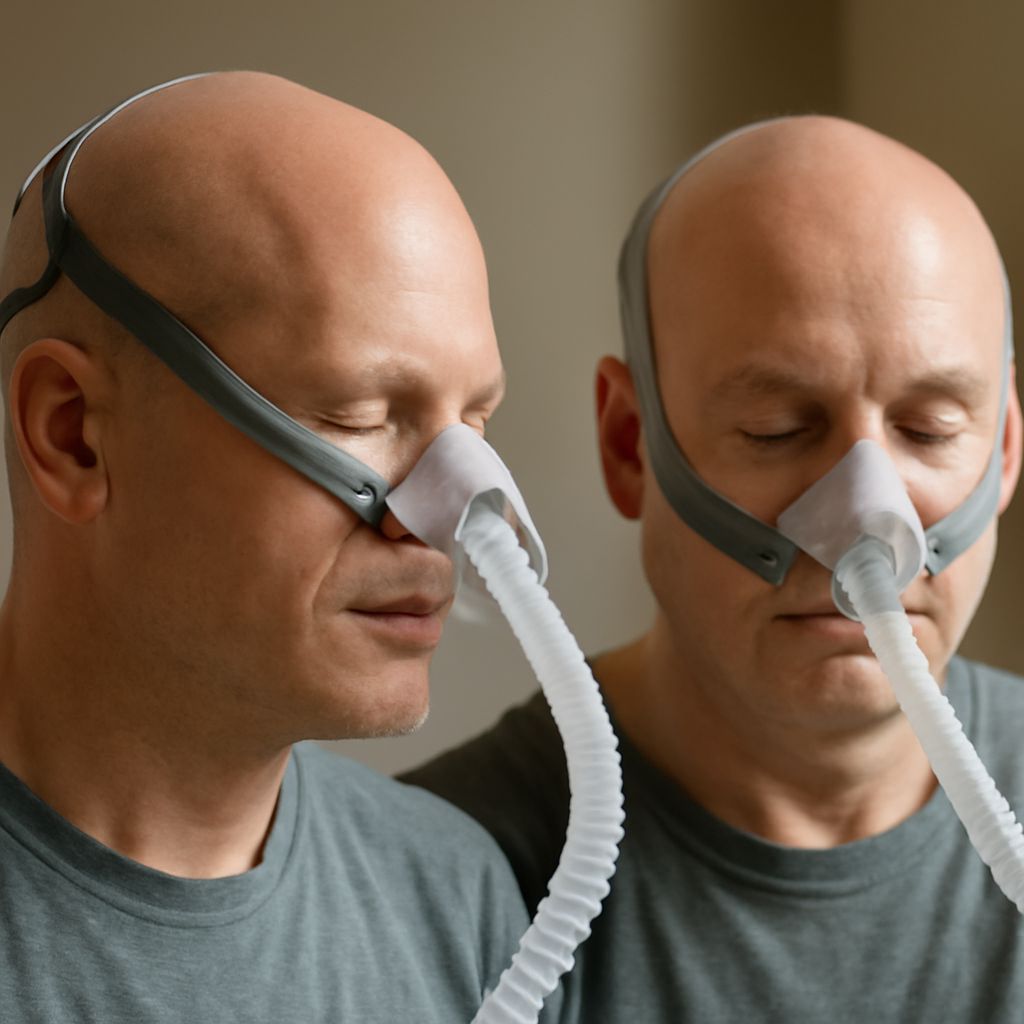
Nasal pillow masks insert two small cones directly into the nostrils rather than sealing against the face. Because the seal point sits inside the nose, beard length has almost no effect on leak rates. Short stubble, a three-day growth, a full beard — none of it contacts the sealing surface. Pressure ranges up to 20 cm H2O work reliably with nasal pillows, making them suitable for most AHI prescriptions. The tradeoff is that nasal dryness increases without adequate humidifier settings, and side sleepers sometimes find the rigid hose connection presses against pillows uncomfortably.
ResMed AirFit P10 and Fisher & Paykel Brevida are frequently cited as top performers in this category for bearded users. Both use minimal forehead support, which reduces the number of contact points that could shift during sleep.
Full-Face and Hybrid Options
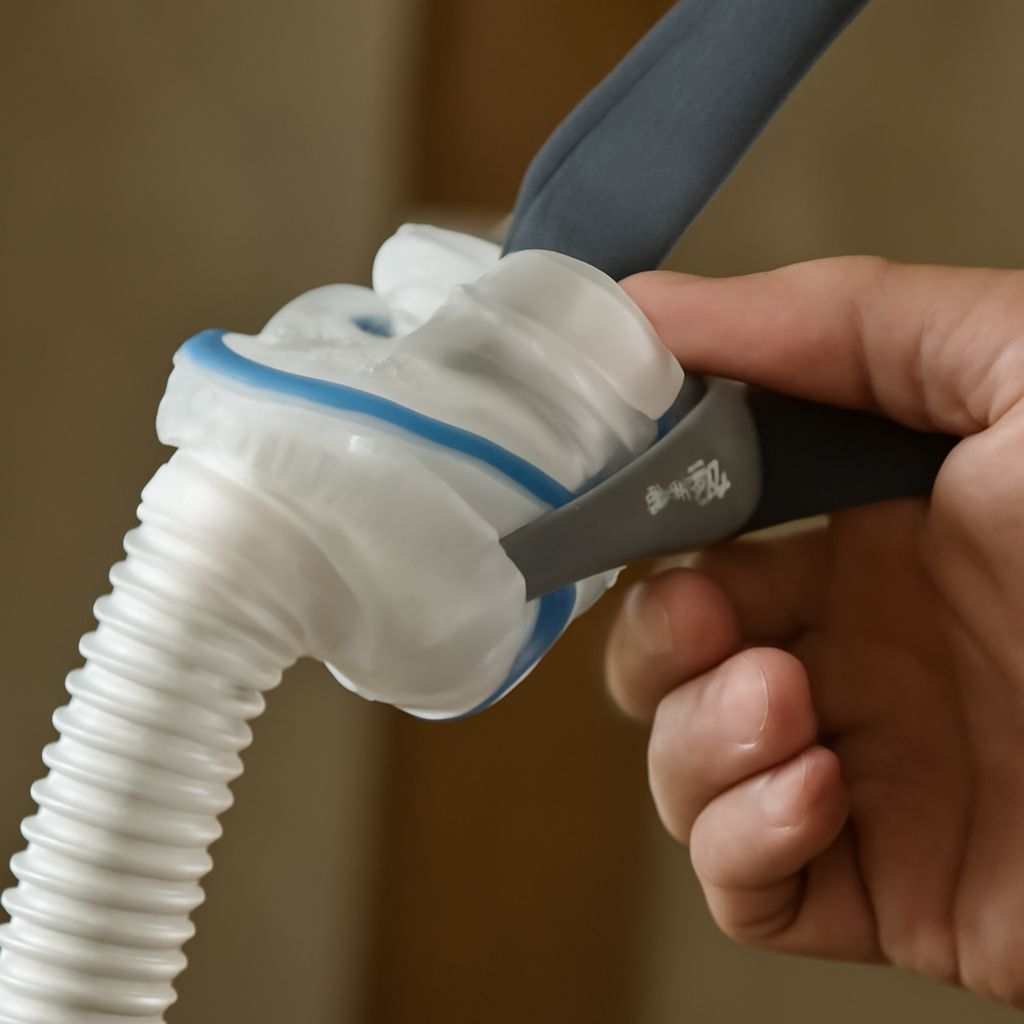
Full-face masks cover the nose and mouth, creating a seal along the upper lip and lower cheeks. A mustache or short beard of under 3 mm often causes manageable leakage that humidifier bypass corrects. Beards longer than 5 mm typically require a memory foam or gel cushion rather than standard silicone. Several manufacturers now offer gel-infused cushions that compress into beard hair over 10 to 15 minutes of use, forming a partial custom seal.
Hybrid masks combine nasal pillows with a mouth guard seal, which means the cheek and upper lip area stays clear of silicone entirely. This design suits mustache wearers better than chin beard wearers, as the lower jaw seal still contacts hair below the mouth.
A cloth cpap mask wraps the cushion contact area in a soft textile layer. The fabric compresses beard hairs slightly differently than silicone, reducing the sharp-edge leak paths that occur where individual hairs breach a smooth cushion surface. RemZzzs brand liners are the most common retrofit option and fit over existing cushions without altering pressure delivery.
Measurement and Fit Adjustments
Before ordering any mask marketed as a cpap mask for beards, measure your beard length with a ruler at the chin and upper lip. Lengths under 3 mm: standard nasal pillow or gel cushion full-face. Lengths 3 to 10 mm: gel cushion or cloth liner hybrid. Lengths over 10 mm: nasal pillow as primary option, or custom-molded cushion if a full-face seal is medically preferred.
Headgear tension affects leak rates independently of cushion type. Over-tightening compresses the cushion so it flattens against beard roots rather than around them. A two-finger gap between headgear strap and cheek is the standard fitting guideline. If the seal holds for the first 30 minutes but degrades by morning, beard growth overnight (typically 0.3 to 0.5 mm per night) is likely responsible. Shaving or trimming before a therapy session resolves this for most users.
Heated humidifier settings of 3 to 5 on a 1 to 8 scale prevent the dry nasal passages that bearded users often attribute to mask fit but are actually caused by mouth breathing triggered by a partial leak. Correcting leak first, then adjusting humidity, gives cleaner data for both problems.
Next Steps for a Better Night
Start with a nasal pillow mask if beard length exceeds 5 mm and a full-face seal is not medically required. If a full-face seal is necessary, add a cloth liner to an existing cushion before buying a new mask entirely. Trim or shape the beard at seal contact points rather than shaving completely, then allow one week of consistent data before evaluating whether a mask change is warranted. Most suppliers offer 30-day return windows for CPAP masks, which provides enough time to test real-world performance across different beard growth stages.