Pain in the rhomboid muscles may be felt between the spine and a shoulder blade, particularly during certain arm or shoulder movements. The larger muscle, the rhomboid major, lies in that region, but pain near it does not prove that it is the source. Joints, nerves, other muscles, and structures in the chest can produce overlapping symptoms.
New pain in this area with chest pressure, shortness of breath, fainting, a cold sweat, or pain spreading to the jaw or arm requires emergency attention: call 911. Pain that changes with breathing or movement can still have a serious heart or lung cause.
Rhomboid Major Pain and the Muscles Around the Blade
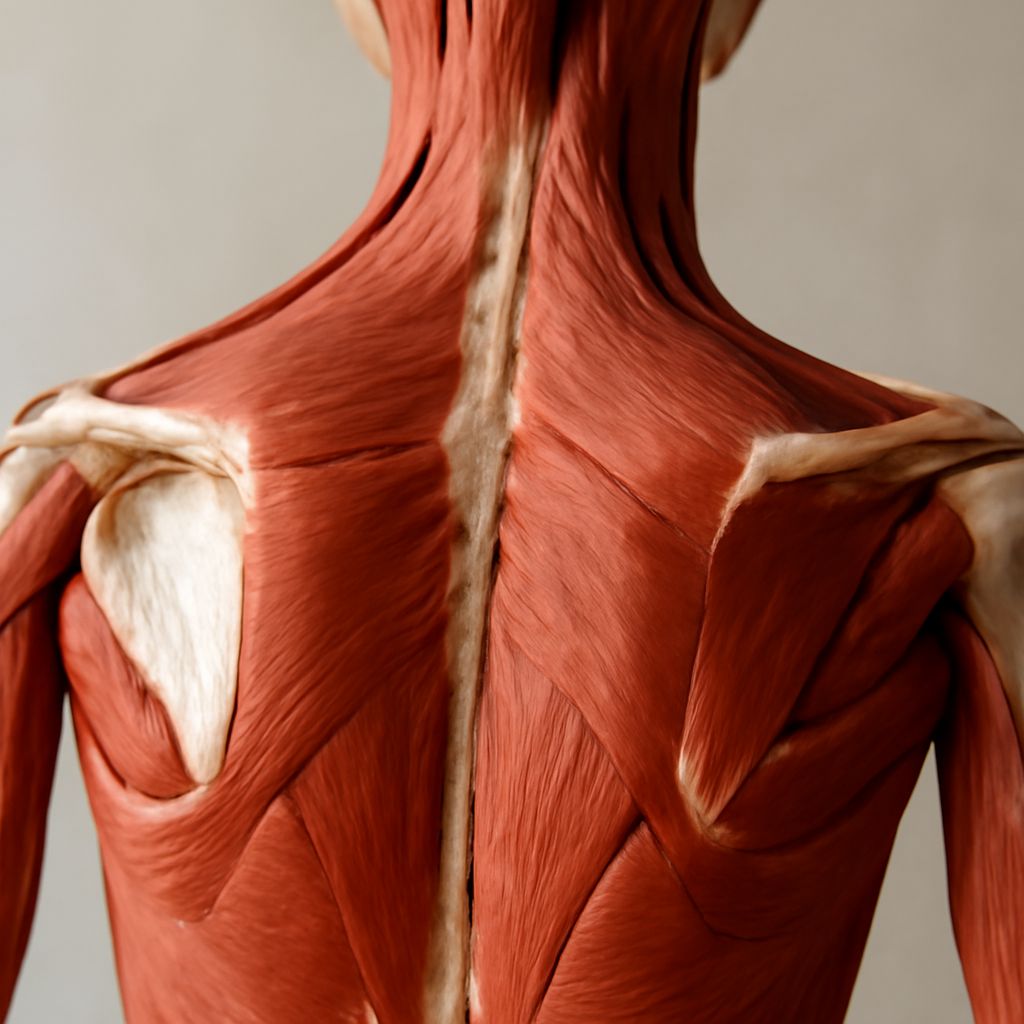
The rhomboid major and rhomboid minor connect the spine to the inner edge of the shoulder blade. They help draw the blade toward the spine and contribute to its movement and stability. When an arm reaches, pulls, or lifts, the shoulder blade moves with it; several muscles share that work.
Rhomboid muscle pain can follow an unfamiliar pulling activity or a sudden increase in workload. Pain affecting the rhomboid major may be associated with tenderness and discomfort during movements involving the shoulder blade. An ache attributed to the rhomboid major may overlap with symptoms from nearby tissues; a clinician cannot confirm that muscle is responsible simply because of the location.
The latissimus dorsi is a larger muscle that extends along the back and helps move the arm. Pain attributed to it may overlap with discomfort around the shoulder blade, but the muscles have different attachments and roles. A painful rhomboid major is only one possible explanation. An examination considers the shoulder, neck, ribs, and upper back rather than treating any one spot as proof of a diagnosis.
Activity, Tenderness, and Spasm
A rhomboid muscle spasm is an involuntary tightening of a muscle that may feel like a cramp or sudden contraction. A person may describe a tight, painful area after repeated pulling or carrying a load. The description is useful, although a feeling of tightness does not establish which muscle is contracting or why.
Pain in the rhomboid area may become noticeable when a person draws the shoulder blades together or moves the arm. Other muscles and joints also participate in those movements, so a response to one motion is only a clue. Suspected rhomboid major pain may need further evaluation if it persists, spreads, or limits normal activity.
A recent change in exercise, work, or lifting can help explain the timing of an ache. It does not exclude another condition. A clinician may ask whether pain began suddenly, follows a particular activity, occurs at rest, or comes with numbness, weakness, fever, or breathing changes.
Why Breathing Changes the Assessment
The chest wall and shoulder girdle move during breathing. Muscles around the upper back may therefore be uncomfortable during a deep breath after an injury or strain. Suspected rhomboid pain when breathing should still be assessed in context: a lung or other chest condition can also cause pain with a breath.
Sudden shortness of breath, coughing up blood, fainting, or sudden severe chest or upper-back pain requires emergency evaluation. Chest pressure or discomfort with sweating, nausea, breathlessness, or pain spreading to the arm or jaw can signal a heart attack. The American Heart Association recommends calling 911 for possible heart attack symptoms, even when the cause is uncertain.
Pain near the rhomboids during breathing, accompanied by fever or a new cough, also warrants prompt medical advice. A clinician can assess the breathing symptoms and determine whether the chest, lungs, or another source needs investigation. An assumed muscle strain is not a reason to delay that assessment.
Persistent Symptoms and Clinical Assessment
Chronic rhomboid pain is a description of persistent pain in the region, not proof of an ongoing injury to a particular muscle. Pain around the rhomboids that continues over time may have several contributing causes, including shoulder or neck conditions, and may affect sleep or work. Long-lasting pain near the rhomboid muscles deserves an assessment that considers those effects as well as the painful area.
A clinician asks when symptoms began, where they spread, what changes them, and whether there was an injury. They may observe shoulder-blade movement, check the neck and shoulder, and examine strength and sensation. When pain might involve the rhomboid major, the clinician compares findings across nearby structures and considers the history rather than relying on tenderness alone.
Imaging is not necessary for every episode of upper-back discomfort. Tests may be appropriate after significant trauma, when neurological findings are present, or when chest symptoms suggest another cause. The choice depends on what the assessment is intended to clarify.
Returning to Comfortable Activity
If a clinician has assessed the symptoms and a muscle-related problem is considered likely, a temporary reduction in aggravating activity may help. Gentle movement and a gradual return to normal tasks can be more useful than prolonged bed rest. A physical therapist may suggest a plan suited to the person’s activities and examination findings.
A wrapped cold pack or gentle heat may offer temporary relief for soreness in the rhomboid muscles. Protect the skin and stop if it makes symptoms worse. A pharmacist or clinician can advise whether an over-the-counter pain medicine is appropriate alongside other medicines and health conditions. Improvement in rhomboid muscle pain does not establish which muscle originally caused it.
Decide When to Get Help
Call 911 for upper-back pain with chest pressure, serious breathing difficulty, fainting, or other possible heart attack symptoms. Seek prompt medical advice for pain with breathing, fever, a new cough, worsening symptoms, or new weakness. For persistent pain near the major rhomboid without emergency signs, arrange a clinical appointment and bring notes on the onset, affected movements, and any changes over time.