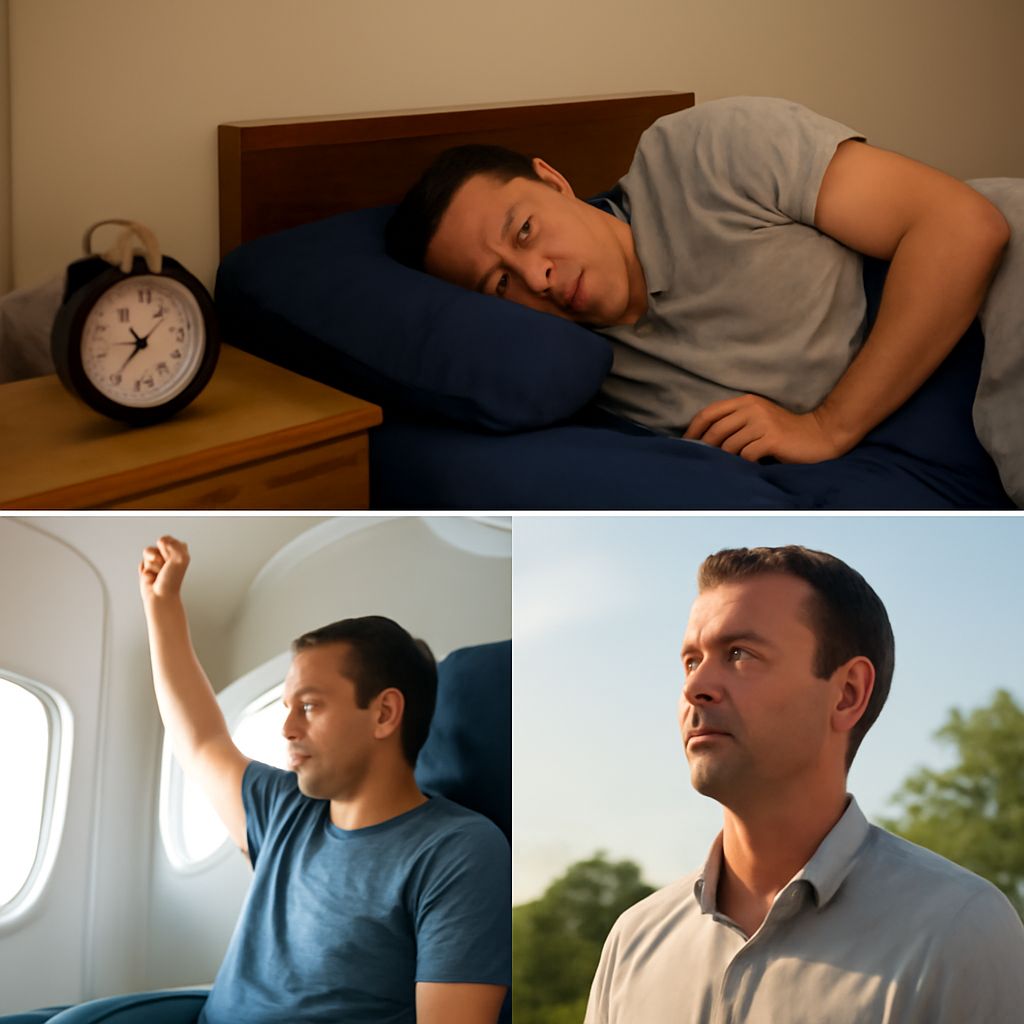
Travelers often arrive at their destination feeling groggy, disoriented, and sluggish. Jet lag prevention is a practical way to reclaim those first few days of a trip—whether for work or relaxation—by helping the body adjust efficiently to new time zones. By mastering how to avoid jet lag, travelers can boost alertness, mood, and overall enjoyment of the journey.
Knowing how to not get jet lag requires more than just adjusting your watch. With specific, evidence-based routines and a few small habit changes, travelers discover that flying east to west, or between any time zones, does not have to derail healthy sleep patterns.
Understanding Jet Lag and Why It Happens
Jet lag results from a mismatch between the body’s internal clock—its circadian rhythm—and the local time at a travel destination. This mismatch occurs when crossing multiple time zones quickly, such as on long-haul flights. The body’s natural rhythms regulate not only the sleep-wake cycle, but also hormone production, digestion, and temperature, so even modest disruptions can cause noticeable symptoms.
When a person travels across several time zones, their circadian rhythm lags behind the new environment. Sleep disturbances, daytime fatigue, difficulty concentrating, and digestive discomfort are common. Severity often depends on how many time zones are crossed, how abruptly the change occurs, and individual sensitivity. The direction of travel also matters: generally, flying east shortens the day, forcing the body to adjust to an earlier bedtime, while flying west lengthens the day, which can be easier for most people.
Understanding these mechanics highlights why jet lag prevention involves more than just trying to sleep on the plane. Instead, it requires setting the stage for the body to adapt as smoothly as possible to its new schedule.
Factors such as age, baseline sleep health, hydration, and work schedule can also impact symptoms, making a personalized approach especially helpful for frequent travelers or those heading on critical missions.
How to Avoid Jet Lag: Key Prevention Strategies
Several methods can reduce the impact of jet lag. Gradually shifting bedtime and waking hours 1–2 days before departure toward the destination’s local time helps the internal clock adjust. For instance, if traveling east, try going to bed an hour earlier each night; if west, delay sleep and wake times by an hour. Even modest shifts—30 to 60 minutes per day—can condition the body.
Light exposure is another powerful tool. Morning light advances the circadian rhythm, ideal for trips east, while evening light delays it, helping with westward journeys. Spend time outside or by bright windows at the appropriate local time. Sunglasses can be used to reduce unwanted light exposure if arriving when it’s nighttime at home.
During the flight, travelers benefit from hydration by drinking water regularly and avoiding excess caffeine or alcohol, as these can disrupt sleep and exacerbate dehydration. Strategic napping—limiting naps to under 30 minutes—can provide relief without leading to grogginess or further sleep pattern disruption.
Meal timing also plays a role. Eating meals on the destination’s schedule (or as close as possible) helps entrain digestion and other rhythms, supporting a smoother transition and enhancing how to avoid jet lag on future journeys.
How to Not Get Jet Lag When Traveling East to West
Flying east to west is considered somewhat less taxing for the body’s clock. The circadian rhythm finds it easier to lengthen a day than to shorten it. Still, symptoms can arise without preparation, especially after a jump of three or more time zones. Start by delaying sleep and wake times in 30–60 minute increments for two to three nights prior to departure. This gentle adjustment can help the body’s sleep cycle catch up to the westward destination.
Exposure to afternoon and early evening light upon arrival further delays the circadian clock, matching local time. Outdoor activities—such as walking, sightseeing, or casual exercise—during these hours reinforce the adjustment. Travelers who rely on naps should keep them brief, ideally no longer than 20–30 minutes and not too late in the day, to prevent offsetting the evening sleep window.
Hydration remains critical; flying dehydrates and altered sleep can increase discomfort. Aim for small, frequent sips of water throughout the flight and after landing. When possible, enjoy meals at the same time as locals, even if this means adjusting appetite cues gradually over the first day or two.
For work travelers, scheduling important meetings or activities for mid to late morning—rather than the first hours after arrival—gives the body more time to adjust, lowering the risk of cognitive fatigue or reduced alertness.
Essential Sleep Tips Before and After Your Flight
High-quality sleep before departure strengthens resilience to jet lag. In the days leading up to the flight, aim for a consistent sleep routine: target 7–9 hours per night in a dark, quiet room, and avoid stimulants or screens for at least one hour before bed. Lay out travel items and complete checklists early to minimize pre-trip anxiety and late-night packing.
On travel day, wear comfortable clothing and bring a travel pillow, eye mask, and noise-canceling headphones. These tactile supports make it easier to relax and doze off, even in unfamiliar environments. If using sleep aids, consult a physician first; melatonin supplements may help, but timing and dosage must be appropriate for the specific time zone change.
After arrival, spend time outside or in sunlight as soon as practical. Physical activity, such as a brief walk or light stretching, signals to the body that it’s time to be awake. Keep the first evening’s routine low-stress and, if possible, plan for an early night to catch up on any missed sleep. If waking up during the night, avoid screens—read a physical book or practice deep breathing to resettle.
Good post-travel sleep hygiene includes sticking to the new local schedule for meals and bedtime, even if not initially sleepy or hungry. Over several days, these cues reinforce the local circadian rhythm, promoting faster adaptation and better long-term sleep quality.
Frequently Asked Questions About Jet Lag Prevention
How long does jet lag typically last? For most adults, the body takes about one day per time zone crossed to fully adjust. However, symptoms often begin improving after 2–3 days with proper prevention strategies.
Does melatonin really help? Melatonin supplements can aid how to avoid jet lag, especially when timed to coincide with the new bedtime at the destination. Check with a healthcare provider for the best regimen and to avoid unwanted interactions.
Should caffeine be avoided entirely while traveling? Moderate caffeine use can help with alertness during the day but should be avoided within six hours of planned sleep to reduce the risk of sleep onset delays and restlessness.
Are children or older adults more affected? Both groups may be more sensitive to jet lag. Children often adjust more quickly, but older adults may experience longer-lasting symptoms, so extra emphasis on routine, hydration, and gradual schedule changes is beneficial for these travelers.