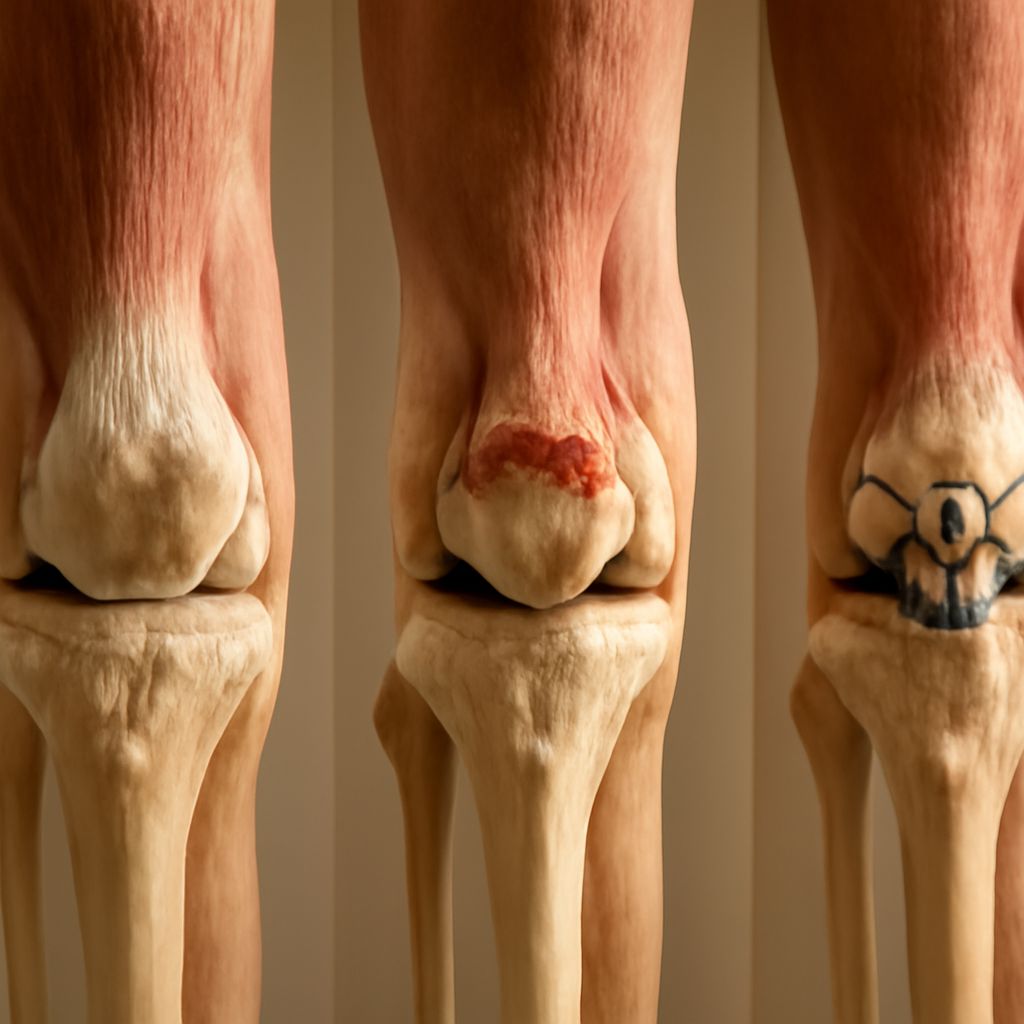
A clinician assessing possible arthritis starts with the person’s symptoms and medical history, examines the affected joints, and decides whether a laboratory test or imaging would answer a particular question. There is no single test that identifies every form of arthritis. The route to a diagnosis depends on the joints involved, the pattern of symptoms, and the conditions the clinician is considering.
Testing for a possible joint condition is therefore only one part of the assessment. A result becomes meaningful alongside the examination and history, much as one piece of a puzzle takes its place among the others. The process may lead to a diagnosis at the first visit or require further investigation and follow-up.
Is there a test for arthritis that covers every type?
Is there a test for arthritis that can provide every answer? No. Arthritis is a broad term covering different conditions that affect joints. Osteoarthritis, rheumatoid arthritis, and gout, for example, have different mechanisms and may require different evidence. A clinician chooses tests based on what the symptoms and examination suggest rather than ordering one universal panel.
The National Institute of Arthritis and Musculoskeletal and Skin Diseases explains that there is no single test for osteoarthritis. Similarly, its guidance on rheumatoid arthritis describes the use of history, examination, and selected tests because no single test establishes that diagnosis in every case.
Questions about how to test for arthritis are best answered by asking which form is suspected and what the clinician needs to learn. A blood test that helps investigate inflammation serves a different purpose from an image of a joint or an analysis of fluid taken from it. Not every person needs all three.
What the history and examination reveal
The history begins with where symptoms occur and when they started. A clinician may ask whether one or several joints hurt, whether swelling is visible, how long stiffness lasts after waking, and whether symptoms change with activity or rest. A sudden episode and a slowly developing problem can suggest different questions for the examination.
The person’s medical history, medications, previous injuries, and family history can also be relevant. A description of practical effects—difficulty opening a jar, walking, or sleeping comfortably—helps show how the problem affects daily life. When assessing arthritis, a clinician may also ask about symptoms elsewhere in the body, because some inflammatory conditions affect more than the joints.
During the examination, the clinician looks for swelling, warmth, tenderness, and changes in movement. Comparing joints on both sides and observing how a person walks or uses the hands can add context. These findings guide the next decision: whether the pattern supports a particular diagnosis, needs further testing, or calls for prompt investigation of another cause.
What blood tests can and cannot show
Blood tests for arthritis may look for markers associated with inflammation or antibodies associated with certain autoimmune conditions. For example, a clinician investigating possible rheumatoid arthritis may order rheumatoid factor and anti-CCP antibody tests. Markers such as C-reactive protein can provide information about inflammation, but they do not identify its cause on their own.
A positive antibody result is interpreted alongside symptoms and examination findings; it is not a diagnosis in isolation. Conversely, a result within the laboratory’s reference range does not necessarily rule out a condition. The clinician can explain what each result means in the context of the particular question and whether another explanation needs consideration.
Testing for arthritis can also involve blood work to look for other conditions that may produce similar symptoms. The choice depends on the history and examination. It is reasonable for a patient to ask what a proposed test is intended to clarify and how the result would influence the next step.
Imaging and joint fluid
X-rays can show changes in bones and joint spaces and may help assess joint damage or another cause of symptoms. Early changes are not always visible, however, so an image without clear abnormalities does not settle every question. Depending on the situation, ultrasound or MRI may provide information about inflammation or soft tissues that an X-ray cannot show as clearly.
A clinician may also take a sample of joint fluid with a needle, particularly when a joint is swollen. The laboratory can examine the fluid for crystals associated with gout or for signs of infection. This is a clinical procedure selected for a specific reason, not a home test. Its result is interpreted with the rest of the assessment, and suspected infection requires prompt attention.
The tests used to assess arthritis need not be identical at every visit. For one person, the history and examination may be sufficient to guide an initial plan; another may need imaging or a fluid sample. The question being asked determines which information is likely to be useful.
When to seek care and what happens next
Persistent or recurring joint pain, swelling, or stiffness deserves a medical discussion, especially when it limits daily activities. A suddenly hot, swollen, very painful joint, particularly with fever or feeling unwell, requires urgent medical attention because infection is one possible cause. A severe joint problem after an injury also needs prompt assessment.
Before an appointment, it can help to note which joints are affected, when symptoms began, and how long morning stiffness lasts. A medication list and relevant previous test results can help the clinician interpret the history. The aim is to describe the experience accurately rather than decide on a diagnosis in advance.
Diagnosing arthritis may take more than one visit if the pattern is still developing or results need interpretation. A primary care clinician may refer to a rheumatologist, a specialist in arthritis and related conditions, when the findings warrant specialist assessment. Follow-up provides a chance to review changes and decide whether the working explanation still fits.
Will a normal test result rule arthritis out?
Not always. Different conditions require different evidence, and some changes may not be visible or measurable early on. A clinician decides how to test for arthritis based on the findings and can explain whether further assessment is needed and what changes should prompt another visit.