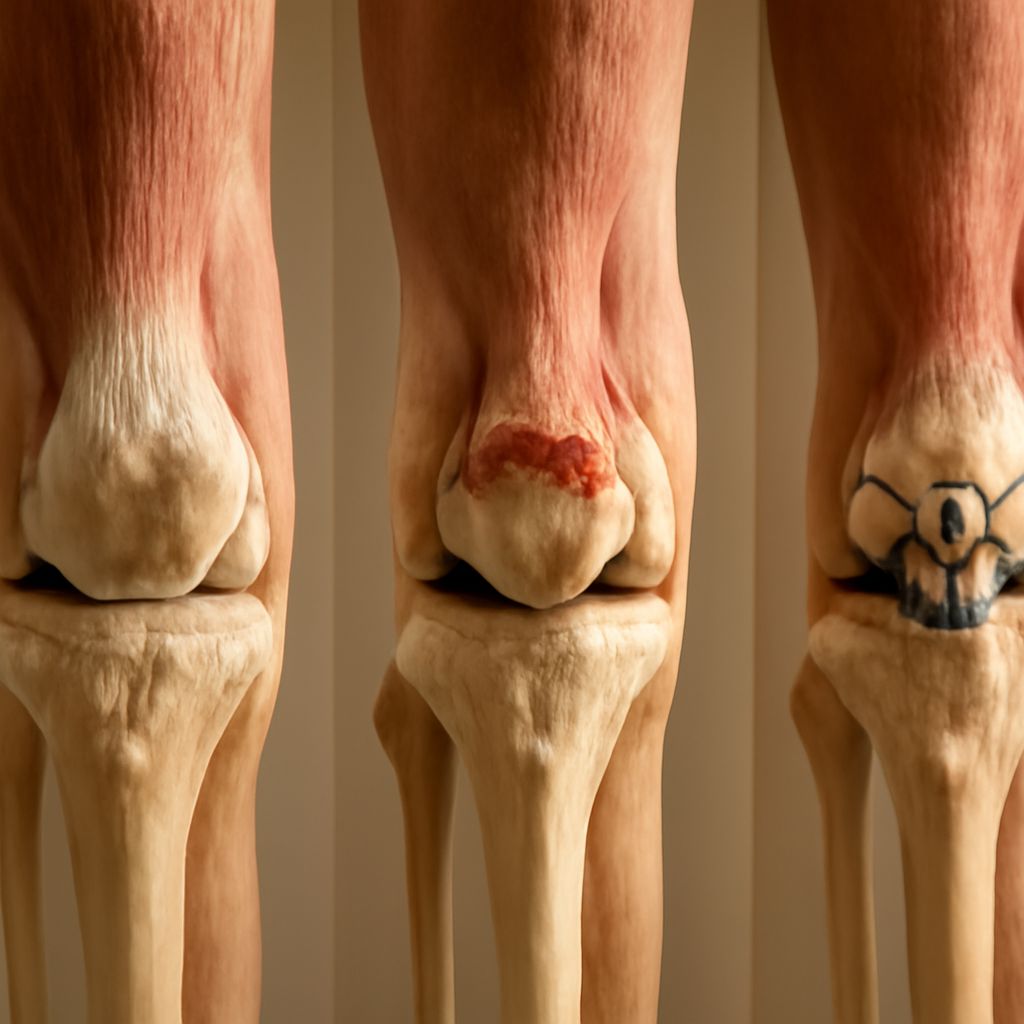
What can pain just above the kneecap mean? One possibility is irritation of the quadriceps tendon, which connects the muscles at the front of the thigh to the kneecap. This condition is often called quadriceps or quad tendon inflammation. The location is a useful clue, but pain in this area has several possible causes, so an assessment is needed before choosing a specific treatment or exercise plan.
A care plan may involve adjusting activities that aggravate the knee and, when appropriate, gradually rebuilding strength. The right starting point depends on the injury, the person’s activities, and how the knee responds.
Quad Tendonitis and the Tendon Above the Kneecap
The quadriceps muscles help straighten the knee. Their tendon attaches them to the upper part of the kneecap, also called the patella. When those muscles contract, the tendon transfers force to help extend the leg. The American Academy of Orthopaedic Surgeons describes this connection and the structures that support knee movement.
Quadricep tendonitis is a term commonly used for a painful or irritated quadriceps tendon. A clinician may use the term tendinopathy when discussing a tendon problem. Repeated jumping, running, squatting, or a sudden increase in activity can place new demands on the tendon, although a particular activity does not establish the cause of pain.
The anatomy helps distinguish two nearby structures. The quadriceps tendon lies above the kneecap, while the patellar tendon extends from the kneecap toward the shinbone below it. The latter is also called the patellar ligament because it connects bone to bone. Both are part of the mechanism that helps straighten the knee, but their location and the clinical assessment matter when discussing symptoms.
What can the symptoms feel like?
Quadriceps tendonitis symptoms can include tenderness just above the kneecap, pain during activities that load the thigh muscles, and sometimes swelling or stiffness. A person might notice discomfort when climbing stairs, rising from a chair, squatting, or landing from a jump. The feeling can vary with the task and the amount of activity.
For example, a runner who has recently added hills may notice an ache near the top of the kneecap after a workout. That history helps a clinician ask useful questions about load and timing. It does not prove that the tendon is the source: knee joint problems, injuries to other tissues, and other conditions can produce pain nearby.
Symptoms of an irritated quadriceps tendon are worth describing in detail. Note when discomfort began, whether it appeared after an injury or gradually, and whether there is swelling, a sense of giving way, or difficulty straightening the knee. A clinician can examine the area and decide whether further investigation is appropriate.
When a knee needs prompt assessment
Seek urgent medical care after an injury if the knee is badly swollen or misshapen, cannot bear weight, or cannot be straightened. A sudden pop followed by pain and difficulty straightening the leg can indicate a tendon tear, which requires prompt assessment. A hot, swollen knee with fever or feeling unwell also needs urgent medical attention.
Quad tendonitis can be confused with other conditions, and an online description cannot distinguish them. If pain persists, returns, disrupts sleep, or limits daily activities, arrange an appointment. The clinician may ask about recent changes in activity and examine tenderness, movement, strength, and other areas of the knee.
How care and rehabilitation fit together
Quadricep tendonitis care often begins by reducing activities that clearly aggravate the knee while the cause is assessed. This might mean temporarily changing a running or jumping routine. Relative rest means adjusting the load, not assuming that all movement must stop. A clinician can advise on appropriate activity for the injury and its stage.
Quadriceps tendonitis treatment may include a rehabilitation program and a gradual return to loading the tendon. The NHS guidance on tendonitis describes avoiding actions that aggravate symptoms and considering physical therapy when pain persists or movement is limited. A cold pack wrapped in a towel may help ease discomfort; a pharmacist or clinician can discuss pain relief appropriate to the individual.
Care for quadriceps tendon pain should fit the person’s goals. Walking through a workday, returning to recreational running, and landing repeatedly in a sport impose different demands. A clinician or physical therapist can use those goals to help plan progress and identify what should be reviewed if symptoms do not improve.
The role of exercise
Quadriceps tendonitis exercises are selected to match the assessment and the person’s current tolerance. A physical therapist may begin with controlled thigh muscle work and later adjust resistance or movement as the knee becomes more capable. The purpose is to build capacity gradually, rather than to test the knee with the hardest activity on the first day.
Exercises for a painful quadriceps tendon can take different forms. Some involve contracting the thigh muscles with little knee movement; others involve controlled bending and straightening. The choice, depth, resistance, and frequency depend on the diagnosis and response. An example of a movement is not an individual prescription, especially after a sudden injury or when straightening the knee is difficult.
A therapist may ask how the knee feels during activity and later that day or the next morning. If a rehabilitation exercise causes a marked or lasting increase in pain, the plan may need adjustment. A return to sport can then be discussed in stages, taking account of strength, function, and the movements required by that sport.
What to expect during recovery
Recovery from irritation of the quad tendon varies with the cause, duration of symptoms, activity demands, and the response to treatment. Some activities may become comfortable before jumping or repeated stairs do. A gradual plan allows the clinician and patient to track those changes and adjust the load as appropriate.
If symptoms are not improving, keep returning as activity increases, or continue to interfere with sleep or daily life, review the plan with a clinician. New swelling, instability, or difficulty straightening the knee also deserves reassessment. The next step may be a change in exercises, a closer look at the diagnosis, or further investigation based on the examination.