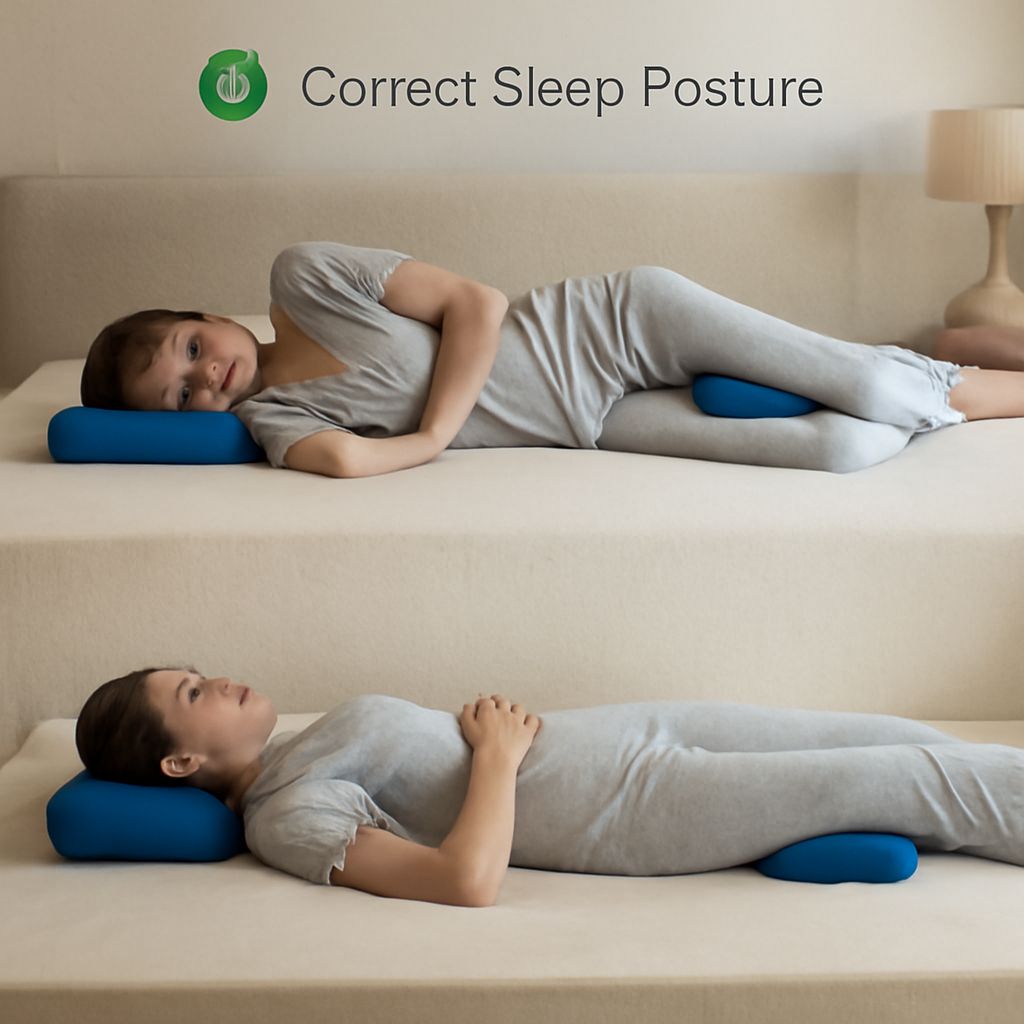
Shoulder pain sleeping on side is one of the most common sleep-position complaints, and it usually comes from sustained compression of the rotator cuff, bursa, or acromioclavicular joint over six to eight hours. Knowing how to sleep with shoulder pain starts with understanding which structures are being loaded and why. Shoulder pain from side sleeping almost always develops on the dependent side, the one making contact with the mattress, rather than the top shoulder, because the body weight forces the shoulder into an internally rotated, impinged position for hours at a stretch.
Shoulder pain sleeping affects both people with existing shoulder conditions and those with no prior history, since anyone sleeping on a surface that is too firm or with a pillow that is too flat can compress the shoulder joint enough to cause bursitis-level inflammation over weeks. Shoulder pain when sleeping on side that builds gradually over two to four weeks typically points to positional overuse rather than a structural injury.
Why Shoulder Pain Develops from Side Sleeping
The shoulder joint, unlike the hip, has very little structural protection from compression. The glenohumeral joint depends on soft tissue, specifically the rotator cuff tendons and the subacromial bursa, for stability and cushioning. When shoulder pain sleeping on side occurs on a firm mattress, the greater tubercle of the humerus presses into the acromion and bursa repeatedly as the person shifts or breathes. After two to three hours, the bursa becomes inflamed and tender. The pain often wakes people between 2 and 4 AM when the inflammatory response peaks.
People with pre-existing shoulder conditions, rotator cuff tears, impingement syndrome, and frozen shoulder, experience shoulder pain when sleeping on side at much lower thresholds. Even a moderately soft mattress can aggravate these conditions because the structural damage is already present. For healthy sleepers, the trigger is almost always mechanical: wrong mattress firmness, wrong pillow height, or sleeping with the arm overhead, which narrows the subacromial space and increases impingement risk.
Mattress and Pillow Setup for Shoulder Pain from Side Sleeping
The mattress should allow the shoulder to sink slightly, roughly 1.5 to 2.5 inches, so the joint is not compressed against a rigid surface. Medium-soft to medium-firm mattresses in the 3 to 5 range on a 10-point firmness scale work best for side sleepers with shoulder pain from side sleeping. A mattress that is too firm keeps the shoulder elevated and jammed upward; one that is too soft allows the whole torso to sink, eliminating the benefit.
Pillow height should match the gap between the shoulder and the ear exactly. Most side sleepers use a pillow that is too thin, which tilts the neck downward and pulls the shoulder joint upward into a position that aggravates impingement. A proper side-sleeper pillow holds the head level with the spine, measured by ensuring no visible tilt of the head toward or away from the mattress surface when lying in the sleep position.
Practical Fixes When Shoulder Pain Sleeping Prevents Rest
Switching to the opposite side is the most immediate fix when shoulder pain sleeping on the affected side becomes intolerable, but many people have a strong side preference or the other shoulder has the same issue. Using a body pillow placed in front of the torso and hugged against the chest keeps the top arm from falling forward and pulling on the shoulder joint during sleep. This position reduces shoulder pain from side sleeping by eliminating the forward rotation of the humerus that narrows the subacromial space.
Applying ice to the shoulder for 15 minutes before bed reduces acute inflammation when the joint is already tender. After the first 48 to 72 hours of acute pain, switching to a heating pad at low heat for 20 minutes before sleep relaxes the rotator cuff muscles and reduces the guarding response that makes the joint stiffer. Over-the-counter NSAIDs taken 45 minutes before bed can lower inflammatory pain enough to allow sleep through the worst of the acute phase.
For chronic shoulder pain sleeping on side that does not respond to position and equipment changes within two weeks, a physical therapist assessment is appropriate. Common findings include rotator cuff weakness, posterior capsule tightness, and scapular instability, all of which are treatable with targeted exercise. Corticosteroid injections into the subacromial bursa provide three to six months of relief for bursitis and allow the person to sleep and exercise without pain while completing rehabilitation.