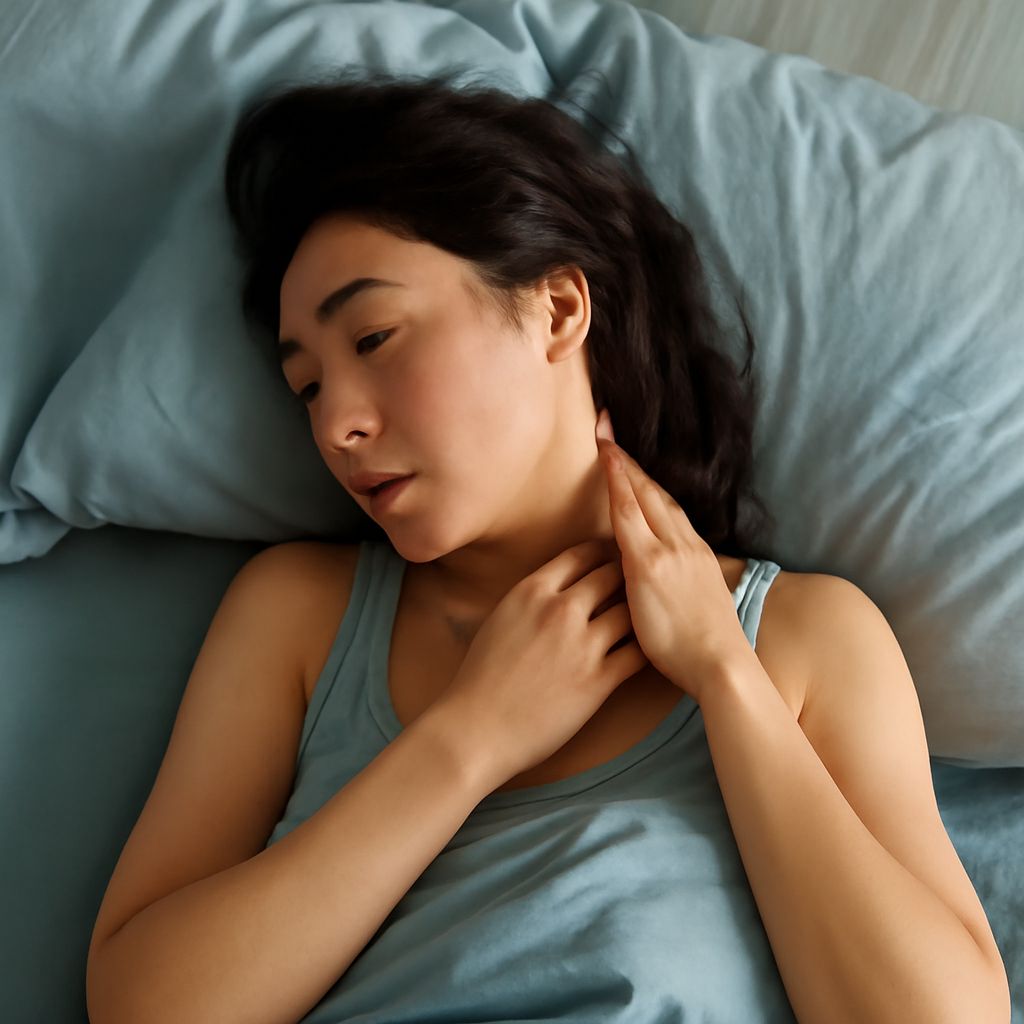
Is it better to sleep without a pillow? The answer depends almost entirely on sleep position and spinal anatomy. For stomach sleepers, going pillow-free reduces cervical rotation and eases neck strain, making it a genuinely useful adjustment for that specific group. For back and side sleepers, the evidence points the other way: is it bad to sleep without a pillow when the cervical spine loses its support? Yes, for most people. Without a pillow, back sleepers let the head drop too far back and side sleepers let it tilt downward toward the mattress, both of which strain the neck muscles and disrupt spinal alignment.
The sleeping without pillow debate is less about the pillow itself and more about what that pillow does to maintain spinal neutrality. Is it better to sleep with or without a pillow depends on matching the head support to the actual gap created by your body in the position you sleep in. Sleep without pillow trials that last three to five nights are long enough to tell whether a change is helping or hurting, based on morning neck stiffness and how quickly it resolves.
Who Benefits from Sleeping Without a Pillow
Stomach sleepers are the clearest candidates for a pillow-free approach. In the prone position, placing any pillow under the head forces the cervical spine into extension and rotation simultaneously, loading the posterior joints at every vertebral level from C1 to C7 throughout the night. Sleeping without pillow for stomach sleepers reduces this load by letting the face rest closer to the mattress surface. If full pillow removal is uncomfortable, a very thin pillow, one inch or less, provides minimal height while still offering some cushion without the neck strain a standard pillow causes.
People with certain cervical conditions, such as a hyperlordotic cervical curve or forward head posture, sometimes find that is it better to sleep without a pillow because their existing curve already fills the space a pillow would occupy. A physical therapist can assess cervical alignment and determine whether pillow reduction is appropriate for individual anatomy.
Who Should Keep the Pillow
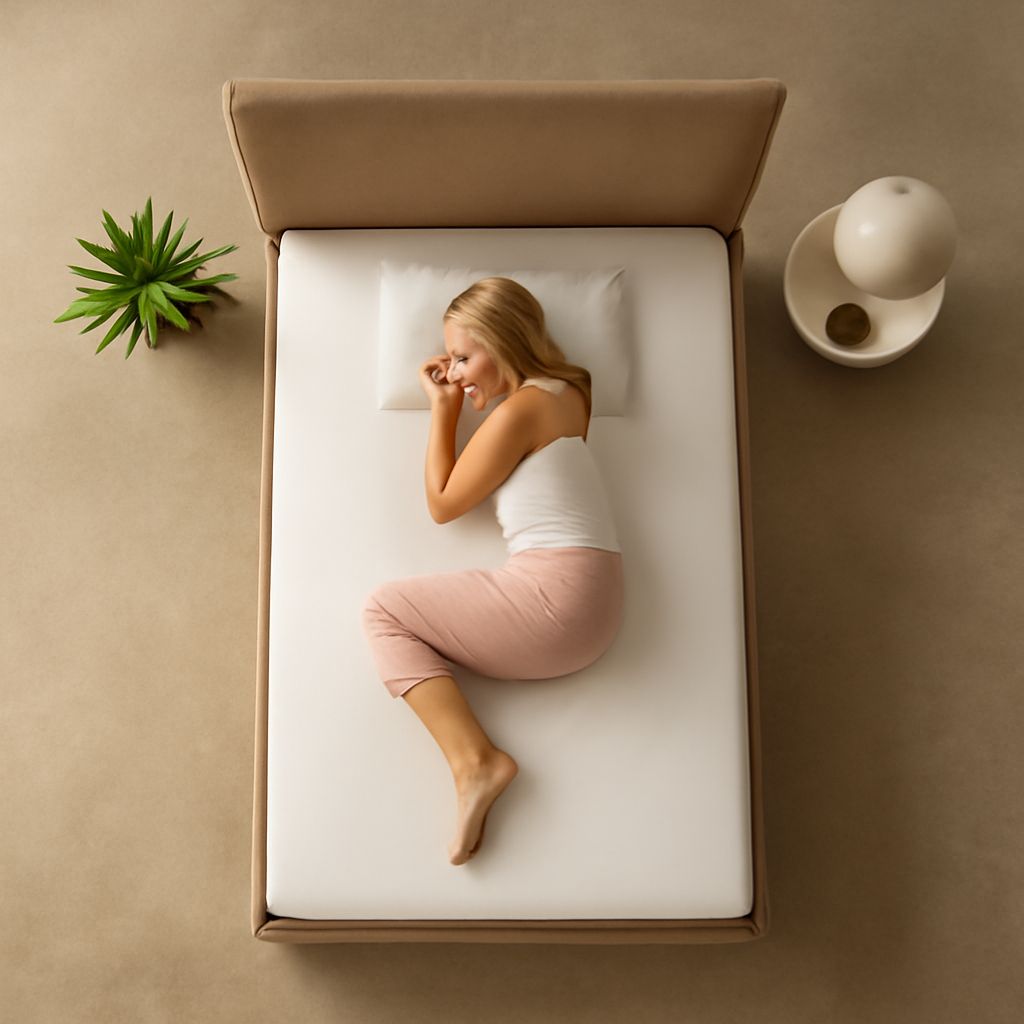
Side sleepers need a pillow to fill the gap between the shoulder and the ear. Without this support, the neck drops toward the mattress, putting the cervical muscles on the lower side under sustained stretch for hours and compressing the muscles on the upper side. The result is predictable: morning soreness and stiffness that worsens over successive pillow-free nights. For side sleepers asking is it bad to sleep without a pillow, the answer is yes unless the shoulder is elevated enough to reduce that gap, which is not anatomically typical for most people.
Back sleepers typically need a low to medium loft pillow that supports the cervical curve without pushing the chin toward the chest. The natural lordosis of the cervical spine in the supine position requires roughly 3 to 4 inches of support for an average adult. Going completely without support flattens this curve and places sustained tension on the posterior ligaments and muscles. People who wake with upper back stiffness after a pillow-free trial are experiencing exactly this effect.
How to Test Whether Sleeping Without a Pillow Works for You
The most reliable method is a five-night test. Night one through three: remove the pillow and rate morning neck stiffness on a scale of 1 to 10 each morning, noting time to resolution. Night four and five: return to the normal pillow and rate the same metric. A meaningful improvement without the pillow, at least 2 points on the scale, is a signal worth acting on. No change or worsening means the pillow is providing necessary support.
During the test, keep all other variables constant: same mattress, same sleep position, same bedtime. Changing multiple things at once makes it impossible to attribute the outcome to pillow use alone. If the test reveals that going sleep without pillow helps on some nights but not others, the inconsistency usually points to position changes during the night rather than the pillow itself being the issue. A body pillow can help maintain a consistent position throughout the test period.
For children, is it better to sleep without a pillow depends on age. Infants should sleep on a firm, flat surface with no pillow due to suffocation risk. Toddlers typically do not need a pillow until age two to three, when the cervical curve has developed enough to require head support. After age six, children generally need the same pillow support principles as adults, adjusted for smaller body dimensions.