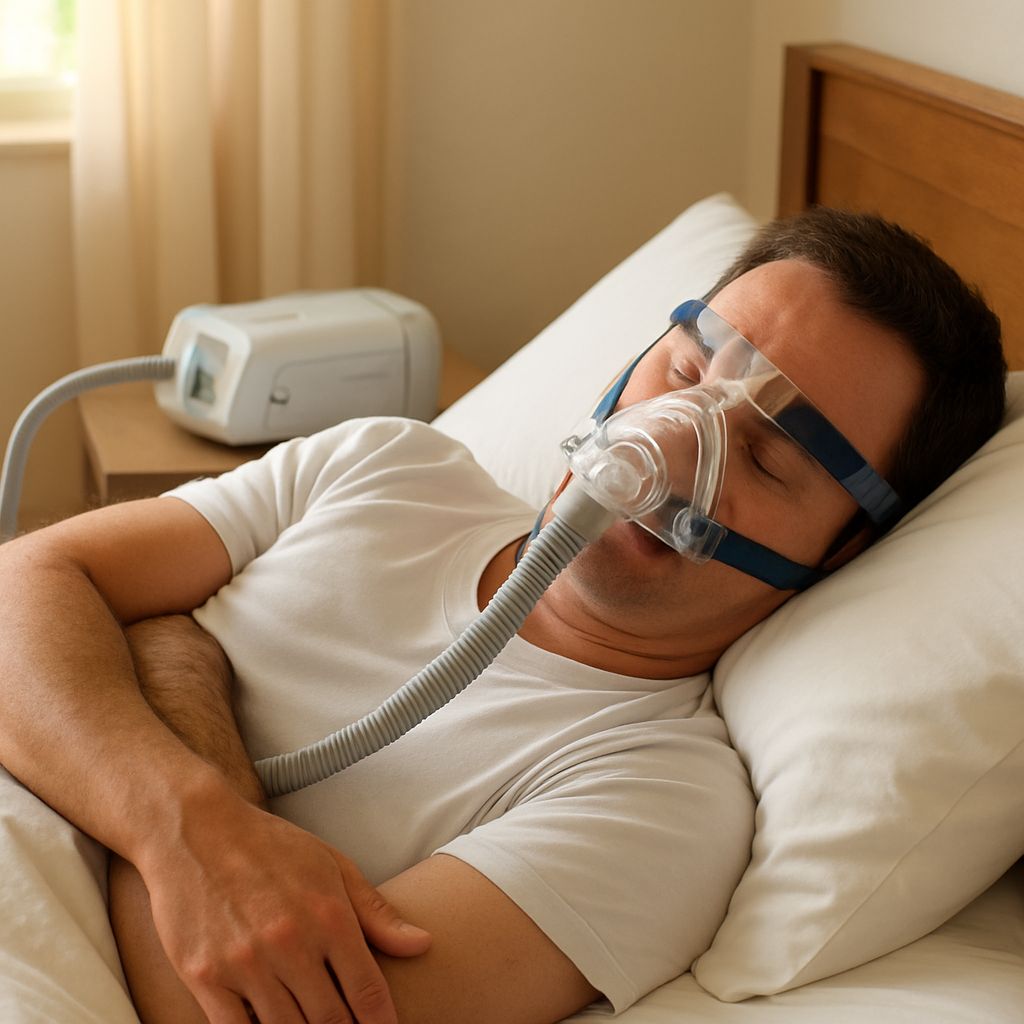
Sleep apnea exercises target the muscles of the upper airway, specifically the tongue, soft palate, throat, and jaw, to reduce their tendency to collapse during sleep and obstruct breathing. Published research on tongue exercises for sleep apnea shows measurable reductions in AHI (Apnea-Hypopnea Index) after eight to twelve weeks of daily practice. A 2009 study in the journal Sleep found that a three-month myofunctional therapy program reduced AHI by 39% in adults and 62% in children with mild to moderate obstructive sleep apnea. Exercises for sleep apnea are most effective for mild to moderate cases and work less reliably for severe apnea where structural anatomy is the dominant factor.
The appeal is obvious: treat sleep apnea without cpap using a drug-free, equipment-free approach that costs nothing beyond the time to practice. Alternative treatments for sleep apnea including exercise programs appeal to people who struggle with CPAP adherence, those with mild apnea below the CPAP treatment threshold, and those looking to reduce their pressure settings over time. Exercise does not replace CPAP for moderate to severe apnea, but it often reduces the pressure required and improves therapy outcomes when combined with device use.
Specific Exercises for Sleep Apnea That Show Evidence of Effect
Myofunctional therapy, also called oropharyngeal exercises, is the most studied category of sleep apnea exercises. The exercises target different segments of the airway in sequence. For the tongue: place the tip against the roof of the mouth just behind the upper front teeth and slide it backward along the palate to the soft palate, ten repetitions, holding at the end position for two seconds. This strengthens the genioglossus muscle, which is the primary tongue muscle responsible for keeping the airway open during sleep.
A second exercise for the soft palate: say “ahh” for three seconds while watching a mirror to confirm the uvula rises and the soft palate lifts. Repeat ten times. This activates the levator veli palatini and palatoglossus muscles, which are frequently weak in people with sleep apnea. A third tongue exercise for sleep apnea: press the entire tongue flat against the roof of the mouth and hold for five seconds, then release. Ten repetitions, twice daily. Suction-cup style contact is what this targets, and the force required builds over two to three weeks of consistent practice.
Jaw and Throat Exercises to Treat Sleep Apnea Without CPAP
Jaw exercises work on the masseter and pterygoid muscles, which contribute to mandibular position during sleep. Open the mouth as wide as comfortable, hold for five seconds, then close slowly. Ten repetitions before bed. Chewing firm foods like raw carrots and apples for ten minutes per day provides natural resistance exercise for the same muscle groups. Didgeridoo playing, confirmed as an alternative treatment for sleep apnea in a Swiss RCT, strengthens the upper airway through continuous circular breathing, but requires daily 20-minute practice for at least four months to show AHI improvement.
How to Build a Daily Routine Using These Exercises
A practical routine for sleep apnea exercises takes under ten minutes and fits before bed or immediately after waking. The sequence: tongue slides (10 reps), tongue press (10 reps), soft palate lift (10 reps), jaw open-close (10 reps), and one minute of nose breathing with mouth taped lightly closed using surgical tape, which trains nasal breathing and reduces oral tissue vibration during sleep.
Results from exercises for sleep apnea take eight to twelve weeks to appear measurably. People testing this approach alongside CPAP can track AHI on their machine’s compliance data over time, watching for a downward trend in AHI and reduction in apnea events per hour. A 20% reduction in AHI after eight weeks of daily exercise is a realistic target for mild to moderate cases. Tracking this data makes it possible to identify whether the exercises are working specifically for a given individual’s anatomy.
Myofunctional therapists specialize in the systematic training of these muscle groups and can provide personalized exercise progressions. Seeing a therapist every two to four weeks while practicing daily at home is more effective than self-guided practice alone, based on studies comparing guided versus unguided oropharyngeal exercise programs. Many speech-language pathologists also offer myofunctional therapy sessions and may be covered under health insurance when prescribed for sleep-disordered breathing.
Key takeaways: Tongue exercises for sleep apnea reduce AHI by 30 to 60% in mild to moderate cases when practiced daily for eight to twelve weeks. Sleep apnea exercises work best as a complement to CPAP or as a standalone approach for mild apnea. Anyone attempting to treat sleep apnea without cpap using exercise alone should track AHI through a home sleep test at the three-month mark to verify that the approach is working.