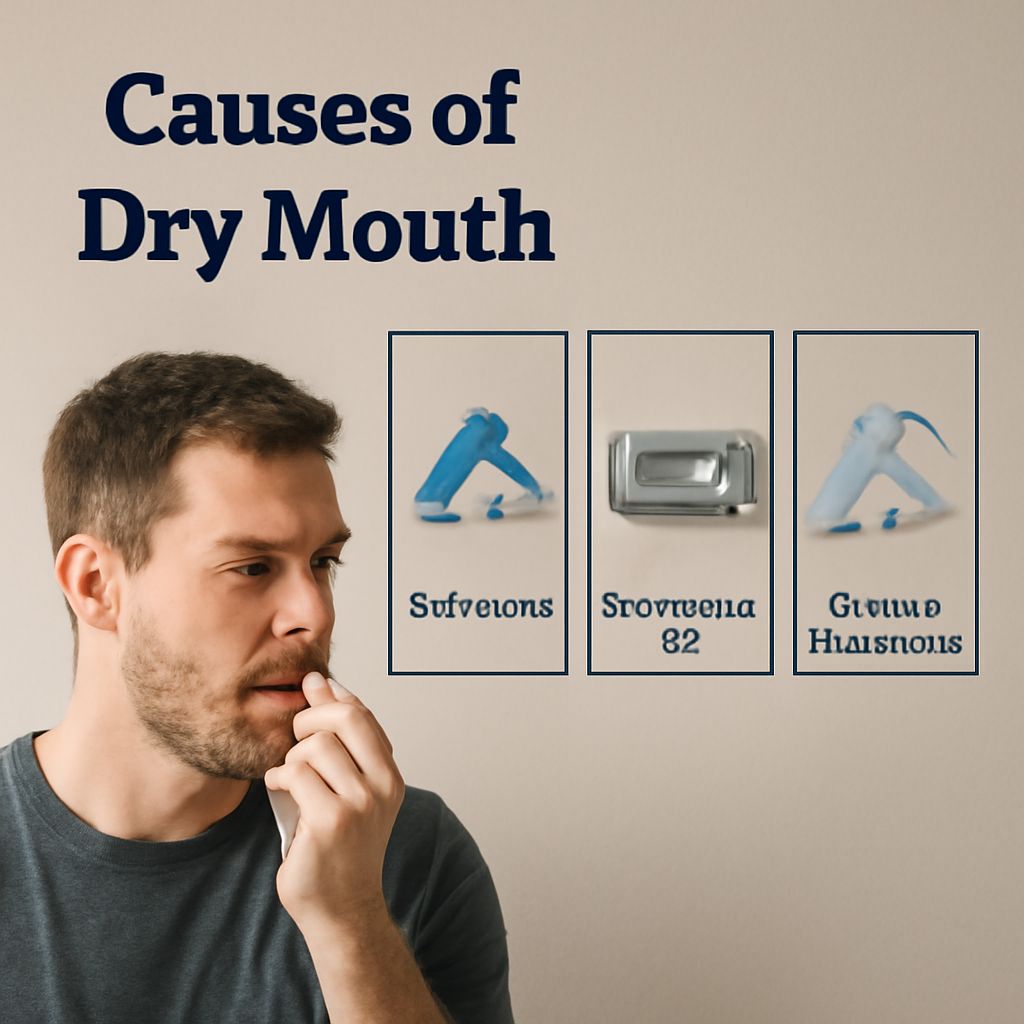
CPAP dry mouth is one of the most frequently cited reasons people reduce therapy hours or stop using their device altogether, yet it has several specific, fixable causes. Dry mouth with CPAP develops when pressurized airflow bypasses the nasal passages and exits through the mouth, carrying moisture from mucosal surfaces with every exhalation cycle. Even when a humidifier is set correctly, CPAP dry mouth even with humidifier complaints remain common because humidification addresses humidity level but does not prevent the open-mouth route of airflow. Understanding whether the cause is mask fit, mouth breathing, or insufficient humidity settings is the first step toward resolving it.
The distinction between dry mouth CPAP users experience due to mask leak and what results from mouth-breathing during sleep determines which solution to apply first. Dry mouth from CPAP caused by a mask seal failure responds to mask refitting or switching mask style; dry mouth from habitual mouth-breathing at night requires a chin strap or full-face mask as the primary intervention. Applying the wrong solution wastes weeks of adjustment time.
Root Causes: Mask Leak, Mouth Breathing, and Humidity
Distinguishing Leak from Mouth Breathing
Device compliance data from most modern CPAP machines records large leak events — typically defined as airflow loss exceeding 24 liters per minute. If the compliance report shows high leak hours coinciding with dry mouth mornings, the mask seal is the primary culprit. Common leak sites are the nose bridge (for cushion-style masks), the inner nostrils (for pillow masks at high pressure), and the forehead bracket junction. Tightening the headgear by one tension notch per adjustment and waiting three nights before further changes prevents over-tightening, which paradoxically worsens seal by distorting the cushion geometry.
Mouth breathing during sleep is identifiable by waking with a dry throat rather than a dry nose. The upper palate and posterior oral cavity lose moisture faster than the nasal passages, so mouth-breathers typically describe a sensation of severe thirst immediately on waking rather than nasal dryness that develops over the first hour of morning. A chin strap keeps the jaw closed for most users, though those who breathe through their mouth due to nasal congestion find chin straps uncomfortable and ineffective — congestion must be treated first in those cases.
Fixing the Problem: Humidifier Settings, Chinstraps, and Mask Changes
Most CPAP humidifiers offer heat settings from 1 to 5, with 5 delivering the most moisture. Default factory settings are often 3, which suits average humidity environments but may be insufficient in air-conditioned rooms or dry climates where ambient relative humidity drops below 40 percent. Raising the humidifier one step at a time — staying at each new setting for two nights before adjusting further — prevents the opposite problem of rainout, where condensation forms in the tubing and drips onto the face.
Heated tubing eliminates rainout entirely by maintaining consistent air temperature from the machine to the mask. This allows the humidifier to run at a higher setting without moisture condensing in the cooler sections of the tube. Heated tube adapters are available for most major machine models and cost between $30 and $80 as aftermarket accessories. For users who have already tried high humidifier settings and still report dryness, heated tubing is the most effective single upgrade.
Full-face masks that cover both nose and mouth solve mouth-breathing completely by eliminating the pressure differential that drives mouth-opening during sleep. The trade-off is a larger contact area on the face, a wider range of potential leak points, and higher headgear adjustment complexity. Many CPAP providers allow a 30-day trial period on mask changes, which is enough time to determine whether a full-face design resolves the dry mouth pattern before committing to the equipment.
Oral moisturizing gels — applied to the tongue, gums, and inner cheeks before sleep — provide a physical moisture layer that slows mucosal dehydration during the first two hours of sleep. Xylitol-based gels are preferred over glycerin-only formulas because xylitol also inhibits bacteria that thrive in dry oral environments. This approach treats the symptom rather than the cause but provides meaningful relief while other adjustments are being trialed.
Pro tips recap: Start by checking your compliance data for leak events, then address mouth-breathing or seal issues before adjusting the humidifier. Use heated tubing if rainout has prevented high humidity settings. A full-face mask resolves mouth-breathing definitively when a chin strap is insufficient.