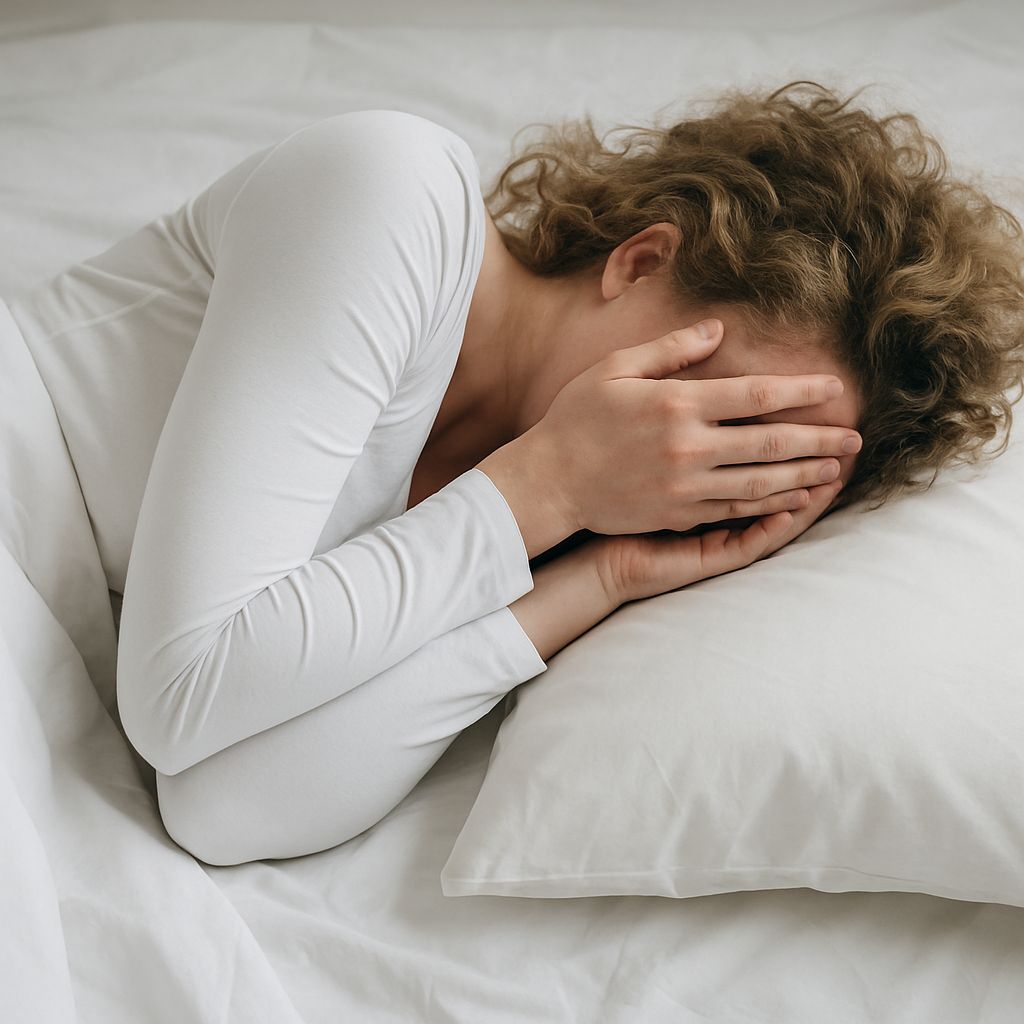
Most people discover they can’t sleep when sick at the worst possible time: late at night, congested, and staring at the ceiling while the body runs a fever. The frustration is compounded because sleep is exactly what the immune system needs to fight infection. Understanding why illness disrupts rest makes it easier to choose targeted remedies rather than grabbing whatever is on the bathroom shelf.
Sick and can’t sleep complaints cluster around four main drivers: nasal congestion blocking the airway, fever raising core temperature above the narrow band the brain needs for sleep initiation, pain or body aches generating arousal signals, and coughing that fragments every sleep cycle. Layered on top of this, some over-the-counter cold medications contain stimulants that make falling asleep harder, not easier. The phrase sleep screen, when used in wellness contexts, refers to the practice of limiting bright-light exposure before bed, but during illness the concern shifts to clearing the airway and managing body temperature. Monitor sleep mode is a device setting unrelated to human rest, and monitor goes to sleep describes screen power-saving behavior, not illness-related fatigue.
Why Illness Blocks Sleep and What to Do About It
Nasal passages inflamed by a cold or flu swell the turbinate tissue, cutting airflow and forcing mouth breathing. Mouth breathing dries the throat, triggers coughing, and reduces oxygen saturation enough to cause multiple micro-arousals per hour. Sleeping with the head elevated 30 to 45 degrees using two stacked pillows or a wedge reduces venous pressure in the sinuses, slowing the swelling cycle. A saline rinse applied 20 minutes before lying down clears mucus physically without the rebound congestion that follows decongestant sprays used for more than three consecutive nights.
Managing Fever for Better Sleep
Core temperature peaks in the late afternoon and early evening during illness. When someone who is sick and cannot sleep tries to lie down, their temperature may still be on its way down from a daytime high. A lukewarm bath or shower 30 to 45 minutes before bed accelerates surface cooling. If a non-prescription antipyretic is appropriate, timing the dose at least 30 minutes before bedtime maximizes its temperature-lowering effect during the critical sleep-onset window. A room temperature between 65 and 68 degrees Fahrenheit supports the natural cooling the body needs for deep sleep, even when fever is present.
Hydration, Environment, and Medication Timing
Dehydration thickens mucus and worsens inflammation. Drinking 8 to 12 ounces of warm water or herbal tea within an hour of bedtime keeps airways moist and reduces the throat irritation that triggers coughing fits. Honey dissolved in warm water coats the posterior pharynx and provides mild cough suppression backed by small clinical trials.
Medication selection matters. Combination cold preparations that include pseudoephedrine or phenylephrine act on alpha-adrenergic receptors in blood vessels, reducing congestion but also raising alertness. Nighttime formulations replace these with antihistamines that cause sedation, a useful tradeoff during illness. Reading ingredient labels before purchasing avoids the common mistake of taking a stimulant decongestant at 10 p.m. and then wondering why sleep will not come.
Humidifiers add moisture to air that heating systems dry out during winter months. A cool-mist ultrasonic model placed 3 to 4 feet from the bed maintains 40 to 60 percent relative humidity, the range that keeps mucosal tissue from cracking. Clean the water tank every 48 hours to prevent bacterial aerosolization.
- Elevate the head 30 to 45 degrees.
- Use saline rinse 20 minutes before bed.
- Check cold medication labels for stimulants.
- Keep room temperature between 65 and 68 degrees Fahrenheit.
- Run a clean cool-mist humidifier at 40 to 60 percent humidity.
Persistent inability to sleep during illness lasting more than five days, or accompanied by a fever above 103 degrees Fahrenheit, warrants a call to a clinician to rule out secondary bacterial infections that require prescription treatment rather than supportive home care.