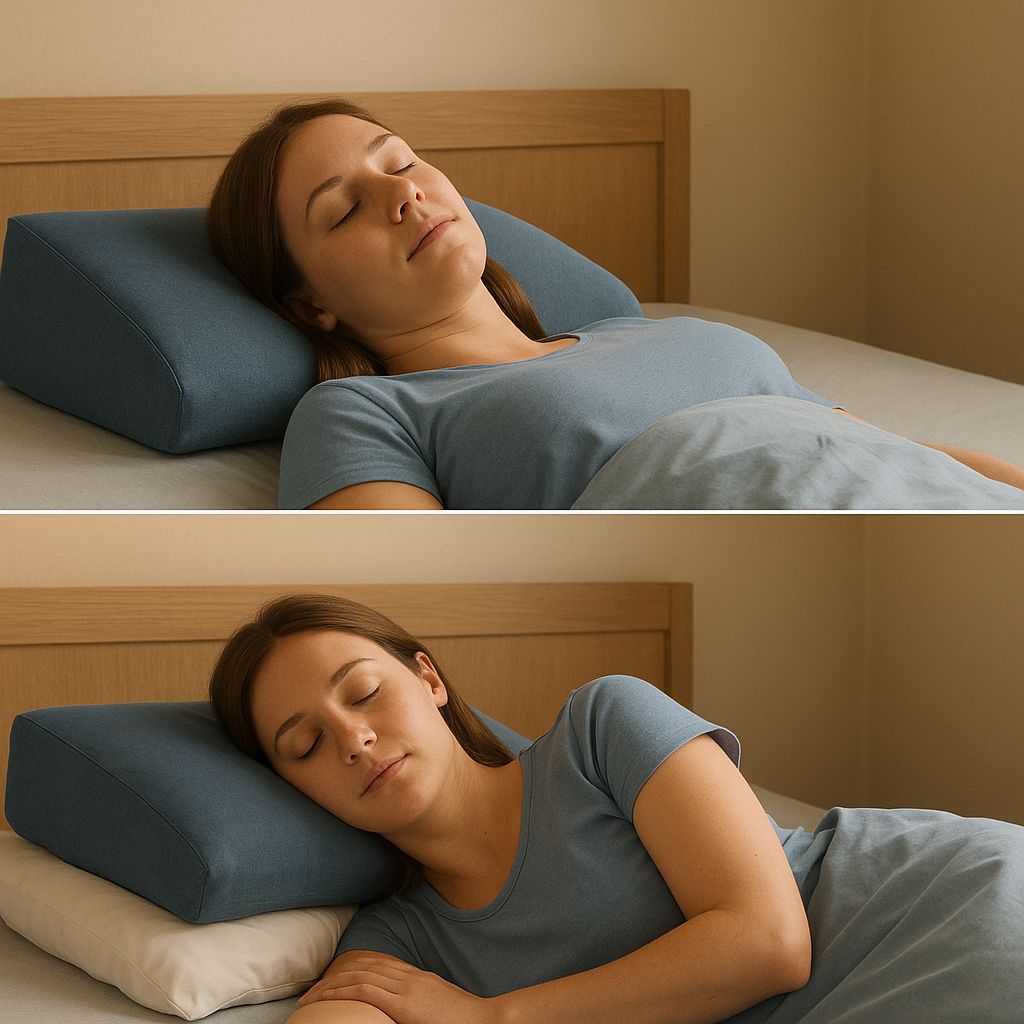
Knowing how to sleep after cervical neck surgery is one of the most immediate practical challenges patients face when they leave the hospital, because the wrong position can stress the surgical site, increase swelling, and interfere with fusion in the early weeks. The neck’s stabilizing hardware, whether anterior plating or posterior instrumentation, is only as effective as the patient’s nighttime posture during the period when bone is actively integrating with the implant.
Shoulder injuries present a related challenge in a different anatomical region. The best way to sleep with rotator cuff injury requires offloading the shoulder joint rather than the cervical spine, but the general principle, supporting the repair site to minimize mechanical stress, is the same. Sleeping after ACDF surgery, one of the most common cervical procedures, requires specific precautions around neck flexion and rotation that differ from general post-operative guidelines. The best way to sleep after back surgery addresses the lumbar spine and shares some overlap with cervical recovery in terms of mattress selection and positional aids. Rotator cuff pain sleeping complaints arise from compression of the repaired tendon against the mattress or from arm positioning that rotates the shoulder joint through the night.
Position Guidelines After Cervical and Shoulder Surgery
After cervical surgery, the safest initial position is semi-reclined at 30 to 45 degrees for the first one to two weeks. A recliner chair or an adjustable bed keeps the head elevated above the heart, which reduces swelling at the surgical site and decreases the venous pressure that feeds post-operative pain. If a flat bed is the only option, two to three firm pillows stacked in a gradual slope replicate the angle adequately, provided the neck collar prescribed by the surgeon is worn during all sleep periods in the first week.
Sleeping after ACDF surgery, anterior cervical discectomy and fusion, requires avoiding full neck flexion and full extension during the four-to-six-week active fusion window. A cervical pillow with a central depression for the back of the skull and raised lateral edges to prevent the head from rolling sideways keeps the neck in neutral alignment without active muscle effort. Most surgeons clear patients to transition from semi-reclined to fully supine between weeks two and four based on imaging and symptom checks.
For the best way to sleep with rotator cuff injury in the weeks after surgical repair, sleeping on the back with the operated arm supported by a small wedge pillow beside the torso is the standard recommendation. The wedge maintains 20 to 30 degrees of shoulder abduction, the position of minimal rotator cuff tension, reducing rotator cuff pain, sleeping discomfort, and the chance of adhesive scar tissue forming across the repair. Side-sleeping on the operated shoulder is contraindicated for the first six to eight weeks.
Mattress, Pillow, and Aid Selection for Post-Surgical Recovery
A medium-firm mattress rated 5 to 7 on the standard firmness scale provides enough surface resistance to prevent the hips from sinking while still cushioning pressure points at the heels and sacrum. Surfaces that are too soft let the pelvis drop below the thoracic spine, creating lumbar flexion stress that also tensions the cervical musculature through the thoracolumbar fascia. This matters as much for the best way to sleep after back surgery as it does for cervical recovery.
Memory foam cervical rolls placed inside the pillowcase add targeted support for the cervical lordosis without requiring the patient to purchase a specialty pillow. A rolled bath towel of 3 to 4 inches diameter achieves the same effect at no cost and can be adjusted by adding or removing a layer of towel material until the height keeps the spine neutral. For shoulder recovery, a commercial abduction pillow with a diagonal strap maintains limb position through position changes during the night without requiring the patient to reposition consciously.
- Sleep semi-reclined at 30 to 45 degrees for the first one to two weeks after cervical surgery.
- Wear the prescribed collar during all sleep periods in the first week.
- Use a cervical contour pillow to maintain neutral neck alignment once cleared to lie flat.
- After rotator cuff repair, sleep supine with a wedge pillow supporting the arm at 20 to 30 degrees of abduction.
- Choose a medium-firm mattress rated 5 to 7; avoid surfaces soft enough to let the pelvis sink below the thoracic spine.