Tendonitis affecting the hand or a finger is a term for irritation involving a tendon, the tissue that connects muscle to bone. Tendons help bend and straighten the fingers, so a problem along their path can make gripping or other movements uncomfortable. A painful finger alone, however, does not establish that a tendon is the cause.
A clinician considers the location, timing, movement, and appearance of symptoms before deciding what they mean. Arthritis, nerve problems, injury, and infection can also affect the hand. Persistent or worsening symptoms deserve an assessment rather than an assumption based on the painful spot.
Finger Movement and the Tendon Path
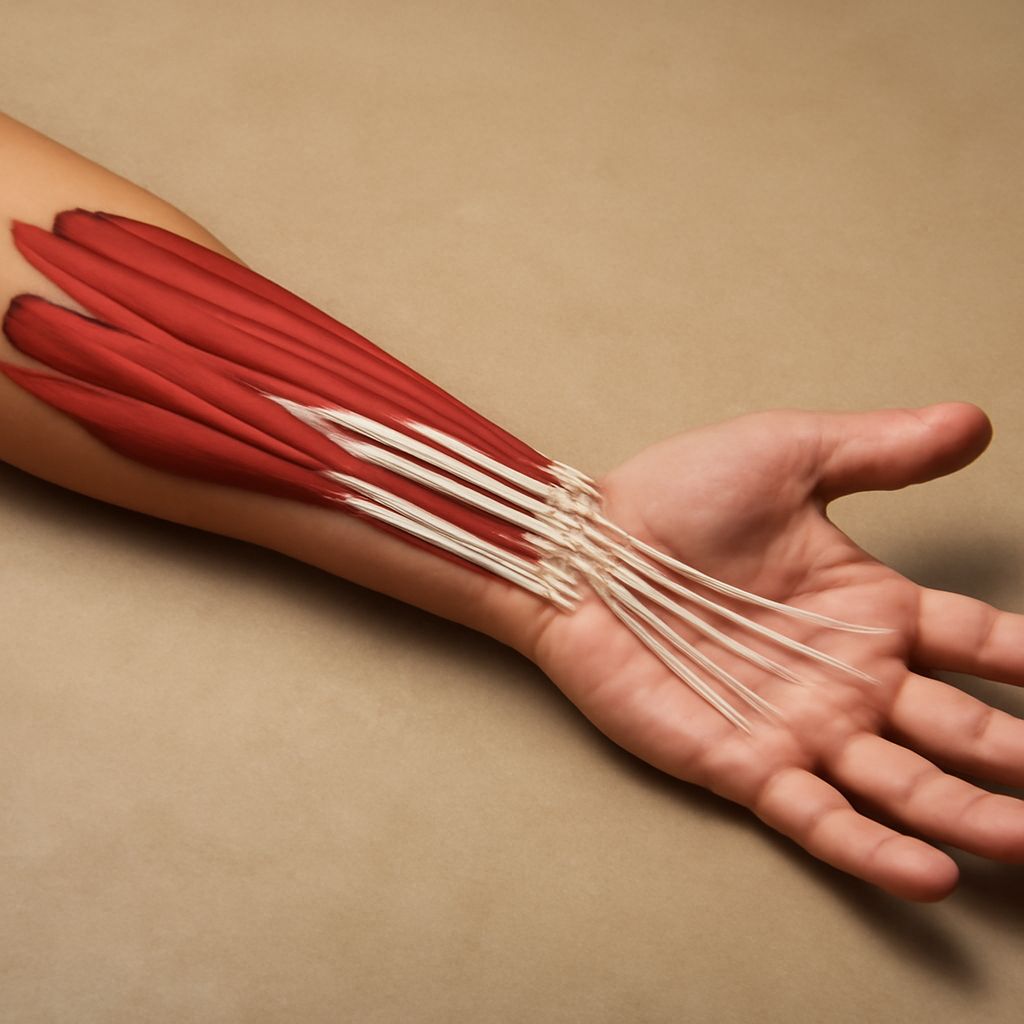
The tendons that move the fingers are long structures that travel from muscles in the forearm through the wrist and into the hand. Some help bend the fingers, while others help straighten them. Protective coverings and small structures that guide tendons allow them to move as the hand opens, closes, and grips.
“Tendonitis” and “tendinitis” are alternative spellings. The term is often used broadly for tendon pain, although not every persistent tendon problem involves the same degree of inflammation. In some conditions the protective sheath around a tendon is involved; clinicians may call inflammation of that sheath tenosynovitis.
When a tendon is irritated, finger movement may be painful along the course of an affected tendon. Tenderness or swelling can also occur, and gripping may feel difficult. These features provide clues, not a diagnosis, because joints and other tissues are closely packed in the hand. Inflammation in a finger tendon can make a particular bending motion uncomfortable, while tendon inflammation affecting a finger may interfere with a familiar grip. A clinician can assess whether inflamed finger tendons are a likely explanation.
How Hand and Wrist Problems Differ
A tendon can pass through several regions, so symptoms near the hand and wrist may be connected. Wrist tendinitis refers to symptoms involving tendons around the wrist; a hand tendon problem may be felt farther along the palm, back of the hand, thumb, or finger. The painful area does not necessarily show exactly where irritation began. Tendon inflammation in either hand can involve different tendons, so hand tendon inflammation is assessed according to the structures and movements involved.
Activities such as holding a tool or opening a jar may aggravate tendon symptoms in the hand. A clinician may ask which motion brings on discomfort and whether it occurs in one finger or several. This distinction helps narrow the assessment without relying on a label alone.
De Quervain’s tenosynovitis affects tendons and their sheath on the thumb side of the wrist and may make thumb movement or gripping painful. Trigger finger involves difficulty with a finger tendon gliding through its sheath; the finger may catch, click, or lock. Neither condition should be diagnosed solely from a description of pain.
What Else Can Cause Similar Symptoms?
Arthritis affects joints and can cause stiffness, swelling, and difficulty moving a hand. Osteoarthritis and inflammatory arthritis have different underlying processes, and symptoms may overlap with those of tendon conditions. For example, a stiff finger joint in the morning is useful information for a clinician but does not identify a particular disease by itself.
Nerve problems can cause tingling, numbness, or weakness. A strain, fracture, or ligament injury can follow an accident, while a cut may damage a tendon. Infection can cause increasing pain, redness, warmth, swelling, or fever. These possibilities matter because they require different responses.
Tendonitis in the hand may follow repeated gripping or an increase in activity, but a recent task does not prove it caused the symptoms. Tendon problems can also affect hand function in ways that resemble other conditions. A clinician’s examination helps determine which tissues are likely involved and whether more urgent care is needed. Inflamed tendons of the hands can affect tasks differently from joint inflammation. When tendon inflammation affects both hands, a clinician may also consider the overall pattern and other affected areas.
What an Examination May Include
The clinician asks when the discomfort started, which tasks make it worse, and whether there was a fall, cut, or sudden increase in activity. Questions about numbness, morning stiffness, other painful joints, and health conditions help place the symptoms in context. A list of medicines and previous treatments can also be useful.
The examination may include checking the skin, swelling, tenderness, and the movement of each finger and the wrist. The clinician may ask the person to bend or straighten a finger, grip gently, or perform a specific motion while observing where pain occurs. Sensation, circulation, and strength may also be checked.
The diagnosis of tendonitis of the hand is usually based on the history and examination. Imaging may be considered if an injury, fracture, or another condition is suspected, or if the diagnosis remains uncertain. X-rays show bone well but do not directly establish every tendon problem. Ultrasound or MRI can sometimes help answer a more specific question. Evidence of tendon inflammation in a hand must be interpreted alongside the examination. Inflammation in hand tendons does not by itself explain numbness or every restriction in movement.
Care While Symptoms Are Being Assessed
A clinician may suggest temporarily reducing an activity that aggravates symptoms and gradually returning to it as comfort improves. A splint or hand therapy may be appropriate for some conditions, but its type and duration depend on the diagnosis. Keeping a finger completely still for a long period without guidance can lead to stiffness.
A wrapped cold pack may provide short-term comfort; protect the skin and stop if it worsens symptoms. A pharmacist or clinician can advise whether an over-the-counter pain medicine is suitable given other medicines and health conditions. These steps do not replace assessment of symptoms that persist or worsen.
Tendonitis in hands may affect work, hobbies, or sleep, and a useful care plan takes those activities into account. A therapist can help adapt a grip, tool, or schedule when appropriate. The aim is to support a return to comfortable function, not to work through increasing pain.
When to Seek Care
Seek urgent medical attention for a painful, swollen finger with fever or spreading redness, especially after a cut or puncture. A hand that is pale, cold, or numb after injury also needs urgent assessment. After a significant injury, inability to bend or straighten a finger warrants prompt evaluation.
For persistent or worsening pain, swelling, catching, numbness, or difficulty using the hand, arrange an appointment with a clinician. Bring a note of when symptoms began, which movements affect them, and any recent injuries; these details help guide the next step without assuming a tendon diagnosis.