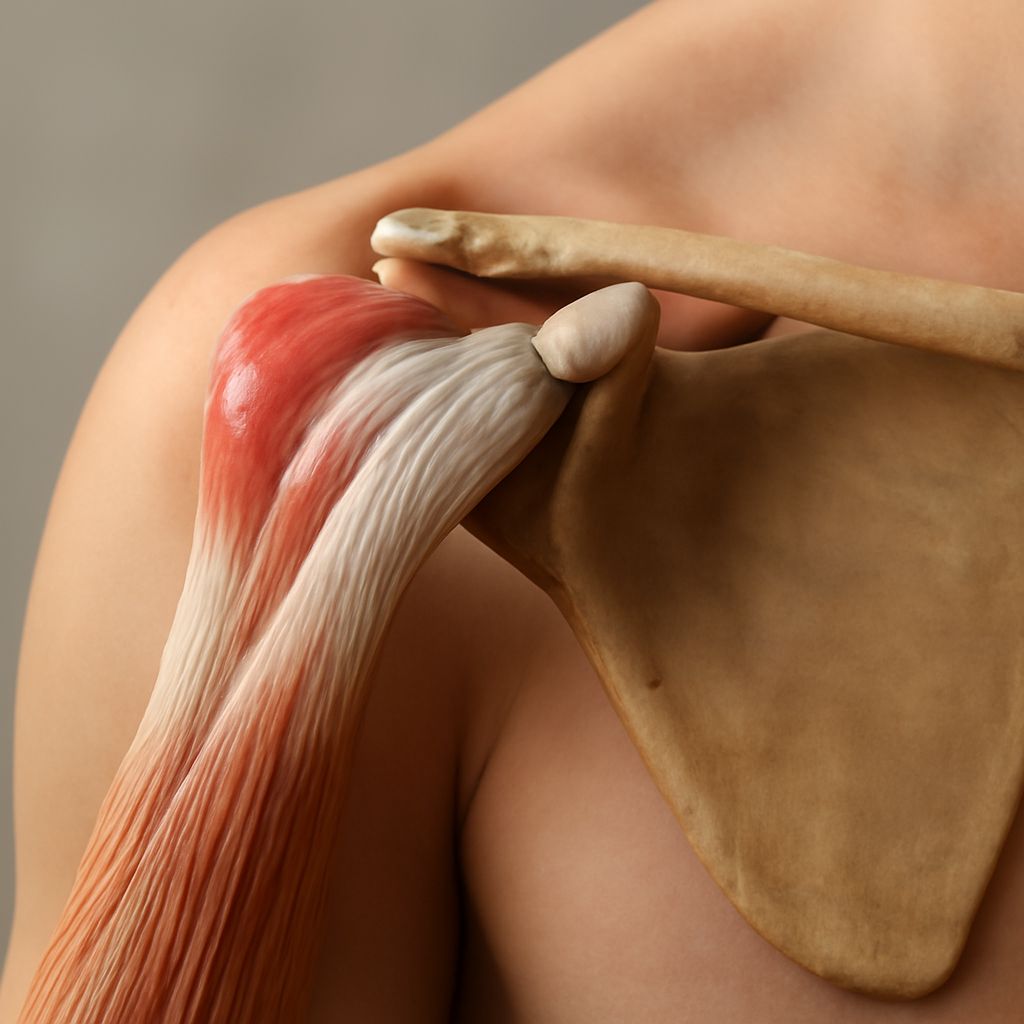
Can pain at the front of the shoulder or upper arm come from a biceps tendon? It can, although the location alone cannot establish the cause. Irritation of a biceps tendon near the shoulder may produce tenderness or pain with certain movements, and similar sensations can arise from other structures nearby.
Symptoms involving the biceps tendon may change with lifting, reaching, or repeated use of the arm. Understanding the terms for this tendon problem makes it easier to describe what is happening and ask a clinician which tissue might be involved.
What does the name mean?
Bicipital tendinitis refers to irritation or inflammation involving a tendon of the biceps. A tendon is a band of tissue connecting muscle to bone. The biceps muscle lies at the front of the upper arm and helps bend the elbow and turn the forearm so the palm faces upward. It also contributes to shoulder movement.
At the shoulder end, the biceps has two tendon attachments, commonly called the long and short heads. The long-head tendon travels through the shoulder region and is often the focus when clinicians discuss biceps tendon irritation at the shoulder. At the other end, a distal tendon attaches near the elbow. These locations matter because a problem near the shoulder and one near the elbow may cause different symptoms and require different assessments.
Bicep tendinitis and biceps tendonitis are closely related ways of describing the condition; “tendinitis” and “tendonitis” are spelling variants. A clinician may also use “tendinopathy,” a broader term for a tendon problem that does not assume inflammation is the whole explanation. The name is most useful when it is paired with the location and findings of an examination.
Bicep tendonitis symptoms: What can be felt?
Bicep tendonitis symptoms often include pain or tenderness at the front of the shoulder, sometimes extending down the upper arm. Discomfort may become more noticeable with lifting or repeated overhead movement. The Cleveland Clinic describes pain and tenderness in the front of the shoulder among the possible features of irritation of the upper biceps tendon.
A person might notice an ache while reaching for a shelf, carrying a bag, or using the arm repeatedly. Some movements may be uncomfortable while others remain manageable. These examples provide a way to describe the experience; they do not prove which tendon is involved. Pain intensity can vary, and the activity that brings it on can be as informative as its location.
With tendonitis, upper arm discomfort can be felt beyond the immediate area of the tendon. Noting whether it stays at the front of the shoulder or travels toward the elbow helps a clinician understand the pattern. Tingling, numbness, sudden weakness, or pain coming from the neck should also be mentioned because they may point toward a different or additional issue.
Why location is a clue, not a diagnosis
Several structures share a small space around the shoulder. The rotator cuff tendons, joints, and nearby tissues can all contribute to pain. Discomfort may also be felt in the arm even when its source is elsewhere. A painful spot helps direct an examination, but it cannot by itself identify the affected tissue.
The phrase upper arm tendonitis describes a location and a tendon problem in general terms. It does not say which tendon is affected or whether the problem is near the shoulder or elbow. Likewise, signs of an irritated biceps tendon may overlap with symptoms of other shoulder conditions. A clinician considers how the symptoms began, which movements provoke them, and what the examination shows.
A person who has changed an exercise routine or begun a task involving repeated lifting may have useful context to share. Tendon irritation can develop with repeated loading, but the activity alone does not establish the diagnosis. An injury, an existing shoulder condition, and changes in strength or movement also form part of the picture.
How a clinician makes sense of symptoms
An assessment usually starts with questions about the location and timing of pain, recent activity or injury, and the effect on everyday tasks. The clinician may examine the shoulder and elbow, compare movement and strength, and check for tenderness. When appropriate, imaging may help investigate a suspected injury or another source of pain; the need for a test depends on the findings.
Describing the symptoms of biceps tendon irritation in practical terms can make the visit more useful. For example, it helps to say whether pain appears when reaching overhead, whether it interrupts sleep, and whether the arm feels weak or simply uncomfortable to use. A record of when symptoms began and whether they are improving gives the clinician a clearer timeline.
Care depends on the cause identified. A professional can explain whether modifying an aggravating activity, rehabilitation, or another approach fits the situation. The goal of the assessment is to understand the problem and its effect on function, rather than apply a standard treatment to every ache in the upper arm.
When to seek help
Persistent or worsening shoulder or arm pain, particularly when it interferes with ordinary activities or sleep, deserves a medical evaluation. After an injury, sudden severe pain, a pop or snap, bruising, new weakness, or a visible change in the shape of the upper arm warrants prompt assessment. These can occur with a tendon tear, which needs a clinician’s evaluation; a tear near the elbow can be especially important to assess promptly.
Seek urgent care for a visibly deformed shoulder, inability to move the arm, significant numbness, or severe pain after an accident. If arm or shoulder pain occurs with chest pressure, shortness of breath, or pain spreading to the jaw, call 911 because those symptoms can signal a heart emergency.
Does front-of-shoulder pain always mean a biceps tendon problem?
No. A sore biceps tendon is one possible explanation, but several structures can cause pain in that area. A clinician can combine the history and examination to determine what is most likely and whether further investigation is needed.