Can tilting upside down on a table relieve back pain? An inversion table changes the body’s angle so gravity pulls differently on the spine. Some people report temporary relief, but the benefits of using an inversion table for lasting pain relief remain uncertain, and the position can pose risks for people with certain health conditions.
Understanding what the table does helps separate its mechanical action from claims about treatment. A clinician can consider the cause of the pain and a person’s health before advising whether inversion belongs in a broader plan.
What does an inversion table do?
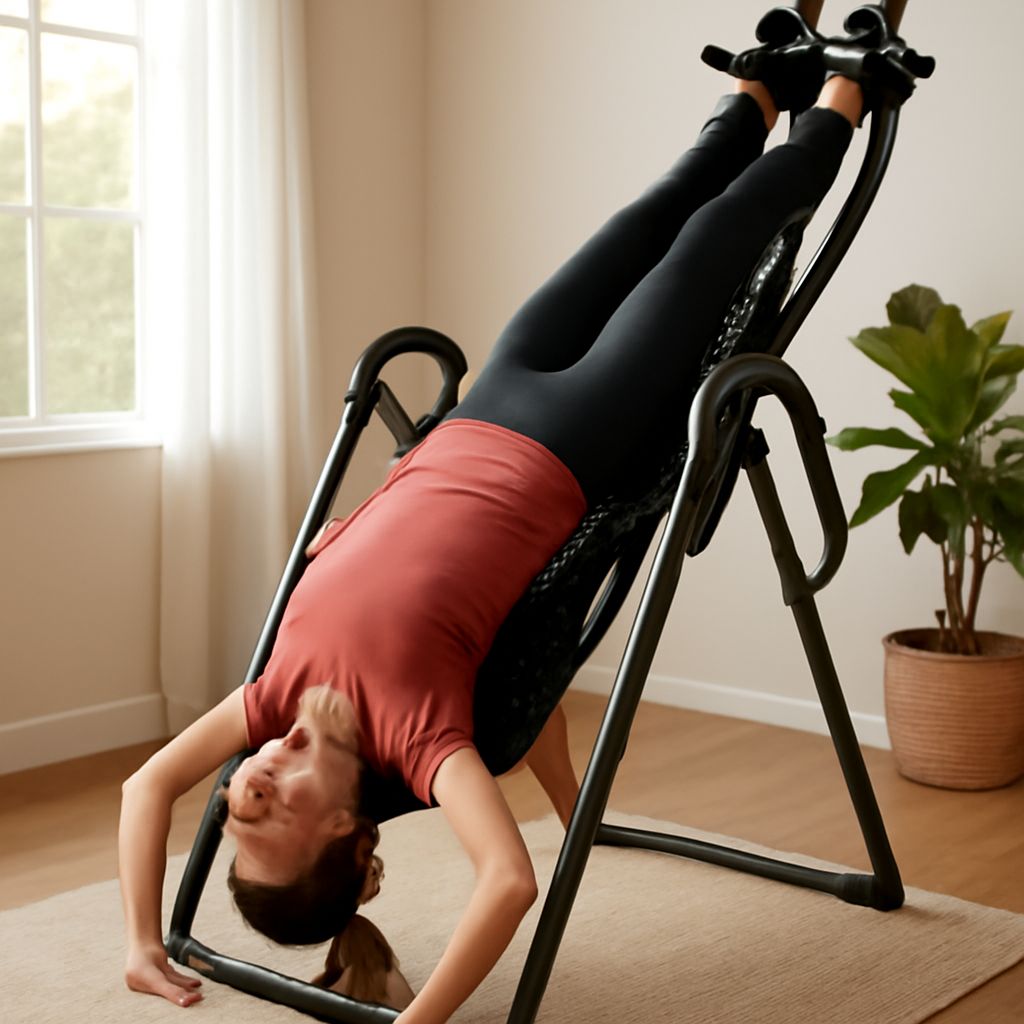
An inversion table supports the body on a platform that pivots backward. The feet or ankles are secured so the user remains supported as the head moves below the feet. The angle can range from a mild tilt to a more inverted position, depending on the device. The person is supported by the table and restraints rather than standing on the floor.
What does an inversion table do to the back? The change in position uses body weight and gravity to create a traction force along the spine. Traction is a pulling effect; it differs from the usual load experienced while standing. The sensation may feel like a stretch, though a comfortable sensation does not show that a particular disc or nerve problem has been corrected.
The effect of an inversion table ends when the person returns upright. This is an important distinction when considering claims that brief sessions can permanently change the spine. The action is temporary, and a change in position alone does not establish how long any change in symptoms will last.
What is known about pain relief?
Inversion table benefits are often described in terms of reducing pressure and easing back discomfort. Some users report feeling better for a short period, but experiences vary. Studies are mixed, and much of the research is small; it is difficult to determine who will benefit, how much relief will occur, or whether the effect will last. The Cleveland Clinic notes that high-quality evidence for many of the claims remains limited.
The benefits of an inversion table should therefore be considered separately from its physical action. A table can create traction while tilted, but that does not prove that it heals a disc, prevents surgery, or provides lasting relief. Reports from individual users can describe their experience; they cannot predict the outcome for someone whose symptoms have a different cause.
Someone considering an inversion table for lower back pain may find it helpful to discuss the pattern of pain first. Pain that stays in the lower back, pain that travels down a leg, and pain after an injury may call for different assessments. A clinician can consider whether a trial is reasonable and how to judge its effect alongside other care.
Why the cause of pain matters
Back pain can arise in different circumstances and can involve muscles, joints, discs, nerves, or other structures. A device changes position, but it cannot identify which of those factors is contributing to a particular person’s symptoms. For persistent or worsening pain, an assessment can look at the history, movement, and any associated changes in strength or sensation.
Claims about inversion for back pain can also overlook the difference between feeling better during a session and improving daily function. A useful discussion might focus on whether the person can walk, sit, work, or sleep more comfortably over time, as well as whether pain returns after the position changes. If a clinician includes the device in a plan, these observations can help guide follow-up.
Inversion table benefits have not been established as a replacement for an individual treatment plan. Depending on the assessment, care may include appropriately selected movement, physical therapy, or other approaches. A table is one possible adjunct to discuss, not an explanation for why the back hurts.
Who needs a safety assessment?
Inversion can raise pressure in the eyes and affect blood pressure and heart rate. It may also cause dizziness or make it difficult to return upright. People with glaucoma or other eye disease, high or low blood pressure, heart disease, or a history of stroke should discuss the risks with a healthcare professional before use. Pregnancy, reflux, or a history of brain injury also merits a conversation about suitability.
A healthcare professional can weigh those conditions alongside medication, mobility, balance, and the reason for considering the device. Someone who has difficulty getting on or off the table or securing the restraints may face a fall or become unable to return upright without help. The possible advantage of using a tilted table must be weighed against those practical risks as well as the uncertain evidence for pain relief.
If a clinician agrees that a trial is appropriate, the device’s instructions and the clinician’s advice should guide its use. Having another person present may help if assistance is needed. New dizziness, worsening pain, or difficulty returning upright are reasons to stop and seek advice. Greater inversion is not established as a guarantee of a better result.
When should back pain be evaluated promptly?
Urgent evaluation is important for new or worsening leg weakness, numbness around the groin or saddle area, or new difficulty controlling the bladder or bowels. Severe pain after a fall or other significant injury also needs prompt assessment. Fever or unexplained weight loss accompanying back pain should be discussed with a clinician promptly, since these details may change the assessment.
For ongoing lower-back discomfort, a person considering an inversion device can bring a description of the pain to an appointment: when it began, where it is felt, whether it travels down a leg, and how it affects daily activities. This information helps the clinician consider the possible source and choose a suitable next step.
Can an inversion table replace other treatment?
It should not be assumed to. The potential benefits of a table used for inversion are uncertain and may be temporary, while individual risks can be significant. A clinician can help decide whether it has a role alongside care tailored to the cause and impact of the pain.