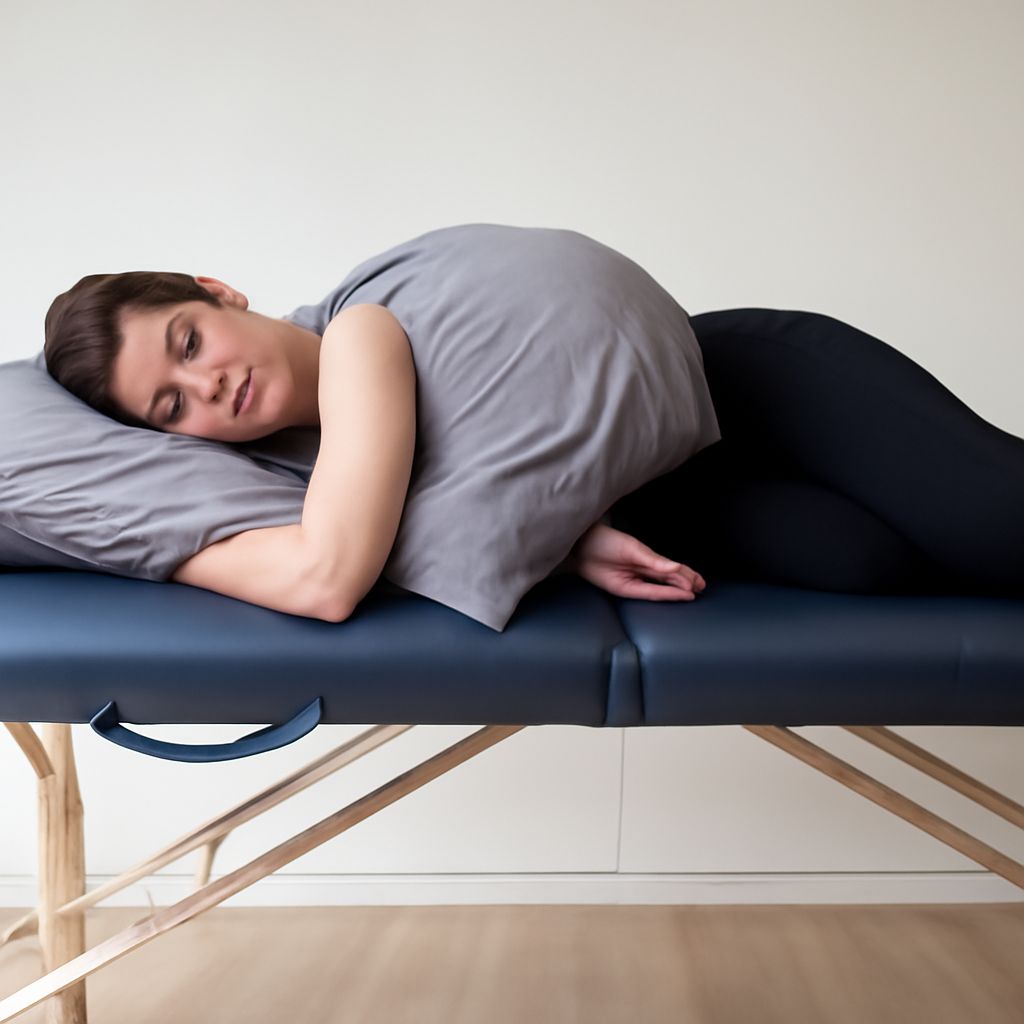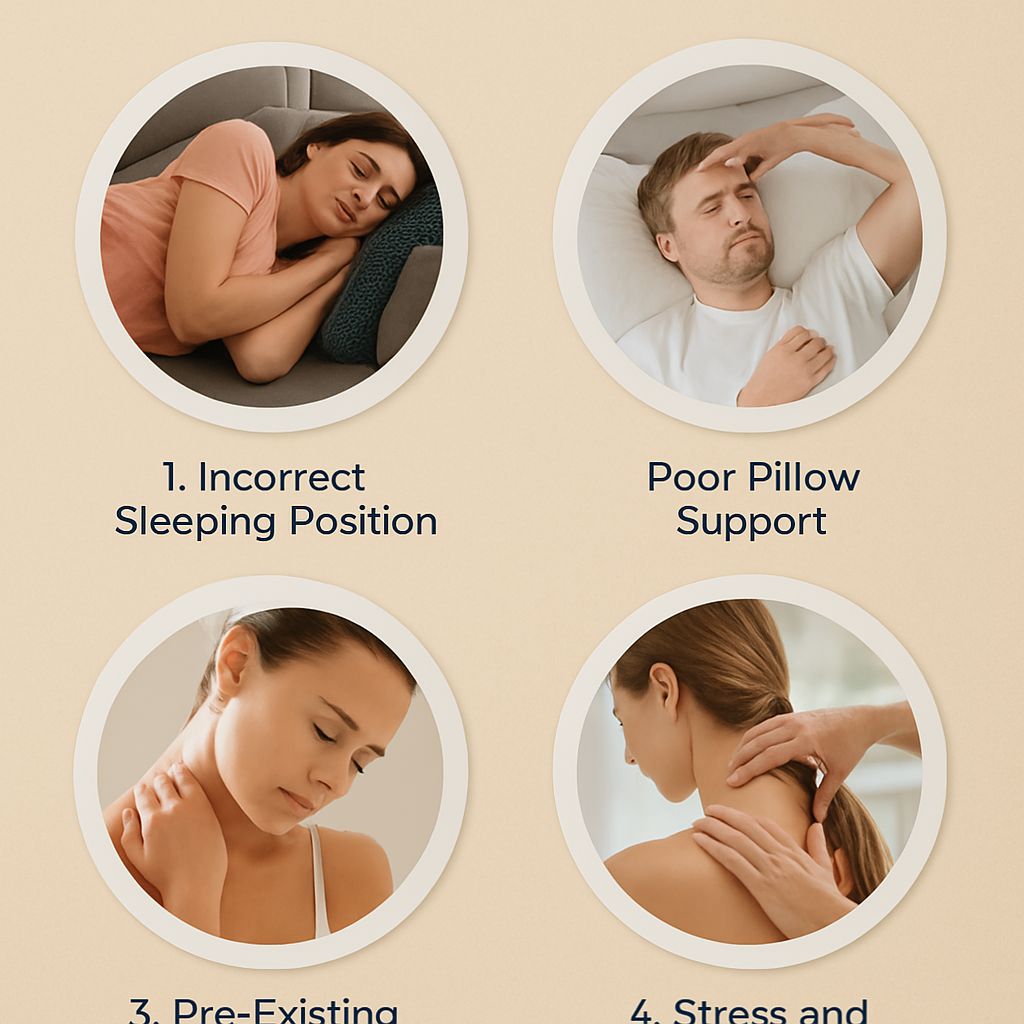
Neck pain after sleeping is among the most common musculoskeletal complaints reported in primary care — and it is almost always mechanical, meaning it comes from position and pillow problems rather than structural damage. Neck pain from sleeping wrong typically involves the upper trapezius, levator scapulae, or sternocleidomastoid muscles being held in a shortened or stretched position for hours without the active adjustments that occur during waking hours. The diagnostic question when a neck hurts from sleeping is whether the pain is unilateral (one side), bilateral (both sides), or centrally located at the cervical spine — each pattern points to a different mechanical cause. Sleeping on neck wrong in a rotated position — most common in stomach-sleepers — loads the facet joints and compresses the intervertebral foramina on one side, producing a sharp, limited-rotation pain that is distinct from the diffuse aching that comes from pillow height problems. Pain in neck after sleeping that radiates into the arm, hand, or fingers suggests nerve root involvement and warrants medical evaluation regardless of position.
Most non-radiating neck pain from sleep has a correctable mechanical cause that responds to pillow adjustment, position change, and targeted stretching within three to seven days.
The Mechanics of How Sleep Position Causes Neck Pain
Side-Sleeping Pillow Height and the Cervical Angle
Side-sleeping is the most common sleep position and the position where pillow height has the greatest impact on neck health. The pillow must fill the gap between the ear and the mattress surface — a distance that varies by shoulder width, typically 10 to 14 cm in adults. A pillow that compresses below this height during sleep allows the neck to angle downward toward the mattress, placing the cervical spine in lateral flexion for the full sleep period. The lower side of the neck — the side toward the mattress — accumulates muscle fatigue from sustained shortening; the upper side from sustained lengthening. Both produce morning stiffness and pain that is position-reproducible.
Memory foam and latex pillows that maintain loft under compression correct this more reliably than polyester-fill pillows, which compress by 40 to 60 percent under the weight of the head. A lateral cervical contour pillow — shaped with a higher edge at the neck and lower center — provides additional support at the base of the skull that standard pillows miss.
Prone Sleeping, Rotation, and Recovery Protocols
Stomach-sleeping forces the neck into 45 to 90 degrees of sustained rotation for the entire sleep period, making it the single strongest positional predictor of recurrent neck pain in all age groups. Transitioning away from prone sleeping takes consistent effort over three to six weeks; placing a firm body pillow along one side reduces the tendency to roll prone during lighter sleep stages. A pillow under the pelvis rather than under the head during the transition period reduces lumbar extension discomfort that sometimes accompanies prone-to-side-sleeping transitions.
Back-sleeping produces the lowest cervical risk when pillow height is appropriate — the head should rest in neutral without the chin dropping toward the chest or tilting toward the ceiling. A pillow with a cervical contour roll at the base keeps the natural lordotic curve supported. High-loft pillows in the back-sleeping position push the head into a chin-to-chest position that stretches the posterior neck muscles under load throughout the night.
When neck pain is already present on waking, a warm compress applied for 10 to 15 minutes before rising reduces morning muscle guarding better than waiting to stand and then stretching. Follow with gentle active rotation: turn the head 30 to 45 degrees left, hold for five seconds, return to center, repeat right, and perform five cycles before standing. Avoid end-range forced rotation during the acute phase, which can aggravate facet joint irritation.
Cervical nerve root pain — identified by radiation into the arm, hand, or fingers, accompanied by tingling or numbness — does not respond to positional adjustment alone. This pattern requires imaging and clinical assessment, typically including a neurological examination to determine the affected level. Self-managing cervical radiculopathy with pillow changes alone risks delayed treatment of a condition that responds better to early intervention.
Bottom line: Neck pain from sleeping wrong is correctable in most cases by matching pillow height to sleep position and eliminating stomach-sleeping over four to six weeks. Pain that radiates into the arm or does not improve within seven days of positional correction warrants medical evaluation to rule out nerve root or disc involvement.