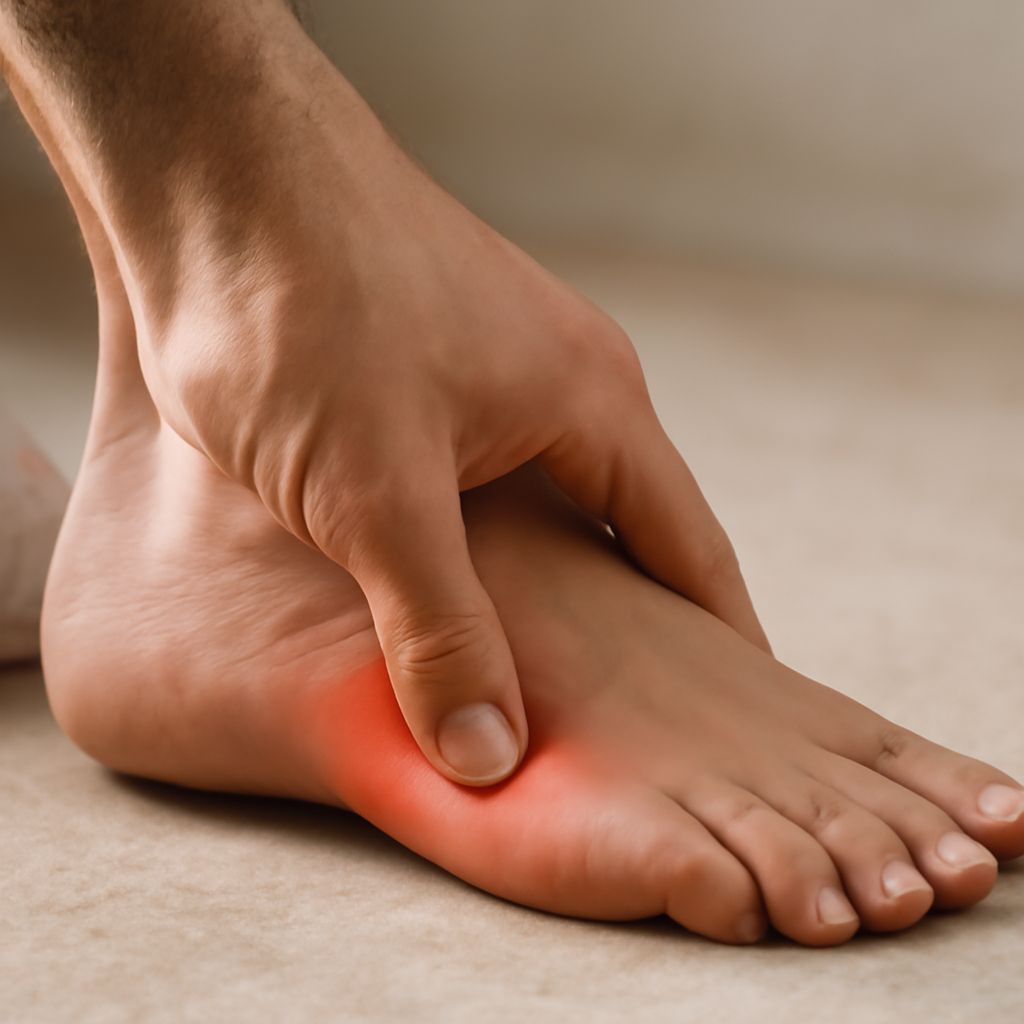
What can make the outer edge of a foot hurt? A sudden twist may injure a bone or ligament, while pain that builds after more walking or running can involve an irritated tendon or a bone under repeated stress. Soreness on the foot’s outer side can also come from pressure against a shoe. The location and the way symptoms began help guide the next step, but they cannot identify the cause on their own.
Pain in the outside of the foot: When to seek help
Some patterns need attention before home care. Go to an emergency department if the foot is visibly misshapen, or if it becomes cold, blue or gray, or numb after an injury. Seek urgent assessment if a person cannot bear weight or walk more than a few steps, has severe or worsening pain, or has substantial swelling after a twist or blow. A fracture or another significant injury may need imaging and protection.
A hot, red, swollen foot with fever also needs urgent medical assessment because infection is one possible cause. A person with diabetes who has a new hot, swollen foot or an open wound should seek urgent advice, even if pain is not severe. These warning signs are consistent with NHS guidance on foot and ankle symptoms. New tingling or loss of sensation also warrants prompt assessment.
For milder symptoms, notice whether ordinary walking is possible and whether the discomfort is improving after reducing the activity that brought it on. A clinician should assess pain that worsens, repeatedly returns, interferes with daily activities or sleep, or has not improved after about two weeks of self-care. Localized bone tenderness after increased activity deserves earlier assessment rather than waiting for that interval.
A bone along the little-toe side
The fifth metatarsal is the long bone on the outside of the foot that connects toward the little toe. A hard blow or a twist can break it. A fracture may cause focal tenderness, swelling, and pain with standing; bruising can appear as well. Being able to take some steps does not by itself rule out a fracture.
Foot pain on the outside of the foot that starts abruptly after a twist is worth assessing in context: a sprain can hurt in the same region. MedlinePlus describes fifth-metatarsal fractures, including a Jones fracture near the base, where healing can be difficult. The position of a break matters because different injuries require different protection and follow-up.
Pain on the outside of a foot can also develop gradually after a rise in running, walking, or jumping. Repeated loading can cause a bone stress injury. At first, discomfort may occur mainly during activity and settle with rest; later it can appear during ordinary walking or at night. The American Academy of Orthopaedic Surgeons advises assessment when a bone stress injury is suspected. Stop the painful activity rather than testing it with another run.
Tendons behind the outer ankle
Peroneal tendons connect muscles on the outside of the lower leg to the foot. They pass behind the outer ankle bone and help control foot movement. Pain in the outside of the foot can accompany irritation around that ankle bone, sometimes with swelling. It can follow a change in activity or an ankle injury.
The pattern may be more noticeable with walking or when the foot is turned, and may ease with rest. East Lancashire Hospitals describes this pattern and the tendon’s role. Outer-foot pain after exercise is a reason to consider a tendon problem, but a tender bone, ligament injury, or other condition can produce overlapping symptoms.
If symptoms began after an injury and walking is difficult, an examination is more useful than choosing exercises based on location alone. A clinician can test movement and strength and examine the nearby bone. A sudden snapping sensation, marked swelling, or inability to bear weight calls for urgent assessment.
Pressure under the outer edge
Pain on the bottom outside of the foot may be felt where the foot presses against the ground or a shoe. Pain beneath the foot’s outer edge may be more noticeable with a tight seam, worn insole, or hard area of skin. A blister or callus may be visible at the pressure point. Pain that improves when the pressure is removed is a useful observation, though it does not exclude a deeper problem.
A roomier shoe and a clean, dry sock can reduce rubbing. An open blister or wound should be protected and watched for spreading redness, warmth, or drainage. People with diabetes or reduced sensation should seek professional advice about a sore or wound rather than cutting away hard skin themselves.
Reduce load while symptoms settle
For mild pain along the outer side of the foot without urgent signs, reduce the activity that provokes it: pause running, jumping, or long walks, and avoid a shoe that presses on the sore area. Rest and elevation can help with swelling. A cold pack wrapped in a towel may ease pain or swelling for short periods; avoid placing ice directly on skin.
If a fracture is suspected, protect the foot and arrange assessment rather than pushing through the pain. Pain with ordinary walking can require a clinician’s advice about support and reducing weight on the foot. As symptoms improve and a serious injury has been ruled out, activity can return gradually, guided by what the foot tolerates.
What an examination can show
A clinician may ask when outer-edge foot pain began, about a twist or blow, recent changes in exercise, footwear, and whether pain occurs at rest. The examination can locate tenderness over bone or along a tendon, assess swelling and skin, and test movement, strength, and ability to bear weight.
An X-ray can show many fractures, but an early stress injury may not appear on it. If the examination still suggests a stress fracture, the clinician may recommend further evaluation or MRI, which can show bone changes earlier. Imaging is selected for the question being investigated; not every tendon or pressure problem requires a scan.
If the pain returns when activity resumes
The likely setback is returning to the previous distance or intensity before symptoms have settled. If pain along the outer foot returns during a walk or run, stop the aggravating activity and reduce the load again. If it is worsening, becomes focal over bone, or continues despite that change, arrange an assessment rather than repeatedly testing it.