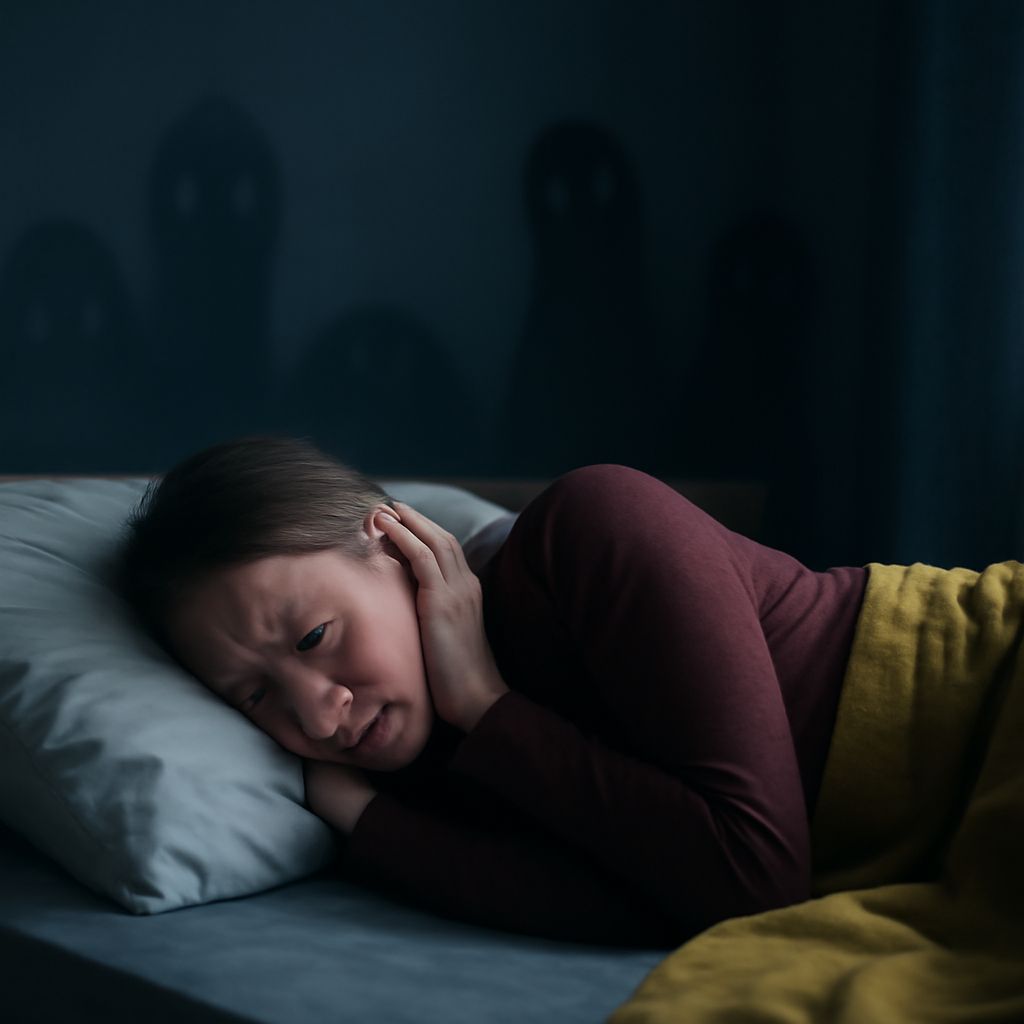
A child may suddenly sit up, cry out, and look frightened, yet seem unable to recognize a familiar person. Episodes of sleep terror can be unsettling to witness. They involve an incomplete awakening from deep sleep, so the person may look alert while remaining partly asleep.
Night Terror: An Incomplete Awakening
Sleep moves through several stages during the night. Deep non-REM sleep is a stage especially common in the earlier part of a night’s rest. A night terrors definition centers on a disruption during this deep sleep: the person partly arouses, with signs of alarm and movement, without becoming fully awake.
Medical sources define a night terror as a type of parasomnia, a term for an unusual experience or behavior during sleep. The eyes may be open, but the person may not respond normally to questions or recognize someone nearby. The episode usually passes and the person settles back into sleep.
The distinction between sleep and waking helps explain the appearance of sleep terrors. A racing heart, rapid breathing, sweating, shouting, or thrashing can accompany an episode. Some people sit up or get out of bed. The movements and the expression of fear can be striking even when there is little awareness of the room.
Sleep terror episodes generally happen in the first part of the night, when deep sleep is more plentiful. According to Mayo Clinic, an episode may last seconds to a few minutes, though it can last longer. Timing and duration vary, so the clock alone cannot identify what happened.
How an Episode Differs From a Nightmare
A nightmare is a disturbing dream from which the person wakes. Afterward, a child or adult can often describe at least some of the dream and may accept reassurance. Nightmares tend to occur later in the night, although the exact timing varies.
With a sleep terror, a person remains partly asleep and is often difficult to wake or comfort. Children usually remember little or nothing the next morning. Adults may recall a fragment of a dream or a feeling associated with the event. A lack of recall does not make the experience less alarming for the person who witnessed it.
These differences are useful when explaining what sleep terrors are: incomplete awakening and limited recall contrast with waking from a remembered bad dream. They are patterns, not a diagnosis based on one detail. A clinician can consider the full account when the event is unusual, frequent, or concerning.
Who Experiences Them?
Night terrors are more common in children than adults, and many children outgrow them. The NHS describes them as particularly common between ages 3 and 8. They can also occur in adults, including people who had similar episodes or sleepwalking earlier in life.
Several circumstances may make an episode more likely. Lack of sleep, fever, stress, changes in sleep schedule, and interruptions to sleep can contribute. Sleep apnea, a condition in which breathing repeatedly stops or becomes restricted during sleep, is among the conditions a clinician may consider. Some medicines and other health conditions can also be relevant.
The presence of a possible trigger does not establish a cause for a particular person. A useful account of sleep terrors includes when episodes happen, how often they occur, and whether sleep has recently changed. That information gives a clinician more to work with than a single assumed explanation.
What a Nearby Person Can Do
The immediate priority is safety. Someone observing a sleep terror can stay nearby and calm, watch the surroundings, and allow the episode to pass. The NHS advises against trying to wake the person. An attempted awakening can increase confusion or distress, and the person may not recognize the helper.
Avoid holding the person down or trying to stop movements unless needed to prevent injury. If the person is moving toward stairs, a window, or a sharp object, protect them from that immediate hazard as gently as possible. Once a night terror ends, allow them to settle. If they wake fully and are upset, calm reassurance is appropriate.
Between episodes, the room can be made safer. Clear obstacles from the floor, keep dangerous objects out of reach, and consider the risk posed by stairs and windows if the person gets out of bed. A family can discuss practical precautions with a clinician when movement is vigorous or the surroundings make injury likely.
Defining a sleep terror also means recognizing its limits as a label: an observer can describe what happened, but an account alone may not establish the cause. New or unfamiliar nighttime behavior deserves attention, especially when there is a risk of harm.
When to Discuss It With a Clinician
Occasional sleep terror episodes in a child can be mentioned at a routine visit. An earlier discussion is appropriate if episodes become frequent, regularly disrupt sleep, cause injury or near-injury, or leave the person very sleepy during the day. A clinician should also hear about episodes that begin in adulthood or continue beyond the teenage years. These situations make a fuller assessment worthwhile.
A clear description of a sleep terror can include the time after bedtime, what movements or sounds occurred, how long the episode appeared to last, and whether the person was responsive. It can also include snoring, pauses in breathing, fever, changes in medication, or recent sleep loss. Reports from a bed partner or parent may be especially useful because the sleeper may remember little.
A health professional may ask about other sleep or medical conditions and, when appropriate, arrange further assessment. Different nighttime events can look similar from the outside, so the account of the whole episode matters.
The meaning of sleep terrors becomes clearer when observations are recorded over time. After reading, start a brief sleep diary: note bedtime, the approximate time and duration of any episode, what happened, and any safety concerns to share at the next medical appointment.