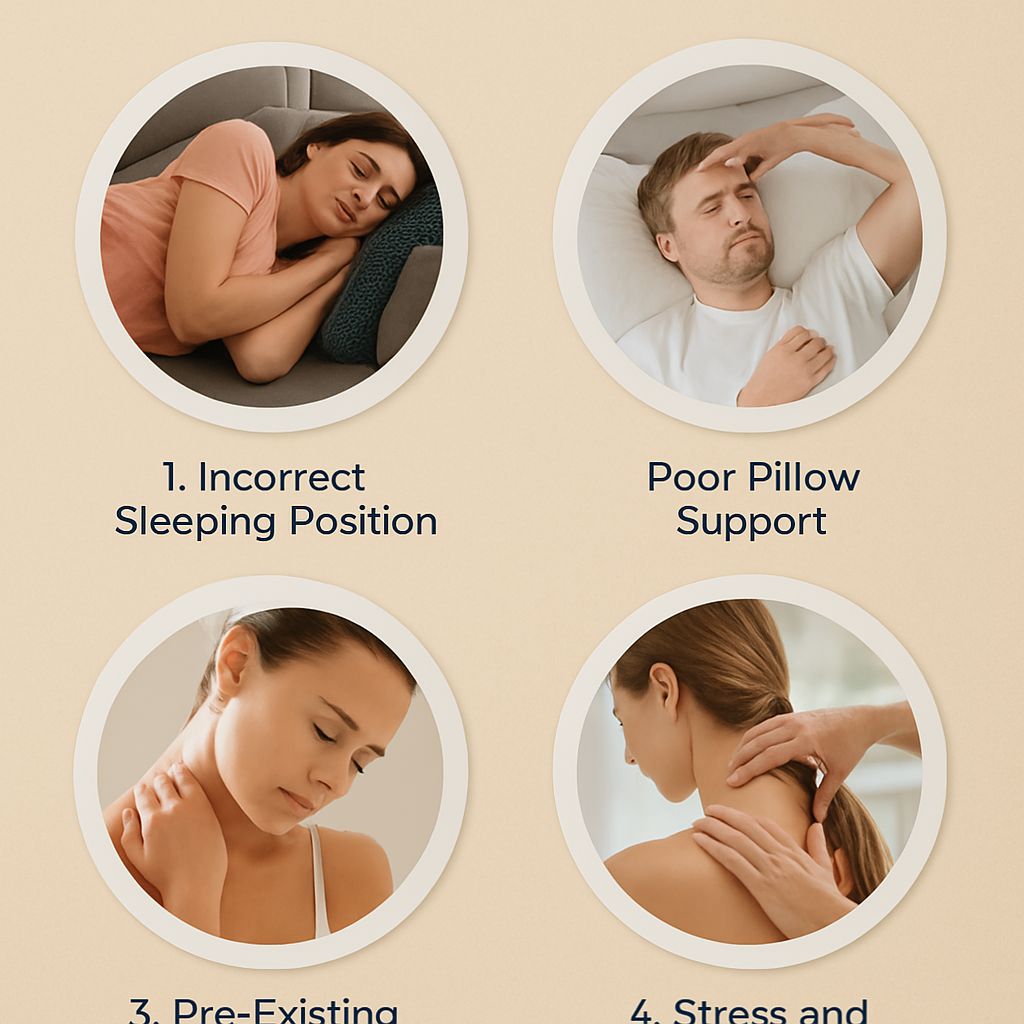
Shoulder pain after sleeping has a well-documented set of causes, most of which come down to sustained pressure on the rotator cuff, bursa, or biceps tendon during side sleeping. The shoulder joint has the widest range of motion of any joint in the body, which also makes it the most vulnerable to positional loading. Pain that appears on waking and improves within 20–30 minutes of movement is almost always positional rather than structural.
Neck and shoulder pain from sleeping typically indicates that the shoulder is being compressed while the neck is unsupported or rotated beyond its neutral range. Neck and shoulder pain after sleeping that persists beyond one hour of waking warrants attention, as chronic positional loading can progress to bursitis or rotator cuff tendinopathy over weeks. Severe shoulder pain after sleeping that prevents raising the arm above shoulder height suggests possible impingement or tear, which requires clinical assessment. Shoulder pain from sleeping wrong, meaning an unplanned position shift during the night, tends to be unilateral and resolves faster than chronic positional patterns.
Why Sleep Position Causes Shoulder Pain
Side sleeping with the bottom arm extended under the pillow creates 4–6 hours of continuous glenohumeral compression. The joint capsule and surrounding bursa lack the circulation needed to sustain that load without developing microinflammation. Shoulder pain after, or during, prolonged side sleeping usually concentrates on the outer shoulder or the front of the joint where the biceps tendon attaches.
Pillow height is the most commonly overlooked factor. A pillow that is too thin allows the shoulder to roll inward, loading the supraspinatus tendon. A pillow rated too thick elevates the head while leaving a gap at the shoulder, forcing lateral cervical flexion that creates neck and shoulder pain from, or linked to, sustained awkward angles. The correct pillow fills the gap between the ear and the mattress without adding additional lateral neck bend.
Pillow and Mattress Adjustments That Help
A body pillow placed in front of the torso allows the top arm to rest at mid-body height rather than crossing to the mattress. This single adjustment reduces internal rotation at the shoulder by 15–20 degrees and is the most commonly cited fix for shoulder pain from sleeping wrong or repositioning during the night. Memory foam pillows rated 4–5 inches for average shoulder width maintain shape through the night without the compression that polyfoam allows.
Morning Exercises That Address Overnight Stiffness
Two to three minutes of pendulum exercises immediately on waking, letting the arm hang and circle passively, reduce synovial stiffness and increase circulation to the joint within 5 minutes. Cross-body shoulder stretches held for 30 seconds, repeated three times, address posterior capsule tightness that contributes to severe shoulder pain after sleeping with the arm overhead. Doorframe pec stretches held for 30 seconds per side counteract the internal rotation pattern that builds during side sleeping.
Next steps: Assess current pillow height against shoulder width. Add a body pillow for front-of-torso arm support during side sleeping. Complete pendulum exercises and doorframe stretches every morning for two weeks and measure whether pain onset frequency decreases before considering any diagnostic imaging.