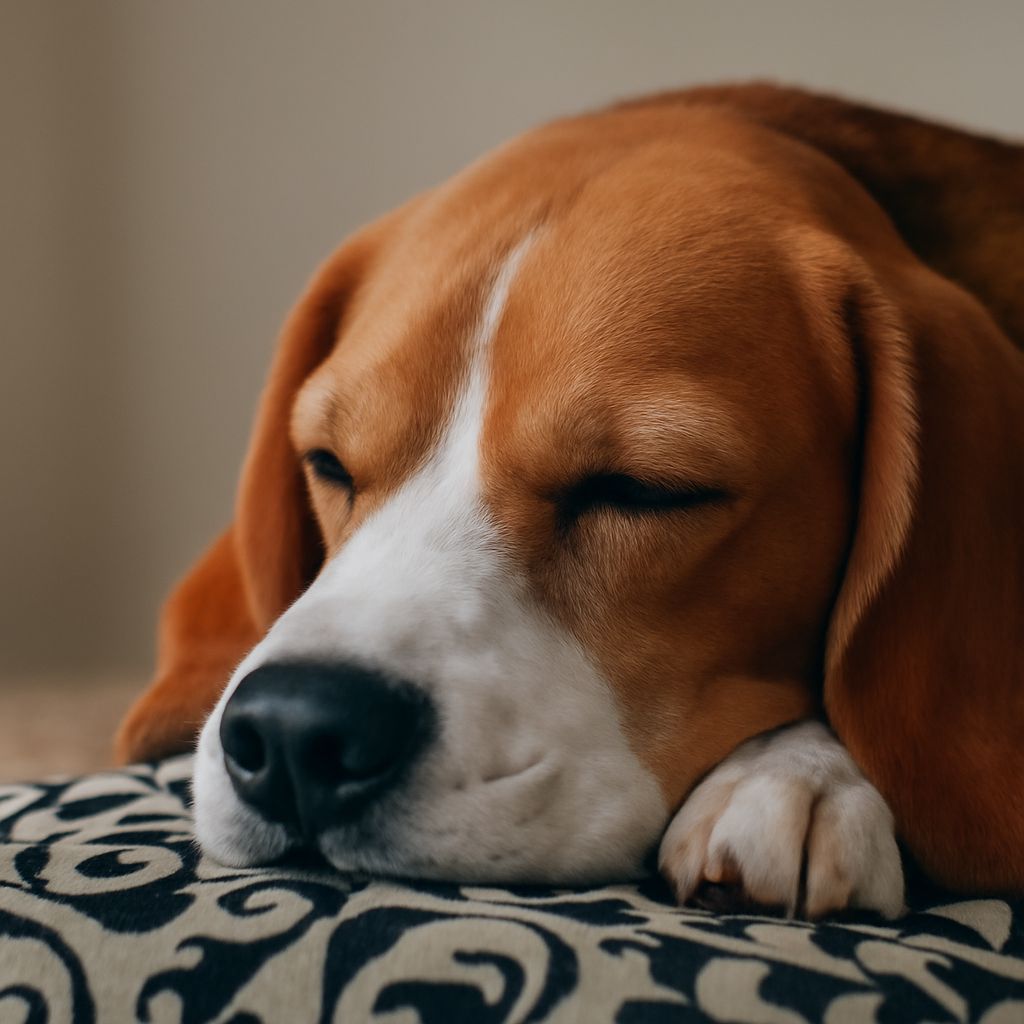
Can dogs have sleep apnea — the same condition that disrupts breathing in millions of sleeping humans? The answer is yes, though the mechanisms and treatment options differ significantly. Dog sleep apnea occurs most often in brachycephalic breeds whose shortened skull anatomy narrows the airway at multiple points. A dog cpap device exists in veterinary medicine, though it is rarely used outside specialty settings due to the difficulty of maintaining a proper mask fit on a non-cooperative patient. Can dogs get sleep apnea regardless of breed? Less common presentations occur in obese dogs of any breed when excess soft tissue compresses the pharynx during sleep. Sleep apnea in dogs causes the same fragmented sleep and oxygen desaturation seen in humans, and the daytime behavioral consequences — lethargy, irritability, reduced exercise tolerance — are measurable with observation.
This article covers breed risk factors, how the condition is diagnosed, and what treatment approaches are available without a dog cpap machine.
Breeds at Highest Risk
Brachycephalic Airway Syndrome
Brachycephalic obstructive airway syndrome (BOAS) affects English Bulldogs, French Bulldogs, Pugs, Boston Terriers, Shih Tzus, and Boxers at the highest rates. The anatomical components of BOAS include stenotic nares (narrowed nostril openings), an elongated soft palate that extends past the epiglottis, and a hypoplastic trachea. Any one of these features increases airway resistance during sleep; all three together can produce severe obstructive episodes.
During sleep, muscle tone in the pharynx drops, allowing the elongated soft palate to prolapse further into the airway. Dogs with BOAS often snore loudly, wake themselves with gasping sounds, and prefer sleeping with their head elevated on a surface edge — a posture that extends the neck and opens the airway slightly, analogous to the sniff position used in airway management.
Diagnosis and Observable Signs
Veterinary diagnosis of sleep apnea in dogs typically involves polysomnography, but this requires sedation or a cooperative patient, which is uncommon. More practically, veterinarians assess airway anatomy under brief sedation: grading nare diameter, measuring soft palate length relative to the palatoglossal arch, and checking for laryngeal collapse. Pulse oximetry during a sleeping episode, measured with a clip probe on the lip or tongue, can confirm oxygen desaturation below 95 percent if the owner brings the dog in while showing active signs.
Observable signs that prompt veterinary referral: gasping or choking sounds during sleep, sleep episodes lasting under 10 minutes before waking, blue-tinged gums during sleep, and reduced activity tolerance compared to prior months. Any combination of these in a brachycephalic breed warrants a BOAS assessment.
Treatment Without CPAP
Soft palate resection surgery is the primary treatment for dogs with elongated soft palate, reducing airway obstruction at the most common collapse point. Stenotic nare correction, which widens the nostril openings with a minor surgical procedure, improves airflow independently and is often performed at the same time as soft palate work. Recovery takes 10 to 14 days with restricted activity.
Weight management is the primary intervention for obese non-brachycephalic dogs. A 10 to 15 percent body weight reduction over 8 to 12 weeks produces measurable improvements in snoring and sleep fragmentation in overweight dogs. This requires a structured caloric deficit, typically 20 to 25 percent below maintenance calories, under veterinary supervision to preserve lean mass.
Bottom line: sleep apnea in dogs is real, most common in brachycephalic breeds, and diagnosable through veterinary airway assessment. Surgical correction for structural causes offers durable improvement, while weight loss addresses the obesity-related form effectively in most cases.