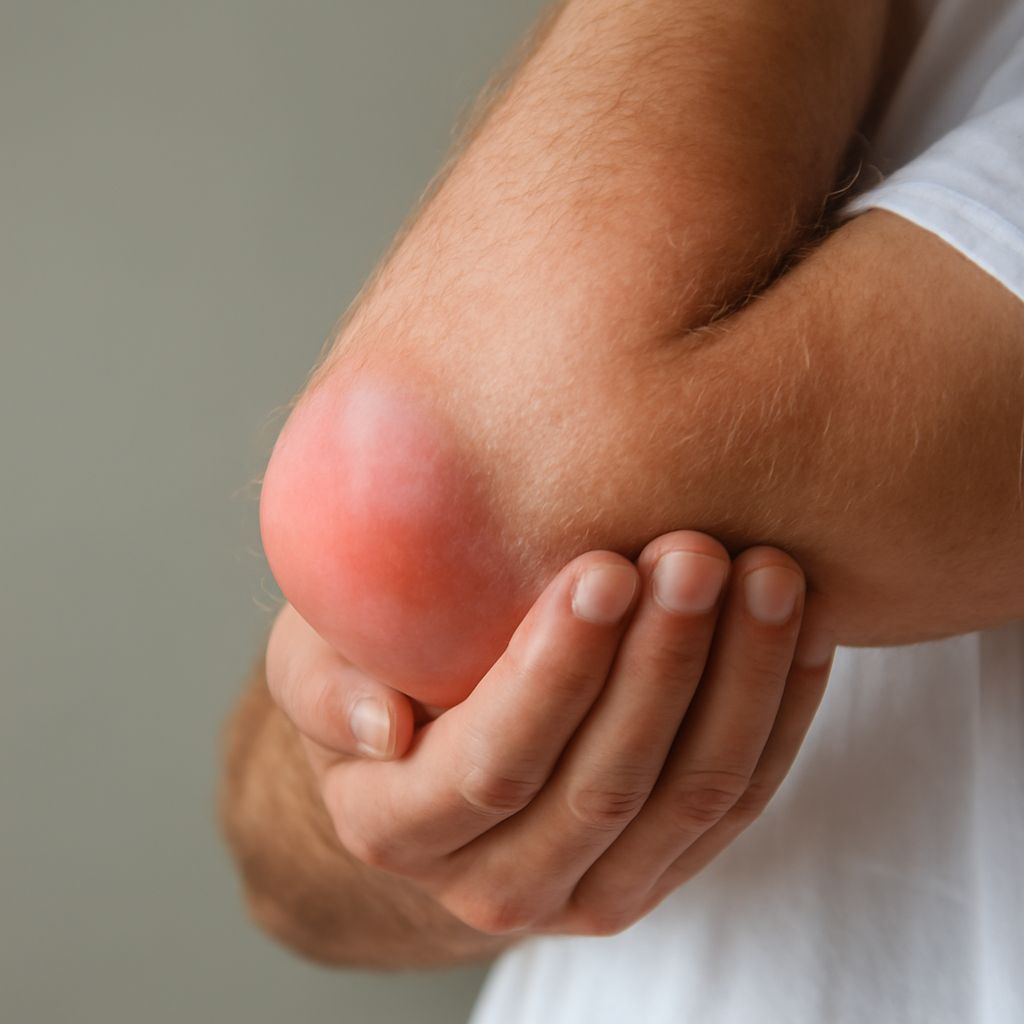
A swollen pocket over the point of the elbow can develop when its cushioning sac becomes inflamed. This inflammation of the olecranon bursa may follow repeated pressure or a blow, although infection and other conditions can also be involved. Treatment for a swollen elbow bursa depends on the cause: protecting the area may help an uninfected bursa settle, while an infection needs prompt medical care.
What happens at the tip of the elbow?
The olecranon is the bony point at the back of the elbow. A thin, fluid-filled sac called a bursa lies between that bone and the skin, helping the skin move over it. When the sac becomes irritated, extra fluid can collect and form a soft lump. Olecranon bursitis may be noticed before it becomes painful, particularly when the swelling is small.
The area can feel tender when touched or pressed against a desk. Larger swelling may make bending uncomfortable, and the skin may feel warm. Symptoms vary: a prominent lump does not reveal on its own whether the fluid is infected. A clinician considers the appearance, the person’s history, and any accompanying symptoms together.
People who ask what is bursitis of the elbow are usually looking for an explanation of that visible swelling. Bursitis of the elbow means inflammation of a cushioning sac; other structures in the area can also become painful. Knowing which tissue is affected helps guide the next step.
Causes and how bursitis differs from tendon pain
Among olecranon bursitis causes are a direct blow, prolonged pressure on the elbow, and repeated irritation. Leaning on a hard surface for long periods is one example. A break in the skin near the bursa can allow bacteria to enter, sometimes through a small scrape that was easy to overlook. Gout and other inflammatory conditions can also be associated with bursal inflammation. The NHS describes common symptoms and possible tests.
Tendons connect muscles to bone. Problems such as tennis elbow tend to cause pain around the outer elbow that becomes noticeable during gripping or lifting. An inflamed bursa more often produces a distinct swelling over the bony tip. These patterns can overlap, and a physical examination can help distinguish a swollen elbow bursa from a tendon problem or another injury.
A recent fall, a wound, fever, and a history of gout are all worth mentioning during an appointment. So are medicines that affect the immune system and conditions such as diabetes, because they may influence how a clinician evaluates possible infection.
When to seek medical care
A hot, red, increasingly tender or swollen elbow needs prompt medical assessment, especially if there is a wound, fever, chills, or a feeling of illness. Infection can occur in the bursa and may need antibiotics. Severe pain, trouble moving the elbow, or a misshapen arm after an injury also calls for urgent assessment. If the person feels seriously ill or has rapidly worsening symptoms, emergency care is appropriate.
Arrange a visit if swelling persists, worsens, returns, or interferes with everyday activities. Even a painless lump deserves evaluation when its cause is unclear. At the visit, the clinician may examine the skin and movement of the joint and ask how the swelling began. If infection or gout is suspected, a fluid sample may be taken with a needle for testing. Imaging or blood tests may be considered when the history or examination calls for them.
Bursitis elbow treatment: protecting the area and treating the cause
For an uninfected, uncomplicated case, treatment for elbow bursitis often starts with reducing pressure. Avoid leaning on the affected elbow, use a protective pad when appropriate, and adjust work surfaces or armrests. A cold pack wrapped in a towel can be applied for about 10 minutes at a time; allow the skin to return to normal temperature between applications. Gentle movement within a comfortable range helps avoid unnecessary stiffness.
An elbow bursa treatment plan may include an over-the-counter pain reliever if it is suitable for the individual. A pharmacist or clinician can help assess medicines and health conditions that affect that choice. At night, a pillow beside the arm can help keep the swollen point from pressing into the mattress. Padding should protect the area without being so tight that it causes numbness or increased discomfort.
If bacteria are responsible, treatment for bursitis in the elbow includes antibiotics prescribed by a clinician. Sometimes fluid is drained or other treatment is needed. A needle procedure has risks, including infection, so it should be performed by a qualified clinician when appropriate; the swelling should not be punctured at home. Steroid injections are not used for an infected bursa. Persistent or repeatedly infected cases may occasionally require surgery. Read the NHS overview of bursitis treatments.
How recovery is followed
How to treat elbow bursitis over time depends on whether swelling is improving and what caused it. Pain may ease before the lump has fully reduced, so improvement can be gradual. A clinician may ask about the size of the swelling, comfort during movement, and any return of warmth or redness. If antibiotics are prescribed, taking them as directed and following the agreed review plan matters even if symptoms begin to improve.
The bursitis elbow treatment plan can also change if the initial approach is not helping. Persistent swelling may prompt another examination to reconsider infection, an underlying inflammatory condition, or another source of the lump. A person learning how elbow bursitis is treated should report new fever or increasing redness promptly rather than waiting for a routine follow-up.
What to expect over time
A bursitis elbow recovery time estimate depends on the cause and treatment. Many uncomplicated cases improve over several weeks, though swelling can take longer to disappear and can return if pressure continues. An infected bursa may need closer follow-up, and recovery after a procedure follows its own timetable. Protecting the elbow during work and rest, then gradually returning to activities as comfort allows, can help reduce repeated irritation. If improvement stalls or symptoms return, a clinician can reassess the elbow bursa and recommend the next step.