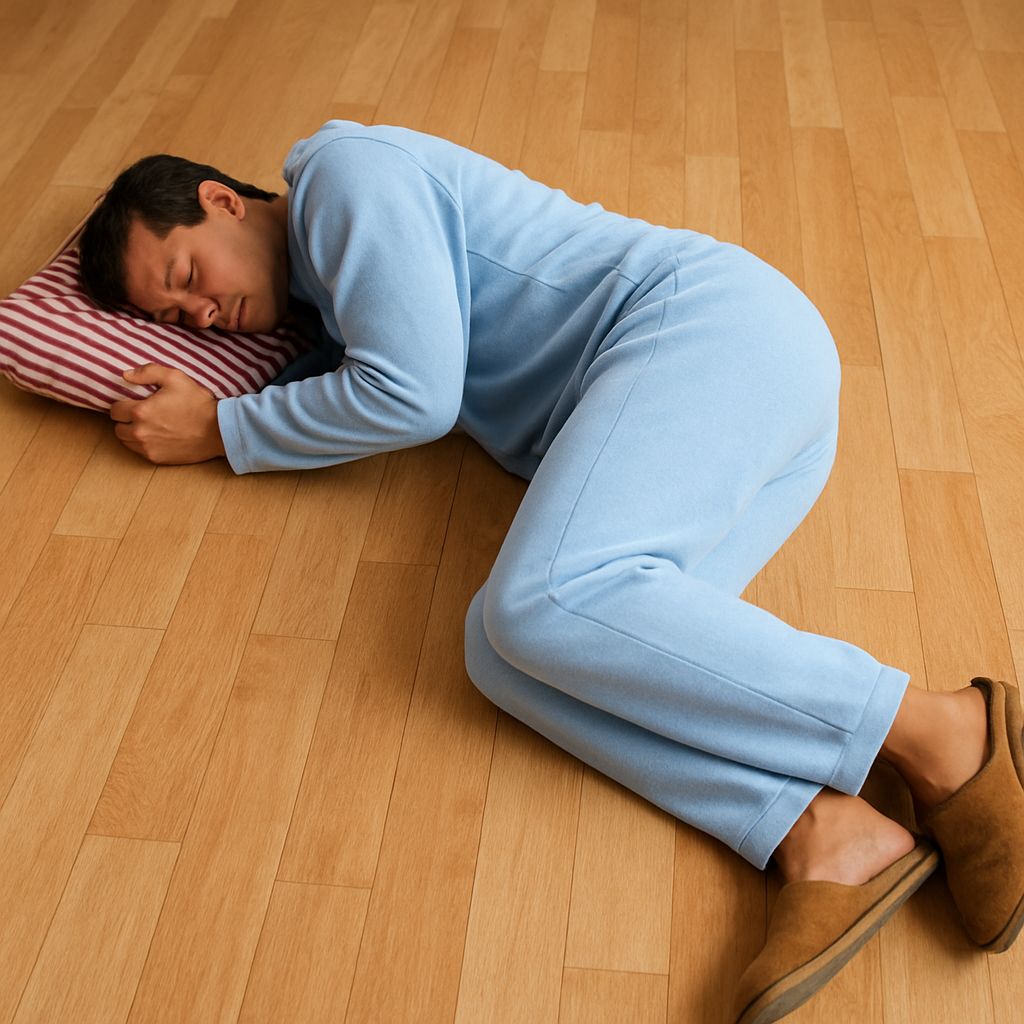
The question of is sleeping on the floor good for your back attracts strong opinions from both advocates and skeptics — but the clinical evidence is more nuanced than either camp typically acknowledges. Whether sleeping on floor good for back outcomes applies to a specific person depends on their body weight, sleep position, the type of back pain they experience, and whether that pain is mechanical or inflammatory in origin. People who try sleeping on the floor for back pain often do so after conventional mattresses have failed them, which means many are already in a high-pain state where any change feels significant. Sleeping on floor back pain outcomes reported anecdotally range from complete relief to dramatically worse symptoms — a distribution that suggests the intervention is highly individual rather than universally beneficial. Sleeping on floor for back health requires a transition period of at least two to four weeks before a fair assessment can be made, as the initial discomfort at pressure points is distinct from the therapeutic effect on spinal alignment.
This guide examines the research base, the likely mechanisms behind reported benefits, the populations most likely to benefit, and the populations for whom floor sleeping is contraindicated.
What Floor Sleeping Does to Spinal Alignment
The Firm Surface Effect and Who Benefits
A hard, flat surface provides uniform support without localized sinkage, which prevents the hip and shoulder from dropping below the spine’s neutral line in side-sleepers. For individuals whose current mattress has excessive sinkage — sagging by more than 3 to 4 cm under bodyweight — floor sleeping redistributes loading across a larger body surface area and reduces the localized loading at the sacroiliac region and lumbar segments that drives mechanical back pain.
Back-sleepers with lumbar hyperlordosis — an exaggerated inward curve of the lower back — may find that the floor provides firmer lumbar contact, preventing the full lumbar sag that occurs on soft surfaces. However, back-sleepers with reduced lumbar lordosis (flat back) or those with lumbar stenosis find that a flat, hard surface without any lumbar support creates sustained posterior compression that worsens their symptoms within two to three nights.
Research from Japan — where floor sleeping on futons has a long cultural history — does not show lower rates of back pain in floor-sleeping populations compared to bed-sleeping ones, suggesting the surface alone is not determinative. The key variable appears to be the quality of the supporting surface relative to the individual’s body shape and pain pattern, not the absolute firmness.
Who Should Avoid Floor Sleeping
People with hip bursitis or trochanteric pain find floor sleeping significantly more painful than mattress sleeping because the bony prominence of the greater trochanter bears direct contact pressure against an unyielding surface. A mattress provides 2 to 4 cm of pressure distribution across the soft tissue of the lateral hip; a bare floor does not. Even a yoga mat — typically 6 to 8 mm thick — offers negligible pressure relief for lateral hip structures.
Older adults and those with osteoporosis are at higher fall risk when rising from floor level, making floor sleeping a functional safety concern independent of its effect on back pain. Neurological conditions affecting balance compound this risk.
Side-sleepers represent the majority of the adult population and generally fare poorly on firm surfaces without modification. Placing a folded blanket or yoga mat beneath the hip and shoulder while floor sleeping reduces lateral pressure by enough to make the position tolerable during the transition period, while still providing the firm lumbar support that motivates the floor-sleeping experiment in the first place.
If floor sleeping is to be trialed, the protocol should include: a clean yoga mat or camping sleeping pad (at minimum), a pillow appropriate for the sleep position, and a two to four-week commitment with daily pain rating to evaluate the trend. Pain that worsens in the first week and does not begin improving by week two indicates the intervention is not appropriate for that individual’s pain pattern.