Sleep Apnea vs Insomnia: Differences, Overlap, and Narcolepsy
Sleep apnea vs insomnia is one of the most common clinical distinctions that patients and clinicians need to make, because the two conditions share surface-level symptoms — daytime fatigue, unrefreshing sleep, difficulty concentrating — while requiring entirely different treatments. Sleep apnea and insomnia have distinct underlying mechanisms: sleep apnea is a breathing disorder that disrupts sleep from a physical cause, while insomnia is a disorder of arousal and sleep initiation that is primarily neurobiological and behavioral in origin.
The challenge is that sleep apnea insomnia often co-occur in the same patient — a condition called comorbid insomnia and sleep apnea (COMISA) that affects 30–50% of people diagnosed with obstructive sleep apnea. Insomnia and sleep apnea reinforce each other in complex ways, making accurate diagnosis essential before treatment begins. Adding a third condition — insomnia and narcolepsy — further illustrates how overlapping symptoms can lead to misdiagnosis without thorough sleep evaluation.
How Sleep Apnea and Insomnia Differ in Cause and Presentation
Sleep apnea is caused by repeated collapse or partial obstruction of the upper airway during sleep, causing breathing to stop for 10 seconds or more at a time. The defining measure is the apnea-hypopnea index (AHI): 5–14 events per hour is mild, 15–29 is moderate, and 30 or more per hour is severe. Sleep apnea diagnosis requires either an in-lab polysomnography or a home sleep apnea test. The cardinal symptoms are loud snoring, witnessed apneas, waking gasping or choking, and excessive daytime sleepiness despite adequate time in bed.
Insomnia is defined as difficulty initiating sleep, maintaining sleep, or waking too early — at least three nights per week for at least three months — with the complaint causing daytime impairment. Insomnia does not require an objective sleep study for diagnosis; it is primarily a clinical diagnosis supported by sleep diaries and questionnaires. The mechanism involves hyperarousal: the insomnia brain shows elevated metabolic activity during sleep, high-frequency EEG activity, and elevated nocturnal cortisol compared to normal sleepers. Insomnia patients often feel fatigued rather than sleepy — a distinction that helps separate it from sleep apnea and narcolepsy.
The practical difference in presentation is important for diagnosis. A person with sleep apnea typically can fall asleep almost anywhere — at traffic lights, in waiting rooms, during passive activities. A person with primary insomnia typically cannot fall asleep in the bedroom but might nod off readily in front of the television, because the bedroom has become conditioned as a place of arousal and worry through the development of conditioned insomnia. This distinction — hypersomnolence versus hyperarousal — is the key clinical separator for sleep apnea vs insomnia.
When Sleep Apnea Insomnia Co-Occur: Complex Insomnia
In COMISA — comorbid sleep apnea insomnia — both conditions are present simultaneously, each making the other worse. Untreated sleep apnea causes frequent nighttime arousals that condition the brain to fear sleep, generating insomnia through the same behavioral pathway that produces primary insomnia. Conversely, insomnia-related hyperarousal can worsen apnea severity by altering respiratory control and sleep architecture, spending more time in lighter sleep stages where the airway is more prone to collapse.
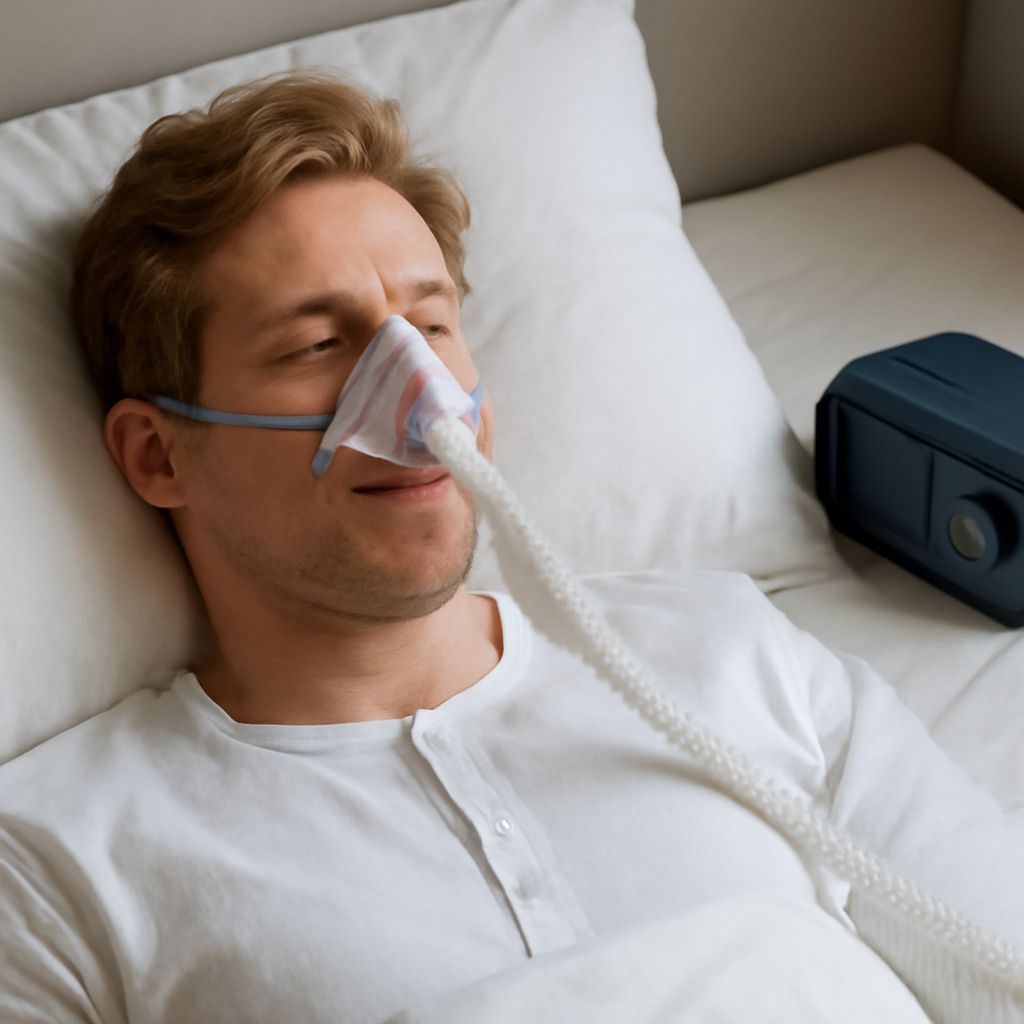
Treatment sequencing matters in COMISA. Starting CPAP therapy in a patient with untreated comorbid insomnia often produces poor adherence — the patient cannot fall asleep with the mask because the insomnia-related hyperarousal makes initiating sleep difficult under any new conditions. The evidence-based approach is to address insomnia first with cognitive behavioral therapy for insomnia (CBT-I) — a structured 6–8 week program — then introduce CPAP. This sequence produces higher long-term CPAP adherence and better outcomes for both conditions than treating either in isolation.
Narcolepsy: How It Differs from Insomnia and Sleep Apnea
Narcolepsy is a neurological disorder caused by the loss of hypocretin-producing neurons in the hypothalamus. Hypocretin (also called orexin) stabilizes the boundary between wakefulness and sleep. Without it, patients experience sudden, uncontrollable transitions into sleep — a phenomenon called sleep attacks — and cataplexy, a sudden loss of muscle tone triggered by strong emotions such as laughter or surprise. These features are specific to narcolepsy and do not occur in insomnia and sleep apnea.
Insomnia and narcolepsy may appear similar on the surface — both produce nighttime sleep fragmentation and daytime fatigue — but the mechanism and experience are opposite. Narcolepsy patients typically fall asleep faster than normal (sleep latency under 8 minutes on the Multiple Sleep Latency Test) and enter REM within 15 minutes of sleep onset. Insomnia patients have prolonged sleep latency and reduced REM pressure. Narcolepsy diagnosis requires an overnight polysomnography followed by a daytime MSLT, not simply a clinical interview.
Stimulant medications — modafinil, armodafinil, and sodium oxybate — are the primary treatments for narcolepsy and are not appropriate for insomnia or sleep apnea. This illustrates why correct diagnosis before treatment is non-negotiable: treating narcolepsy with insomnia-focused CBT-I would not address hypocretin deficiency, and treating insomnia with stimulants would worsen arousal and sleep initiation difficulty.
Key takeaways: Sleep apnea vs insomnia requires distinguishing hypersomnolence from hyperarousal — the two feel similar but have opposite physiological drivers. When sleep apnea and insomnia co-occur, treat insomnia with CBT-I before introducing CPAP for best adherence outcomes. Insomnia and narcolepsy share surface fatigue but differ fundamentally in mechanism, requiring different diagnostic tests and treatments.