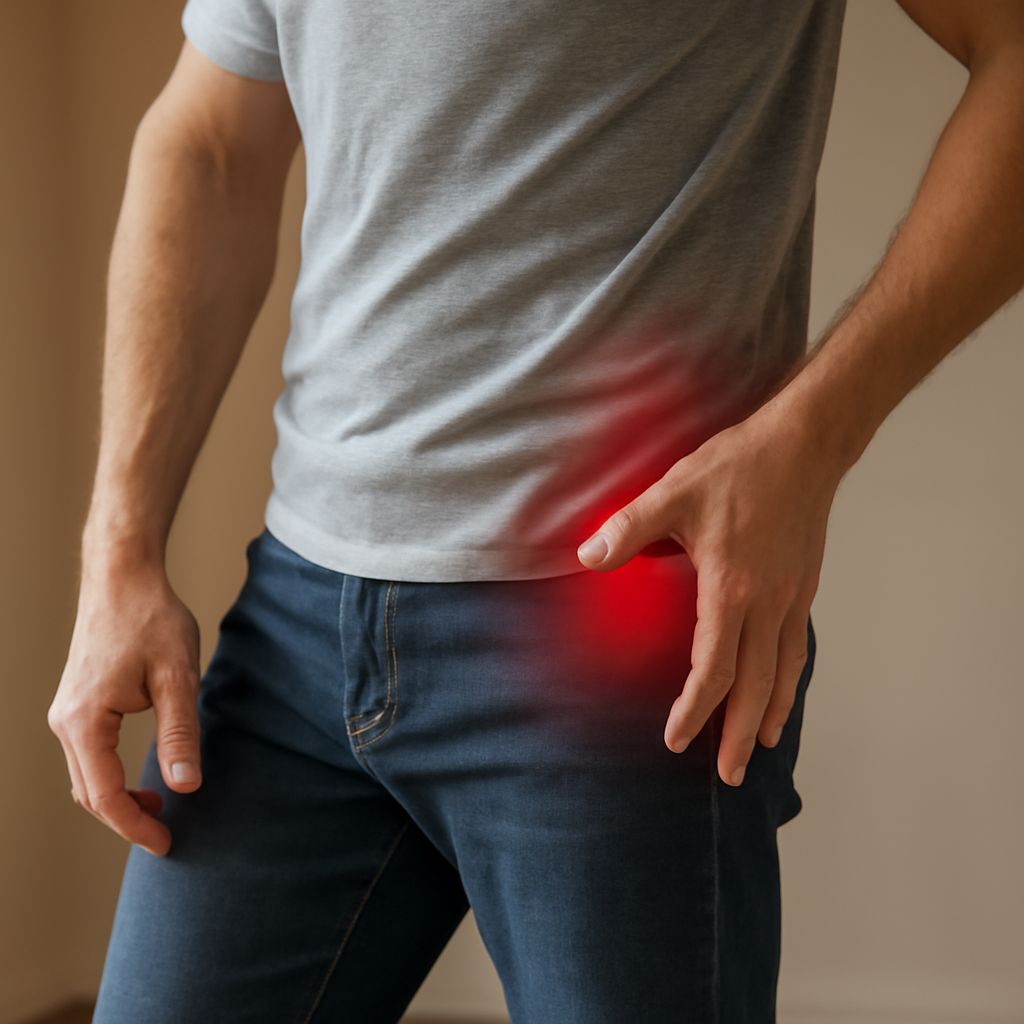
Chronic Pain and Fatigue: How Arthritis, Osteoarthritis, and Morning Hip Pain Drive Exhaustion
Chronic pain and fatigue exist in a reinforcing cycle that is one of the most challenging patterns to break in musculoskeletal medicine. Pain disrupts sleep, sleep deprivation lowers pain thresholds, and the resulting fatigue reduces the capacity to engage in the movement and activity that would otherwise moderate both pain and tiredness. Arthritis and fatigue are particularly closely linked — inflammation, the hallmark of arthritis, directly suppresses energy production at the cellular level through cytokine signaling.
Does pain cause fatigue? The clinical evidence says yes, through multiple documented pathways. Osteoarthritis and fatigue co-occur in up to 70% of affected patients, making fatigue one of the most common and underreported symptoms of osteoarthritis. Hip pain in the morning after sleeping is among the most specific patterns — it reflects both joint stiffness from overnight inactivity and the inflammatory burden that accumulates without the circulation-enhancing effect of movement. This guide explains the mechanisms and the most evidence-supported management approaches.
Does Pain Cause Fatigue? The Physiological Mechanisms
Chronic pain causes fatigue through at least four distinct physiological pathways. First, pro-inflammatory cytokines — particularly interleukin-1 (IL-1), interleukin-6 (IL-6), and tumor necrosis factor alpha (TNF-α) — that drive joint inflammation also act on the hypothalamus to suppress energy metabolism and promote sickness behavior, including fatigue. This is the same pathway activated during acute illness, explaining why people with arthritis and fatigue often describe their exhaustion as feeling similar to having the flu.
Second, chronic pain fragments sleep architecture. Pain signals transmitted through nociceptive pathways cause micro-arousals throughout the night, preventing sustained deep sleep. Polysomnography studies of patients with rheumatoid arthritis show 40–60% reductions in slow-wave sleep compared to age-matched controls — and slow-wave sleep is the phase in which growth hormone is released, tissue repair occurs, and immune memory is consolidated. Chronic pain and fatigue therefore share the same upstream disruption: insufficient restorative sleep.
Third, the sustained muscular tension that accompanies pain — a protective bracing response — consumes significant energy. Muscles held under chronic tension use ATP at rest rather than exclusively during movement. Over 16 waking hours, this continuous energy expenditure adds up, reducing the reserves available for cognitive and physical activity and contributing to the pervasive fatigue characteristic of chronic pain conditions.
Fourth, pain-related depression and anxiety are common and independently cause fatigue through their effects on motivation, sleep, and hypothalamic-pituitary-adrenal axis regulation. When chronic pain and fatigue are compounded by depression — which affects 30–50% of people with chronic pain — the fatigue component becomes particularly resistant to standard pain management approaches alone.
Arthritis, Osteoarthritis, and Morning Pain: Managing the Fatigue Cycle
Arthritis and fatigue management must address both the inflammatory burden and the sleep disruption simultaneously. For rheumatoid arthritis, disease-modifying antirheumatic drugs (DMARDs) — particularly methotrexate and biologic agents targeting TNF-α or IL-6 — reduce the cytokine load that drives both joint inflammation and fatigue. Studies consistently show that patients achieving clinical remission on biologics report fatigue improvements proportional to inflammation reduction, measured by CRP and ESR normalization.
Osteoarthritis and fatigue require a different approach, as osteoarthritis is primarily a mechanical joint disease with a secondary inflammatory component. Exercise — specifically low-impact aerobic activity at 150 minutes per week — is the intervention with the largest evidence base for both pain reduction and fatigue improvement in osteoarthritis. The mechanism includes endorphin release, improved joint lubrication through synovial fluid circulation, and muscle strengthening that offloads joint stress. Aquatic exercise is particularly effective for people whose pain limits land-based movement.
Hip Pain in the Morning After Sleeping: Causes and Solutions
Hip pain in the morning after sleeping is one of the most specific presentations of osteoarthritis-related joint stiffness. The hip joint relies on synovial fluid for lubrication, and this fluid becomes more viscous during periods of inactivity. After six to eight hours without movement, the joint faces increased resistance when first loaded — producing the characteristic pain and stiffness that typically eases within 20–30 minutes of gentle activity.
In inflammatory arthritis, morning stiffness lasting more than 45 minutes is a diagnostic criterion because it reflects the overnight accumulation of inflammatory mediators in the joint space. Hip pain in the morning after sleeping that resolves within 30 minutes generally suggests osteoarthritis; stiffness lasting longer warrants evaluation for inflammatory arthritis or other conditions including hip bursitis or snapping hip syndrome.
Sleep surface and positioning significantly affect morning hip pain. Side sleepers benefit from a pillow between the knees to maintain hip neutral alignment, preventing adduction that compresses the hip joint and bursa through the night. Memory foam or latex mattresses that contour to the hip’s shape distribute pressure more evenly than firm innerspring surfaces. Replacing a mattress older than seven to ten years — when compression set reduces its supportive capacity — often produces measurable improvement in morning pain and the fatigue that follows it.
Warming the hip joint before rising eases morning stiffness. A heating pad applied for 15 minutes before standing up increases blood flow and reduces synovial fluid viscosity. Gentle range-of-motion exercises performed while still in bed — hip circles, knee-to-chest pulls, ankle pumps — prepare the joint for weight-bearing and reduce the acute pain spike that follows immediately rising.
Pro tips recap: Chronic pain and fatigue management improves significantly when sleep quality is treated as a primary target alongside pain control. Track morning stiffness duration to distinguish osteoarthritis from inflammatory arthritis — 30 minutes versus more than 45 is the clinical dividing line. For hip pain in the morning after sleeping, use knee pillow positioning, a supportive mattress, and pre-rise gentle movement to reduce the first-step pain that drives fatigue throughout the rest of the day.