Long Sleeve Sleep Sack Guide: Wool, DIY Patterns, and Baby Safety
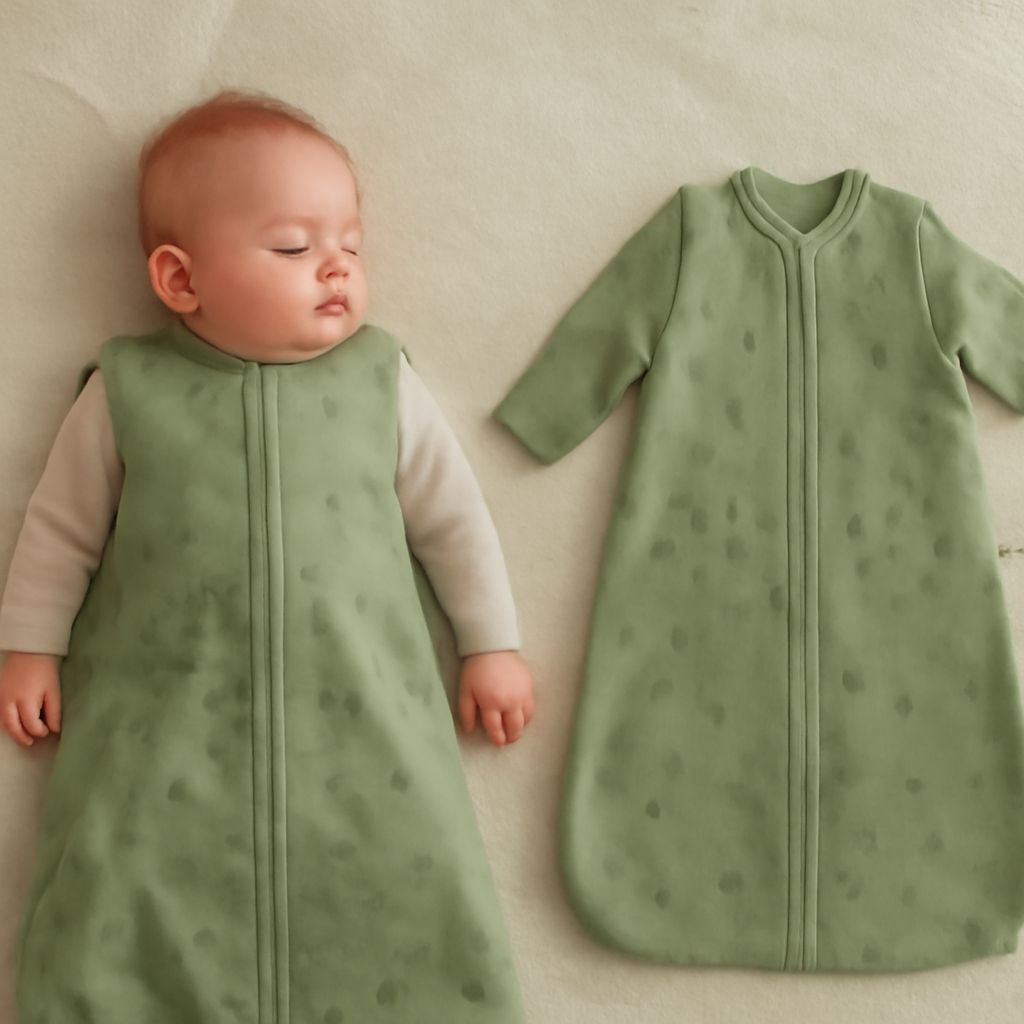
A long sleeve sleep sack is one of the safest and most practical sleep solutions for infants — a wearable blanket with attached sleeves that keeps a baby covered without the suffocation risk of loose bedding. Unlike a standard sleep sack that leaves the arms free, the long sleeve version provides additional warmth for arms and shoulders, making it ideal for cooler sleeping environments where even the arms are at risk of becoming cold and waking the baby. The AAP recommendation to avoid loose blankets in the crib until at least 12 months makes a quality sleep sack an essential item for the first year of life.
For families interested in natural fiber options, a wool sleep sack offers exceptional temperature regulation properties — merino wool in particular maintains warmth in cool conditions while wicking moisture during warmer nights, preventing the overheating associated with synthetic insulation. A baby sleep sack with sleeves can also be sewn at home using a sleep sack pattern, making it an accessible DIY project for parents who sew. Understanding how to adapt a diy sleep sack pattern for different fabric weights and baby sizes ensures that handmade versions meet the same safety standards as commercial products.
Choosing the Right Long Sleeve Sleep Sack
Key specifications for evaluating a long sleeve sleep sack:
- TOG rating: The TOG (Thermal Overall Grade) rating quantifies thermal resistance. A 0.5 TOG is appropriate for rooms above 75°F (24°C); 1.0 TOG for 69–74°F (20–23°C); 2.5 TOG for 61–68°F (16–20°C); and 3.5 TOG for cooler environments. Long sleeve versions typically add 0.5–1.0 TOG equivalents of warmth compared to sleeveless versions.
- Fabric: Organic cotton muslin is breathable and suitable for warm rooms. Jersey cotton provides more stretch and warmth. Bamboo blends are soft, moisture-wicking, and thermoregulating. Wool (particularly merino) provides the best temperature regulation across varying night temperatures but requires more careful washing.
- Closure type: Front zippers opening from the bottom allow easy nighttime diaper changes without fully removing the sleep sack. Avoid top-down zippers that require full disrobing during diaper changes.
- Sizing: Sleep sacks are typically sized by weight rather than age. Verify that the neck opening fits snugly (no more than two fingers of clearance) to prevent the baby from slipping down inside, and that the sack is not so long that it causes tripping when the baby begins pulling to stand.
Wool Sleep Sack and Merino Wool Options
A wool sleep sack — particularly a merino wool sleeping bag liner or a full merino wool sleep sack — offers properties that synthetic materials cannot replicate. Merino wool fiber at 17–19 micron diameter is soft enough for direct skin contact without itching, making it suitable for the entire body including areas that would normally require a cotton liner for comfort.
The temperature-regulating properties of merino wool sleep sacks operate through moisture management: merino can absorb up to 30% of its weight in moisture before feeling wet, releasing it as vapor rather than creating the clammy, damp feeling of synthetic fibers. This property prevents both the overheating that occurs when a child sweats in a sealed synthetic bag and the chilling effect when that moisture-laden synthetic bag cools against the skin.
A wool sleeping bag liner used inside a conventional sleeping bag (for camping or co-sleeping scenarios) achieves similar results at lower cost — the liner adds 1–2 degrees Celsius of warmth while managing moisture actively throughout the night.
DIY Sleep Sack Pattern: What to Know
A diy sleep sack pattern for a baby sleep sack with sleeves requires selecting appropriate fabric (jersey knit or interlock knit for stretch; woven muslin for a traditional non-stretchy version) and following safety guidelines that mirror commercial products:
- Neck opening must fit snugly: measure the baby’s neck circumference and add 1/2 inch maximum for the finished opening.
- Use a fine-tooth zipper that does not have sharp edges when pulled; test the zipper with a baby mitten to ensure it cannot be opened by the infant from inside.
- No decorative elements (buttons, ribbons, loose trims) on the interior of the sack where they could pose a choking hazard.
- TOG calculation for handmade sacks: a single layer of cotton jersey is approximately 0.2 TOG; doubled is approximately 0.4 TOG. Fleece backing adds approximately 0.5–0.7 TOG.
Patterns from reputable sources specify finished dimensions by weight category, ease allowances, and recommended fabric types. Always test the completed sack by inserting a stuffed animal of similar size before use to verify the neck opening and interior space are safe.