What Is Sleep Anxiety: Causes, Cycles, and How to Break the Pattern
What is sleep anxiety, exactly? It is a form of anticipatory fear centered on the act of falling asleep or staying asleep, often accompanied by racing thoughts, elevated heart rate, and physical tension that builds as bedtime approaches. Unlike generalized anxiety that surfaces during the day, sleep anxiety is triggered specifically by the bedroom environment or the thought of lying down, creating a conditioned response that the brain repeats every night.
The phrase cant sleep anxiety captures the experience many people describe: they feel physically tired but mentally locked in a loop of worry, running through tasks, fears, or regrets the moment the lights go out. When someone says they can’t sleep because of anxiety, they are often describing a sympathetic nervous system that has learned to associate bed with threat rather than rest. Anxiety won’t let me sleep is not simply a metaphor; hyperarousal measurably delays sleep onset by an average of 20 to 30 minutes and reduces slow-wave recovery sleep. Tired but can’t sleep anxiety is the cruelest variation: the body is depleted, yet the alarm signals keep firing.
The Neuroscience Behind Anxiety and Sleep Disruption
The amygdala, the brain’s threat-detection center, cannot easily distinguish between a genuine danger and a worry about tomorrow’s presentation. When cant sleep, anxiety signals fire through the same pathways, flooding the body with cortisol and norepinephrine. Core body temperature rises slightly, breathing becomes shallower, and muscle tension increases, all of which directly oppose the physiological conditions needed for sleep onset.
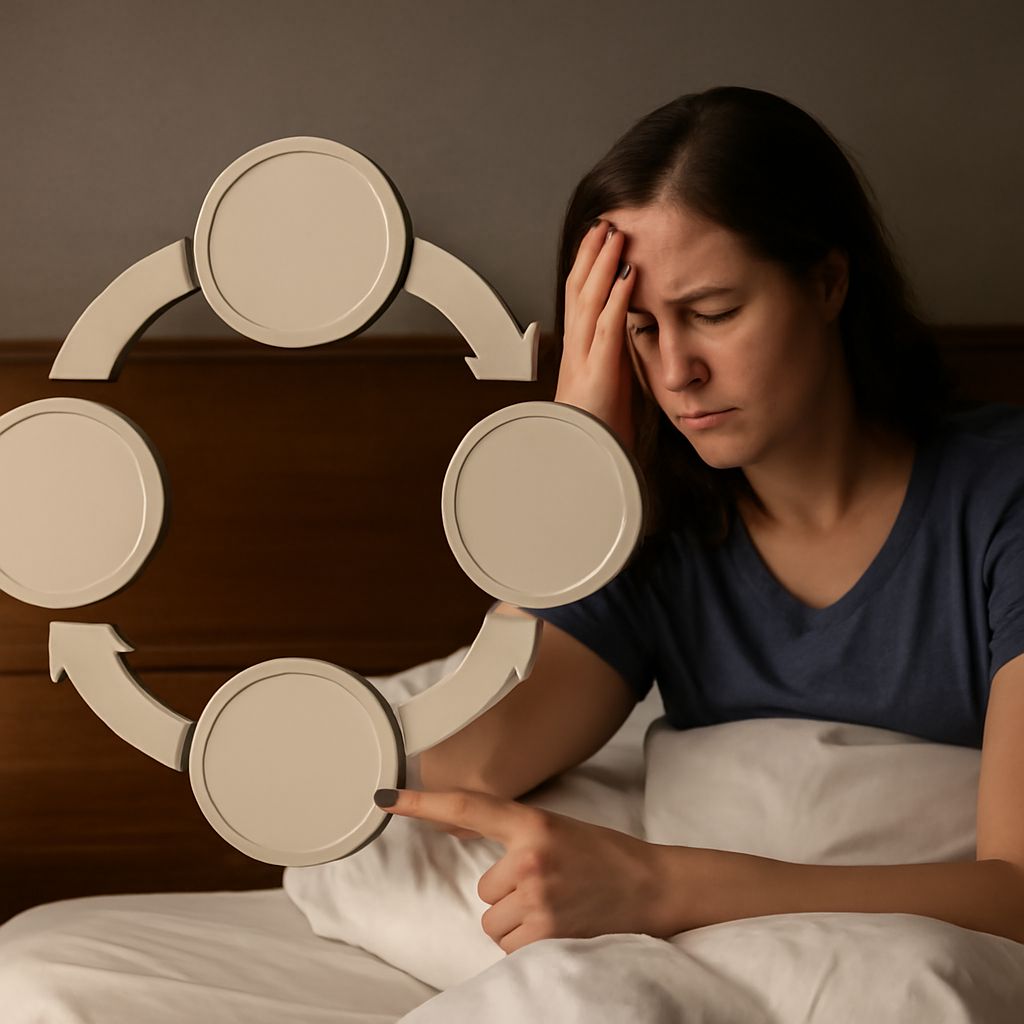
Sleep deprivation then worsens anxiety the following day because the prefrontal cortex, which normally moderates emotional responses, loses regulatory capacity with each lost hour. After a poor night, the amygdala is 60 percent more reactive than it would be after adequate rest, according to neuroimaging studies. This creates the fatigue-anxiety feedback loop: tired but unable to sleep, then more anxious the next day, then harder to sleep the next night.
Cognitive Hyperarousal vs. Somatic Arousal
Sleep anxiety presents in two overlapping forms. Cognitive hyperarousal involves intrusive thoughts, rumination, and mental rehearsal; the person cannot sleep because of anxiety-driven thinking that occupies working memory. Somatic hyperarousal involves physical symptoms: tight chest, shallow breathing, tingling limbs, or the startle response that jolts someone awake just as they are drifting off. Effective treatment often requires addressing both types, since targeting only one leaves the other to sustain the cycle.
Evidence-Based Approaches to Breaking the Cycle
Cognitive Behavioral Therapy for Insomnia, known as CBT-I, is the first-line treatment recommended by sleep medicine organizations. It includes stimulus control, which rebuilds the mental link between the bed and sleepiness rather than wakefulness; sleep restriction, which temporarily compresses the sleep window to increase drive; and cognitive restructuring, which directly challenges the catastrophic thoughts that feed anxiety won’t-let-me-sleep spirals.
Scheduled worry time, practiced 90 minutes before bed, offloads cognitive hyperarousal. A person sits with a notebook for 15 minutes, writes down every concern, and then writes one possible action step per concern. The act of externalizing thoughts reduces their grip during the pre-sleep period. Diaphragmatic breathing at a rate of five to six breaths per minute activates the parasympathetic nervous system within three to five minutes, measurably lowering heart rate and cortisol at bedtime.
- Keep a consistent wake time seven days per week, regardless of sleep quality.
- Reserve the bed for sleep and intimacy only; move all other activities to another room.
- Practice scheduled worry journaling at least 90 minutes before lights out.
- Use diaphragmatic breathing at five to six breaths per minute for five minutes at bedtime.
- Consult a CBT-I trained therapist if the cycle persists beyond three weeks.
Safety recap: Over-the-counter sleep aids and alcohol may reduce time to sleep onset briefly but fragment the second half of the night, worsening daytime anxiety the following day. Patients taking prescription anxiolytics or hypnotics should discuss any behavioral sleep changes with their prescribing clinician before modifying dosing schedules.