Best Way to Sleep on a Plane: Seats, Tools, and Adrenal Recovery
The best way to sleep on a plane combines seat selection, body positioning, and pre-flight preparation into a repeatable system. Sleeping on a plane is uniquely difficult because cabin pressure, ambient noise, limited recline, and circadian disruption all work against sleep onset simultaneously. How to sleep on plane effectively starts before boarding: arriving well-rested matters because sleep deprivation before a flight makes it harder, not easier, to sleep onboard due to elevated cortisol. Those dealing with how to reverse adrenal fatigue should approach long-haul flights carefully, as the stress of travel—time zone shifts, disrupted meals, and poor sleep—directly taxes the HPA axis. Adrenal fatigue recovery stalls when cortisol patterns are disrupted repeatedly by irregular sleep and high-altitude travel stress.
Practical Strategies for In-Flight Sleep
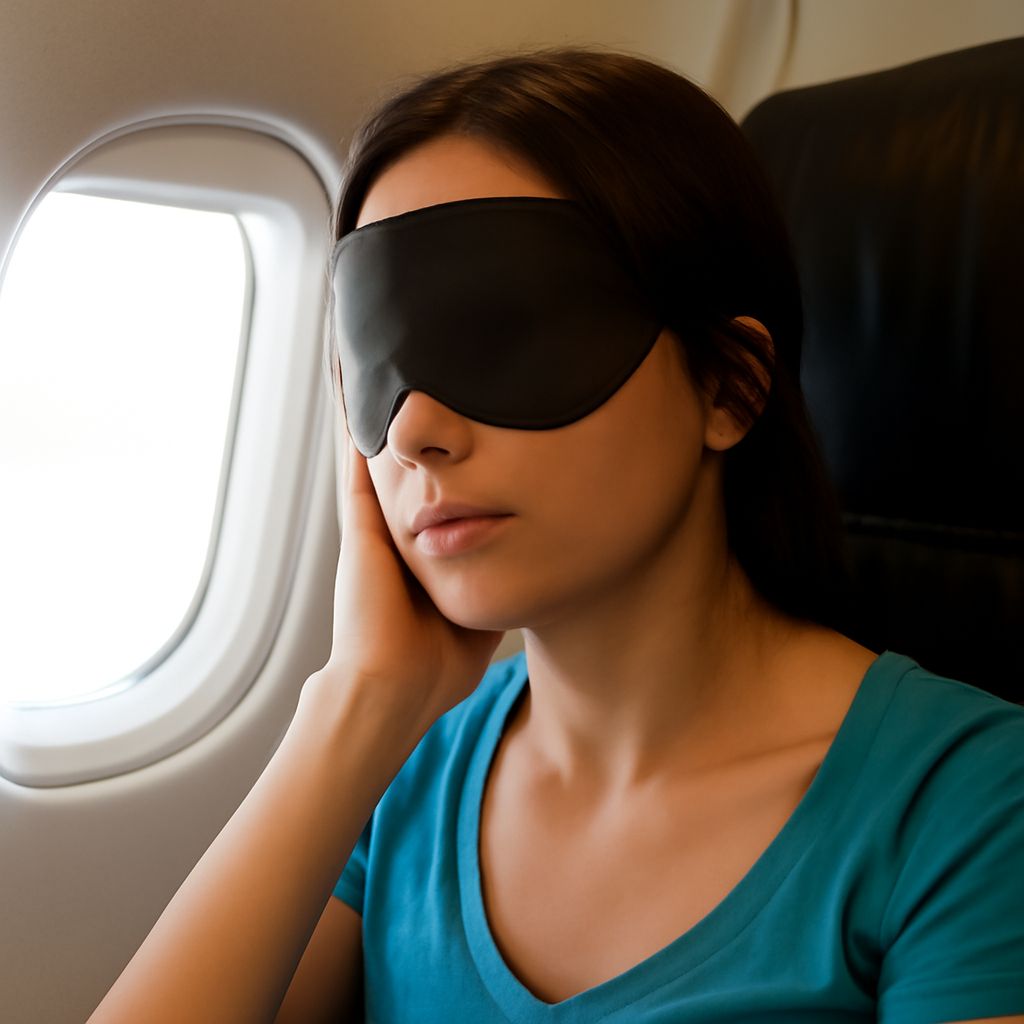
Window seats offer the best conditions for sleeping on a plane. The fuselage wall provides a fixed surface for the head, eliminating the forward-drop problem that wakes aisle and middle seat passengers. Exit row seats have extra legroom but thinner, non-reclining seat backs—adequate for tall passengers but less comfortable for lateral head positioning.
A U-shaped neck pillow that wraps forward under the chin—not the standard backward-facing design—prevents the head from dropping forward onto the chest. The chin-support design keeps the cervical spine in neutral extension during sleep. Memory foam versions that pack to half their size are airport-purchased solutions; inflatable designs weigh under 2 oz but provide less consistent support.
Noise-canceling headphones or foam earplugs reduce ambient engine noise from 85 dB to approximately 55 dB, which crosses the threshold for sleep onset for most adults. Combine with an eye mask that blocks full cabin light without pressing on the eyelids—gel-padded designs are better than flat foam for this purpose.
Timing sleep to align with the destination’s night is the best way to sleep on a plane for minimizing jet lag. On eastbound flights, resist sleeping until the destination’s local nighttime. On westbound flights, stay awake until the destination’s local evening. Both strategies use the flight time to begin resetting the circadian rhythm rather than simply sleeping whenever tired.
For those managing adrenal fatigue recovery, the next steps after a long-haul flight are: maintain consistent meal times in the new time zone immediately upon arrival, avoid caffeine after noon local time for the first 3 days, spend 20 minutes in natural morning light each day to anchor the cortisol awakening response, and prioritize 8–9 hours of sleep for the first week. These steps stabilize the HPA axis more effectively than sleeping in, which disrupts the cortisol rhythm further.