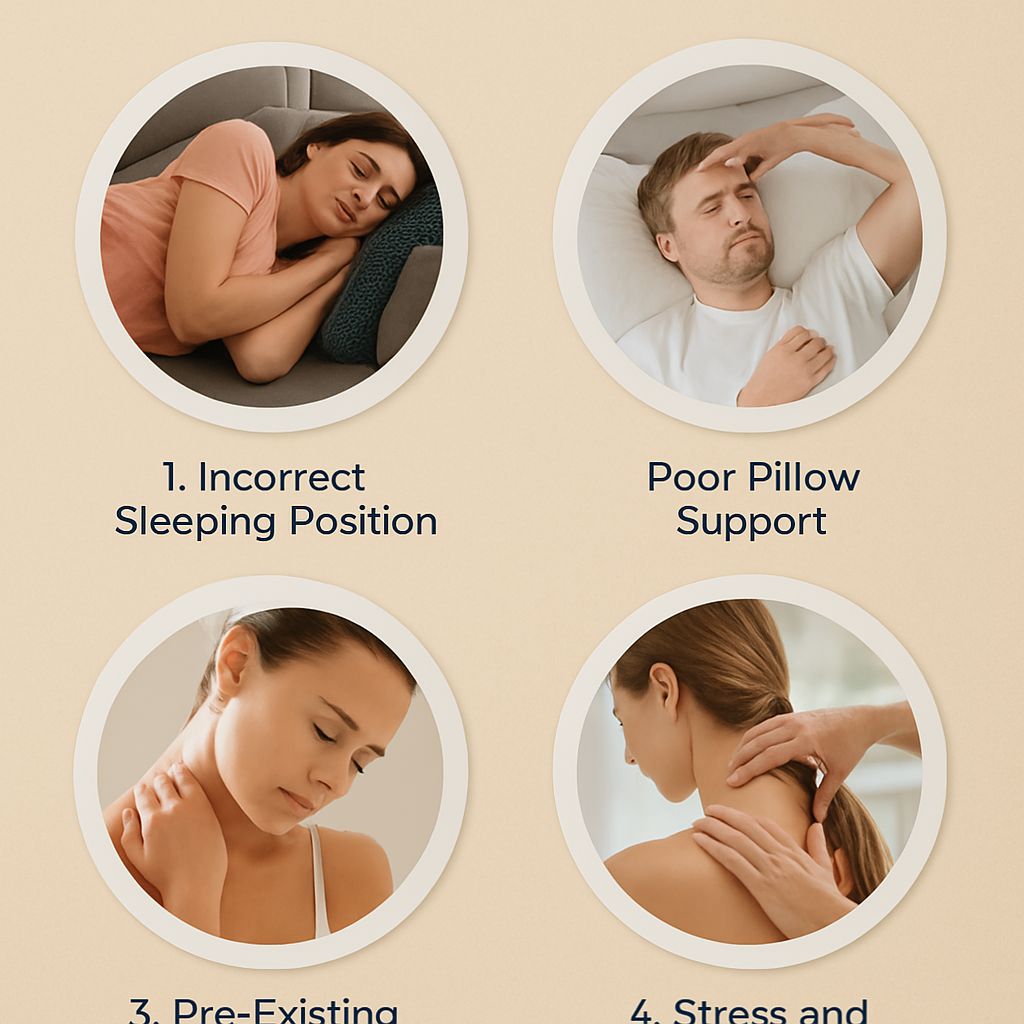
When neck hurts after sleeping, the culprit is almost always mechanical: pillow height, sleep position, or mattress firmness. A sore neck from sleeping is not random. The cervical spine has a natural curve of 20 to 40 degrees, and any pillow that holds the head at an angle outside that range for six to eight hours creates enough sustained tension to cause muscle guarding by morning. Neck pain sleeping complaints spike among people who switch mattresses or pillows without accounting for how those changes affect spinal alignment.
The good news is that how to get rid of neck pain from sleeping is primarily a matter of adjusting equipment and position, not medical intervention. Most cases of sleeping neck pain resolve within two to four days once the mechanical cause is corrected. This guide covers the common causes and the specific adjustments that fix them.
Why Your Neck Hurts After Sleeping
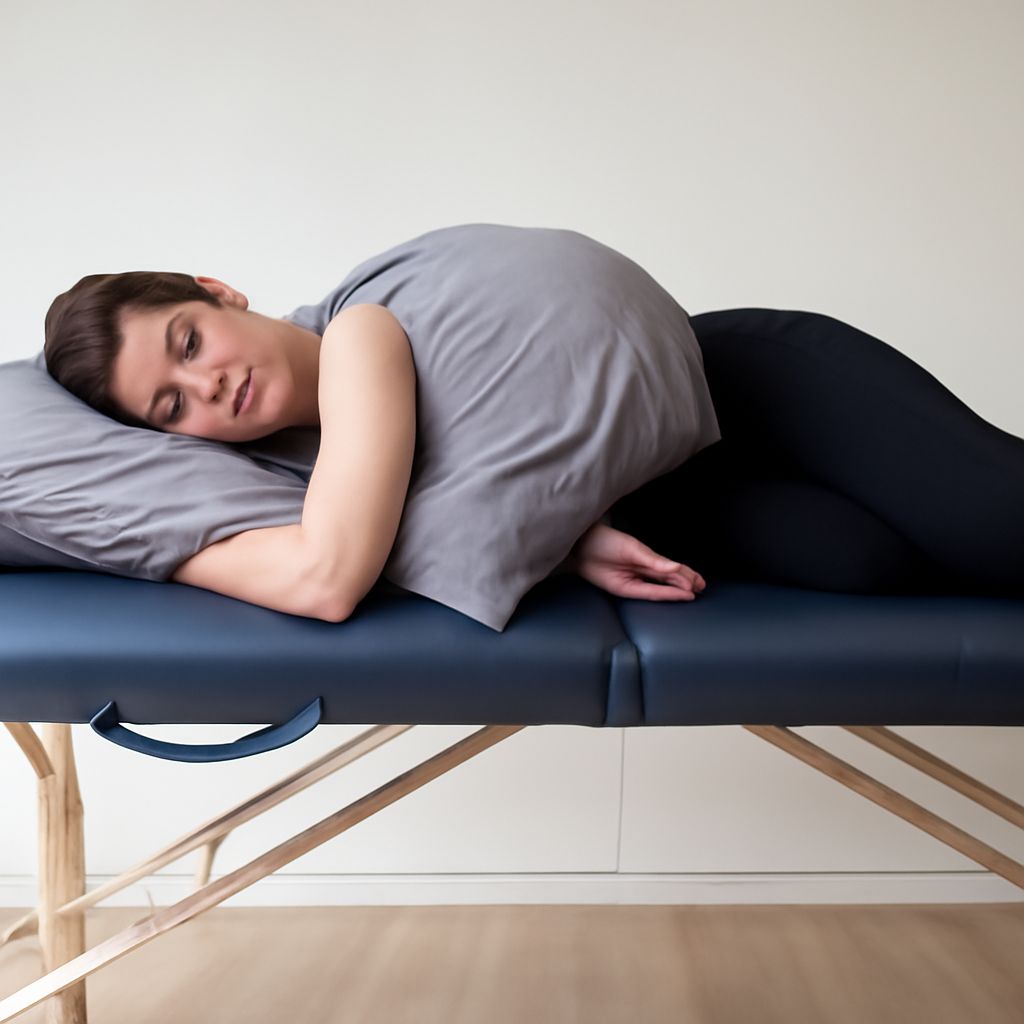
The neck hurts after sleeping most often because the pillow is the wrong height for the sleep position. Side sleepers need a pillow that fills the full gap between the shoulder and the ear, typically four to six inches of loft. Back sleepers need less loft, usually three to four inches, to keep the head from pushing forward. Stomach sleeping, regardless of pillow height, forces the neck into rotation for hours, which is the single worst position for cervical health. The sustained rotation compresses the facet joints on one side and overstretches the muscles on the other.
Mattress firmness plays a secondary role. A mattress that is too soft lets the shoulders sink too deeply, reducing the gap the pillow needs to fill. A mattress that is too firm keeps the shoulders elevated, requiring a thinner pillow. When a new mattress changes how shoulders sit during sleep, the previous pillow setup may no longer work, which is why neck pain sometimes appears weeks after a mattress purchase rather than immediately.
Pillow Position and Sleeping Neck Pain
The pillow should be under the head and neck, not the shoulders. Placing the pillow under the shoulders pulls the cervical spine out of neutral alignment and loads the posterior muscles throughout the night. Memory foam pillows with an ergonomic contour work well for back and side sleepers who need the correct loft without adjustment. Buckwheat pillows allow precise loft tuning by adding or removing fill. Water-based pillows let users dial in exact firmness levels and are frequently recommended by physical therapists for people who wake with consistent neck pain.
How to Get Rid of Neck Pain from Sleeping
Correcting the pillow is the first step. Measure the gap between the ear and the mattress surface when lying on the side; the pillow should fill that space with no upward or downward tilt of the head. For how to get rid of neck pain from sleeping acutely, apply a heating pad at low setting to the neck for 15 to 20 minutes before bed to relax the muscle guarding that developed from the previous night. Heat, not ice, is appropriate for non-inflammatory muscle tension. Ice is appropriate only in the first 24 to 48 hours after an acute injury like a whiplash event.
Gentle range-of-motion exercises done before sleep and immediately after waking reduce stiffness. The sequence: slow chin tucks (10 reps, holding two seconds each), lateral neck tilts toward each shoulder (five reps per side, no forcing), and slow head rotations stopping before the point of pain (five reps per side). These take under five minutes and help restore normal cervical mobility without overstressing inflamed tissue.
Stretches and Adjustments for Sore Neck from Sleeping
A cervical roll placed at the base of the skull while lying on the back takes gravity out of the equation and lets the neck muscles fully release. Physical therapy foam cervical rolls cost $10 to $25 and last for years. For a sore neck from sleeping that persists beyond five to seven days despite pillow and position changes, a single session with a physical therapist can identify whether the cause is myofascial (muscle-related), facet joint irritation, or disc-related. Each requires a different treatment approach. Myofascial issues respond to soft tissue work and stretching. Facet joint irritation often responds to extension exercises. Disc involvement may require traction or specific posture training.
Over-the-counter NSAIDs like ibuprofen reduce inflammation and ease sleep when taken 30 minutes before bed during the first few nights. Using them longer than five consecutive days without consulting a doctor is not recommended. If sleeping neck pain includes numbness or tingling down the arm, radiating pain into the shoulder blade, or loss of grip strength, a physician evaluation is warranted before continuing self-treatment.