How to Sleep After Rotator Cuff Surgery: A Week-by-Week Guide
Understanding how to sleep after rotator cuff surgery is one of the most practically urgent questions patients face — and it is usually not covered in adequate detail before discharge. Sleeping after rotator cuff surgery is challenging for the first four to six weeks because the repaired tendons are at their most vulnerable, the shoulder must remain in a sling or abduction pillow during sleep, and pain peaks between midnight and 4 a.m. due to inflammatory cytokine release during deep sleep. The best way to sleep after rotator cuff surgery for most patients is semi-reclined rather than flat — because the supine position allows fluid to pool in the shoulder, increasing intra-articular pressure and amplifying pain. Sleeping with sling after shoulder surgery requires the sling to remain on throughout the night for the surgeon-specified period, typically six weeks, and using it consistently protects the repair from the inadvertent loading that occurs when an anesthetized arm falls into a dependent position during sleep. Rotator cuff surgery recovery sleeping patterns improve measurably after the first two weeks as post-operative inflammation resolves and the repair begins to consolidate.
This guide covers positioning by recovery phase, pain management strategies for overnight waking, and the equipment that makes a meaningful practical difference.
Positions and Equipment for the First Six Weeks
Why Semi-Reclined Positioning Works Better Than Flat
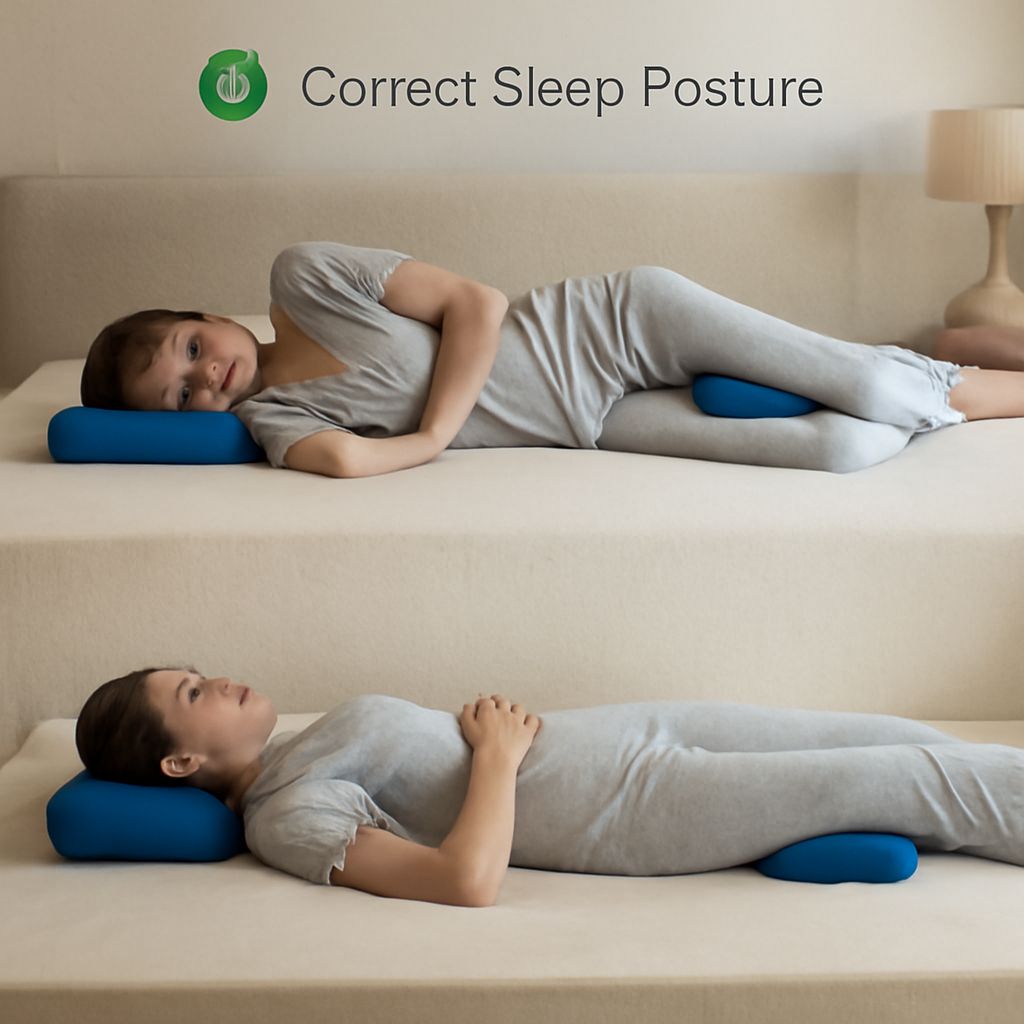
Sleeping completely flat places the shoulder at heart level, allowing inflammatory fluid from the surgical site to accumulate under gravity in the joint space. This produces the 2 to 4 a.m. pain spike that characterizes the first two weeks of rotator cuff recovery — the pain wakes patients who were managing relatively well during the day. Elevating the head and torso to 30 to 45 degrees using a recliner, a wedge pillow, or three to four stacked pillows under the upper back and head reduces intra-articular pressure by allowing fluid drainage out of the joint. Most patients who make this position change report meaningful reduction in the midnight-to-4 a.m. pain pattern within two to three nights.
The surgical arm must remain in the sling with the elbow at 90 degrees and the arm resting against the abdomen in the position the surgeon specified. The most common error is removing the sling during sleep because it feels restrictive, which allows the weight of the arm to pull the repaired tendons under load during shoulder-relaxed sleep. Even brief periods of unbraced arm positioning during the first four weeks can disrupt the tendon-to-bone integration that determines long-term repair success.
Weeks Two Through Six and the Transition to Side-Sleeping
During weeks two through four, most patients begin tolerating the semi-reclined position well and find that pain waking frequency reduces from three to four times per night to one to two times. Taking prescribed anti-inflammatory medication 30 to 45 minutes before sleep — rather than at a fixed morning or evening time — times peak blood concentration to the inflammatory pain window and reduces nighttime waking more effectively than daytime dosing schedules.
Ice application to the shoulder for 15 to 20 minutes immediately before lying down reduces tissue temperature by 2 to 4 degrees Celsius and blunts the first inflammatory wave of the sleep period. Gel packs wrapped in a thin cloth — not applied directly to the skin — applied from the front and back of the shoulder simultaneously are more effective than single-sided application. This pre-sleep ice routine remains useful through the first six weeks.
Side-sleeping on the non-operated shoulder with a body pillow in front of the torso — supporting the operated arm at chest level — becomes possible for many patients between weeks four and six, as the sling requirement is progressively relaxed by the surgeon. The body pillow prevents the operated arm from falling forward into the shoulder-flexion position, which loads the biceps tendon attachment and the anterior capsule repair at a stage when both are still consolidating.
Sleeping on the operated side is not recommended until cleared by the surgeon — typically not before 10 to 12 weeks — because direct lateral compression on the repair site delays vascularization of the healing tendon-to-bone interface. Most surgeons clear a graduated return to operated-side sleeping during the active rehabilitation phase when external rotation strength has returned to a measurable percentage of the opposite side.