How to Sleep With Neck Pain: Avoid It, Fix It, and Track Recovery
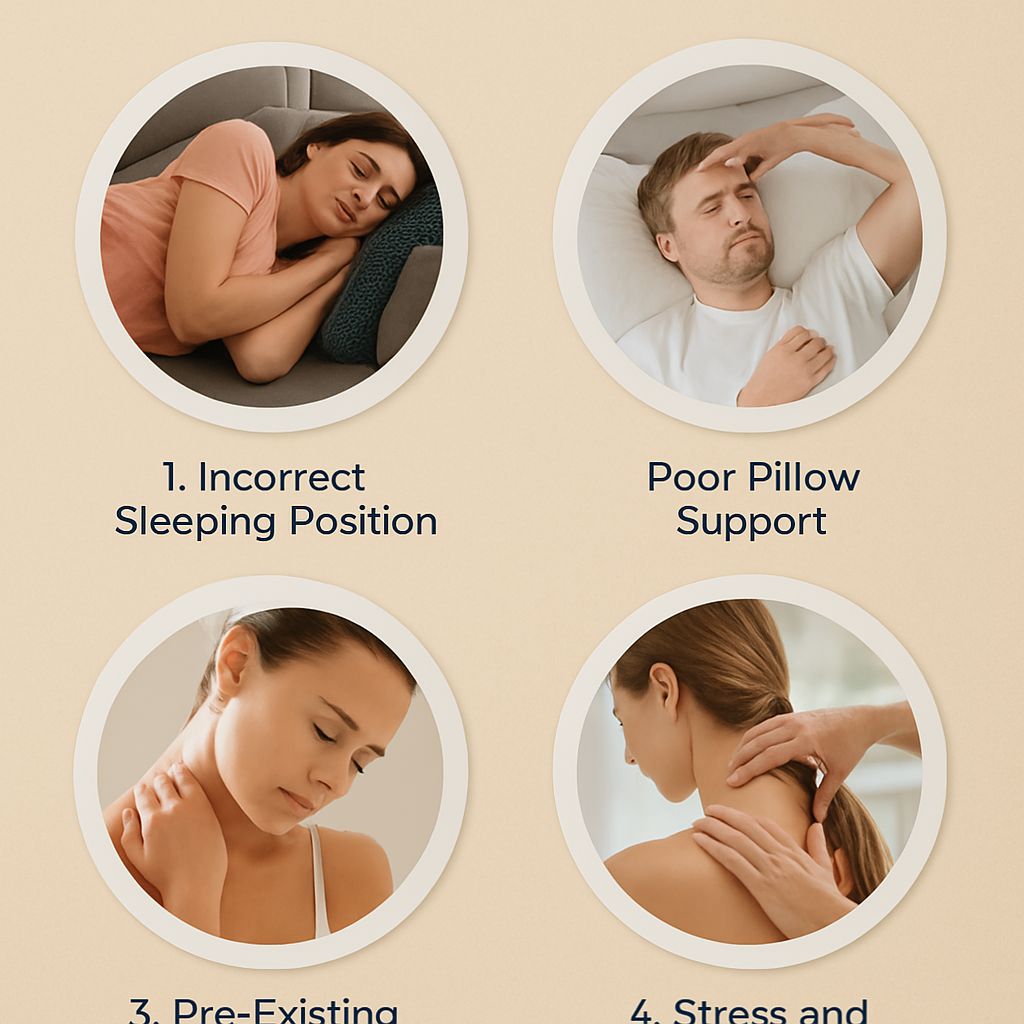
Understanding how to sleep with neck pain requires distinguishing between pain that is already present and pain caused by sleep position. How to sleep to avoid neck pain applies before any injury—using the right pillow height, maintaining spinal neutrality, and avoiding stomach sleeping. How long does neck pain last from sleeping wrong depends on severity: minor muscle strain from a poor position resolves in 1–3 days; facet joint irritation from a sustained awkward angle can linger 5–10 days. Neck pain when sleeping that wakes a person from sleep more than two consecutive nights warrants evaluation because true structural pathology—disc herniation, nerve root compression—also presents nocturnally. Neck and shoulder pain from sleeping wrong is usually muscular and unilateral, tightening the trapezius, levator scapulae, or sternocleidomastoid on the side that bore most of the sleeping load.
Immediate Relief and Position Correction
Adjusting Pillow Height and Surface
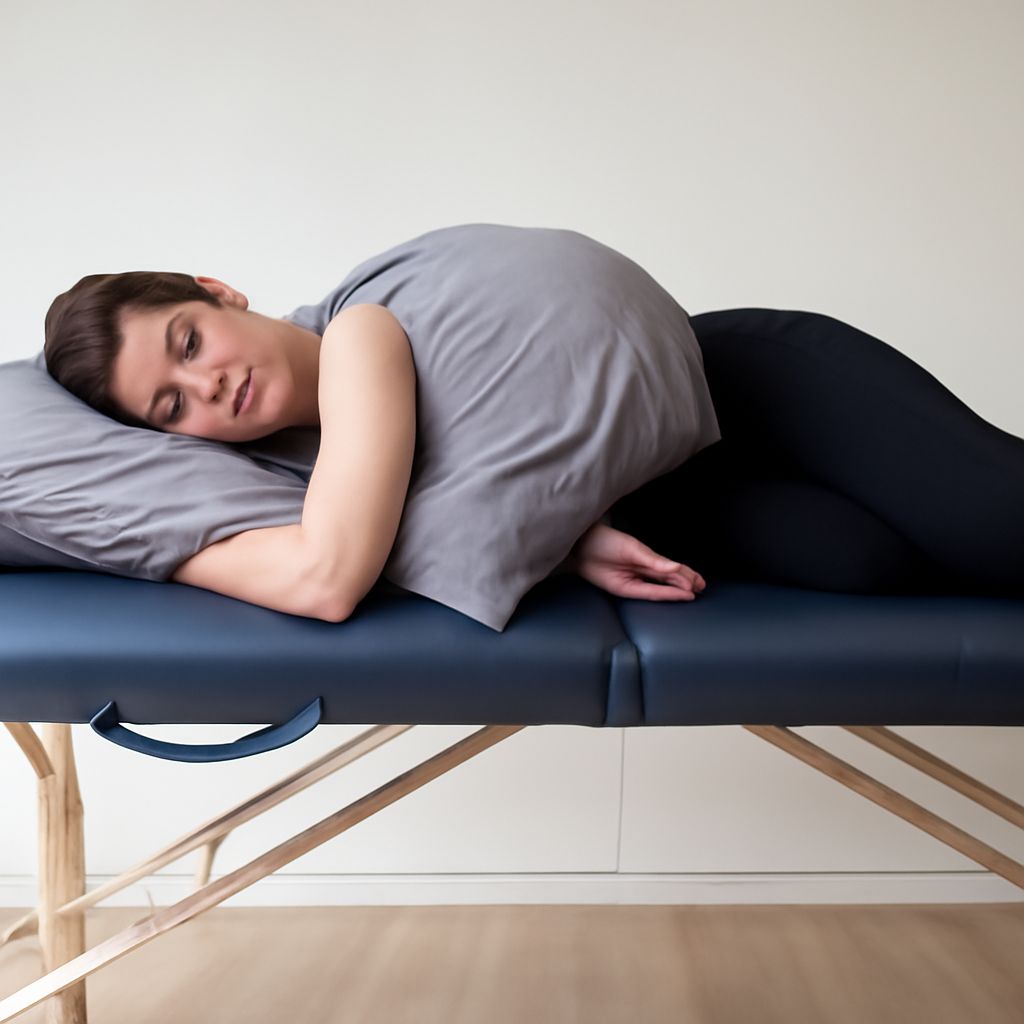
The most common cause of next-morning neck and shoulder pain from sleeping wrong is a pillow that is too high or too low for the sleeping position used. Side sleepers need a pillow height equal to the distance from the ear to the outer shoulder—typically 4–6 inches. Back sleepers need 2–3 inches. A pillow that does not match the position creates a lateral flexion or extension angle held for 4–6 continuous hours, loading the facet joints and stretching the opposing muscle group.
Adjustable or water-filled pillows allow height modification within 24–48 hours of identifying a mismatch. Add or remove water in 50ml increments and test for one night before adjusting further. Most users find their optimal height within 3–5 adjustments.
Recovery Timeline and Warning Signs
How long does neck pain last from sleeping wrong follows a predictable pattern when the cause is muscular: pain peaks on day 1–2, plateaus on day 3, and resolves by day 5–7 with normal movement and no other treatment. Heat applied for 15–20 minutes twice daily starting on day 2—once swelling has peaked—reduces muscle guarding more effectively than ice for this type of strain. Ice is more appropriate in the first 12–24 hours if there is any palpable swelling at the cervical muscles.
Neck pain when sleeping that does not follow this pattern—pain worsening after day 3, pain radiating into the arm, or numbness in the fingers—is not consistent with positional muscle strain and requires evaluation. Cervical radiculopathy from a herniated disc can be triggered or aggravated by sleeping in a hyperflexed position; an MRI or cervical X-ray series clarifies whether structural pathology is present.
To prevent neck and shoulder pain from sleeping wrong from recurring: check pillow height every 6 months as mattresses and pillows compress over time; avoid reading or using a phone while lying flat on the back with the head propped at 45 degrees or more; and change sleep positions at least once during the night rather than spending the full 7–8 hours in one orientation. Sustained load in a single position, regardless of how neutral it starts, creates cumulative fatigue in the cervical support structures by the 4–5 hour mark.