How to Sleep on a Pillow: Choosing and Positioning for Better Rest
Learning how to sleep on a pillow sounds trivially simple, yet pillow selection and positioning are among the most overlooked factors in sleep quality. The right height, firmness, and shape vary with body size, preferred sleeping position, and whether shoulder or neck pain is present. A pillow that is too high or too firm keeps the cervical spine in flexion for hours, contributing to morning stiffness; one that is too soft collapses under the head’s weight, eliminating support entirely.
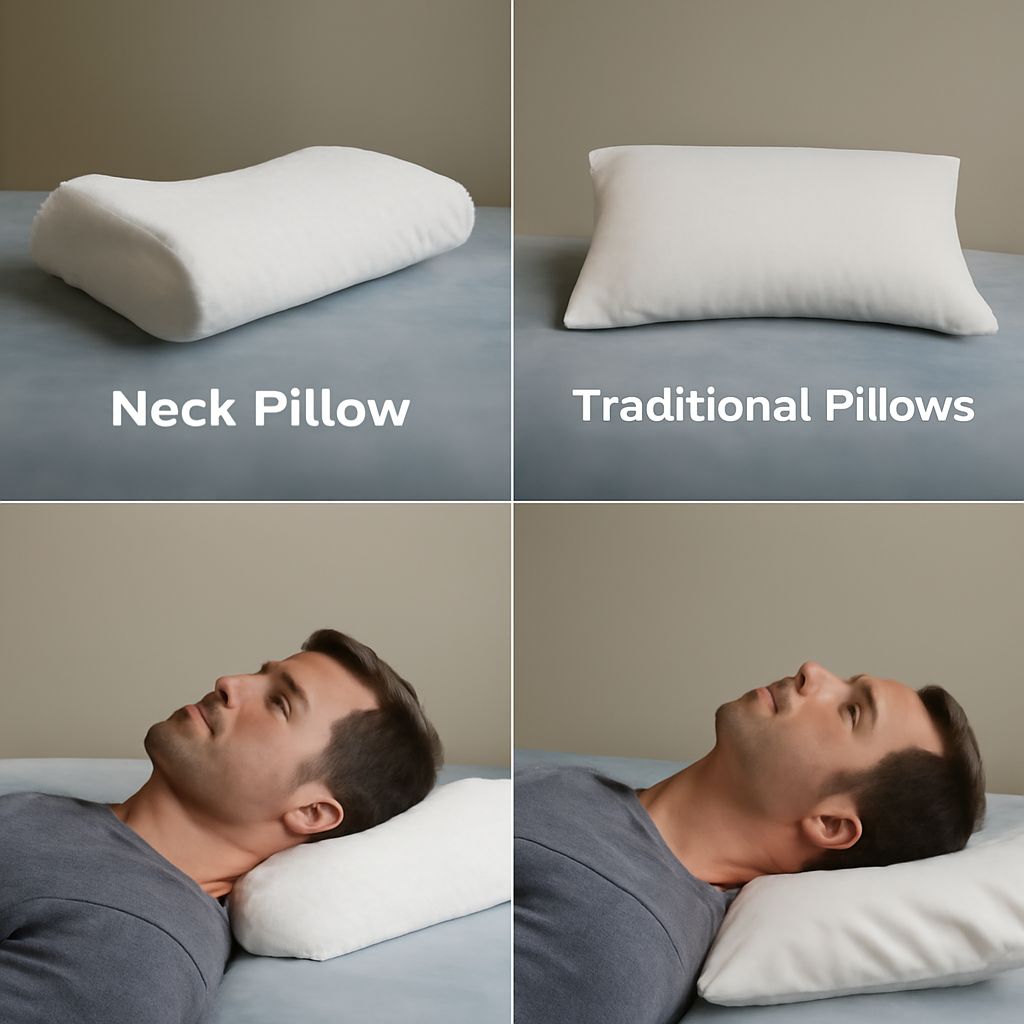
Sleeping on a pillow in the side-lying position requires a different loft than sleeping on the back. Side sleepers need enough fill to bridge the gap between the ear and the mattress, typically 4 to 6 inches for adults with average shoulder width. Back sleepers fare better with 3 to 4 inches of support that cradles the natural lordotic curve without pushing the chin toward the chest. Stomach sleeping is the most challenging position because any pillow height tilts the cervical spine; a thin pillow of 1 to 2 inches or no pillow at all minimizes the rotation stress on the neck joints.
Pillow Materials and Their Effect on Sleep Position
Memory foam pillows conform to the head and neck contour within a few minutes of contact, distributing pressure evenly. Solid memory foam holds its shape through the night but retains heat; shredded memory foam breathes better and can be adjusted by removing or adding fill. Down and down-alternative pillows are soft initially but compress under load, losing their effective loft by the middle of the night unless the fill weight exceeds 700 fill power for down or equivalent for synthetic alternatives.
Latex pillows provide consistent support without the heat retention of foam and are particularly useful for sleepers who shift between back and side positions during the night because the firmness does not change with temperature. A medium-firmness latex pillow, typically rated around 14 to 18 ILD (Indentation Load Deflection), suits both positions for most adults.
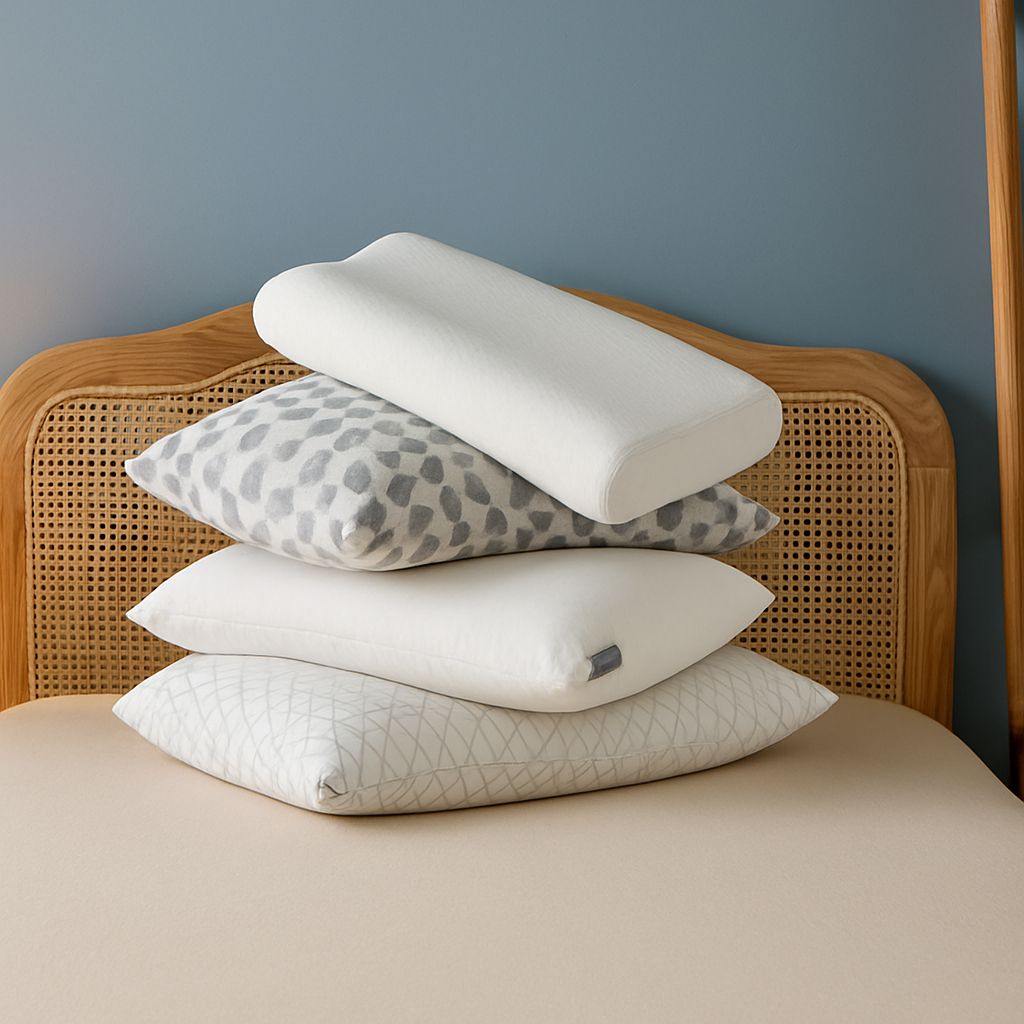
Pillow shape also affects how the fill distributes. Rectangular pillows are the standard. Contoured cervical pillows with a lower center depression and raised outer edge offer specific support for back sleepers by filling the space below the natural curve of the neck. Body pillows provide lateral support for side sleepers, reducing the tendency for the top knee to drop forward and pull the lumbar spine into rotation during the night.
Replacing a pillow is warranted when it no longer springs back after being folded in half and released, when the fill clumps and cannot be redistributed, or when morning neck or shoulder tension increases gradually over several weeks despite no other change in routine. Most foam and latex pillows remain serviceable for 18 to 36 months; down and synthetic fills typically need replacement at 12 to 24 months depending on usage intensity.
- Side sleepers: use 4 to 6 inches of loft to fill the shoulder-to-ear gap.
- Back sleepers: use 3 to 4 inches to support cervical lordosis without pushing the chin forward.
- Stomach sleepers: use 1 to 2 inches or no pillow to minimize neck rotation.
- Test fill by folding the pillow in half; if it does not spring back, replace it.
- Replace down and synthetic fills every 12 to 24 months; foam and latex every 18 to 36 months.
Key takeaways: Pillow loft, firmness, and material all affect spinal alignment during sleep. Matching pillow height to sleeping position is the single most cost-effective change most people can make to reduce morning neck tension. Replacing a pillow before it fully collapses prevents weeks of interrupted rest.