CPAP Headgear: Fitting, Adjusting, and Replacing Straps for a Better Seal
CPAP headgear is the framework of elastic or fabric straps that holds a mask against the face throughout the night. When it fits correctly, therapy pressure stays consistent and skin irritation stays minimal. When the headgear is too loose, air leaks drive the machine to compensate with higher pressure; when it is too tight, marks form on the nose bridge and cheeks, and patients wake with headaches. Neither outcome is acceptable for long-term adherence.
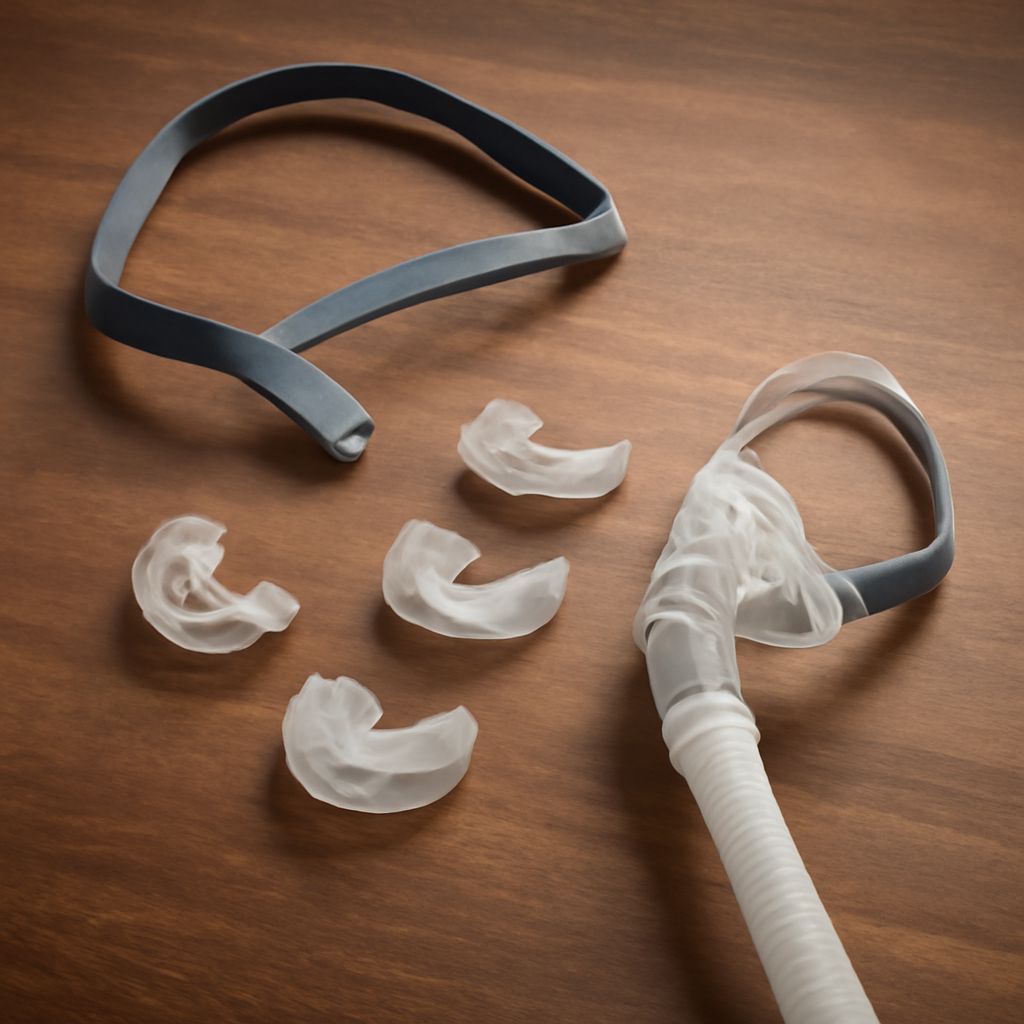
A CPAP head strap refers specifically to the top or back panel that anchors the mask at the crown and back of the skull, while CPAP mask straps are the adjustable segments that run down from the frame to the chin and cheeks. Some manufacturers use velcro tabs at each junction; others use sliding buckles. A CPAP strap that stretches over 12 to 18 months of nightly use loses its elastic recoil, producing the same effect as a loose fit even when set at the original notch. Ordering replacement CPAP head gear before visible fraying appears prevents a week of poor sleep waiting for a shipment.
Fitting and Adjusting CPAP Headgear for the Right Seal
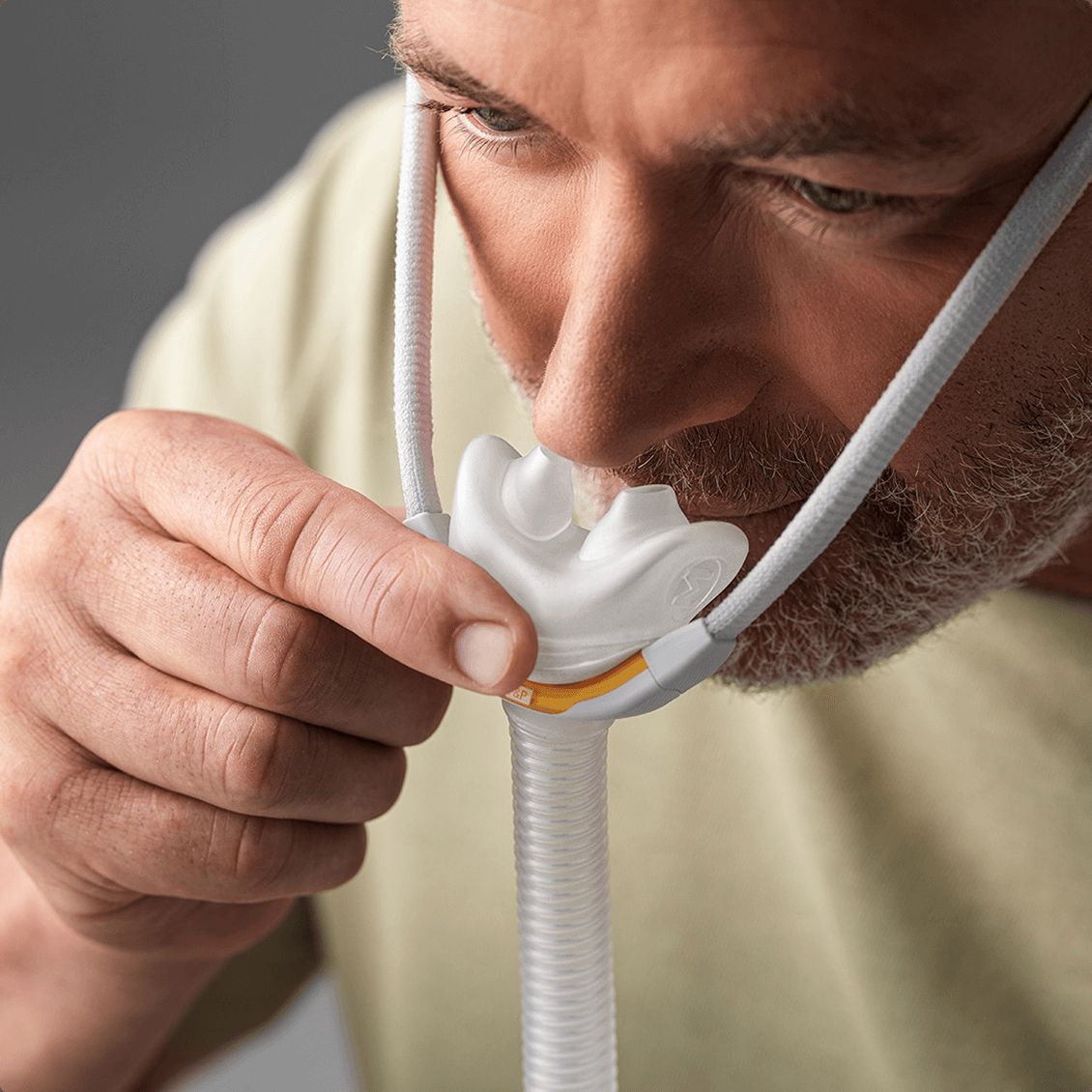
Start by placing the mask on the face and connecting the hose before tightening any strap. Putting on a mask while already lying down causes uneven tension because gravity acts differently in that position than it does sitting upright. Once the mask is centered, tighten the top CPAP head strap first by pulling each side of the buckle or velcro equally until the mask sits flush without gaps along the cushion perimeter.
The lower CPAP mask straps come second. Pull them until two fingers fit flat between the strap and the cheek with slight resistance. If the index finger slips under without resistance, the strap is too loose; if it cannot fit at all, the strap is overtightened and will leave red marks within 30 minutes. A common error is tightening the CPAP strap at one side more than the other, which twists the mask off-center and creates a crescent-shaped leak at the opposite edge.
Lie down after fitting and place the back of one hand near the mask perimeter to feel for air flow. Any detectable current indicates a leak path. Move the offending strap one notch tighter and retest. Most mask-cushion combinations seal reliably with an overall pressure equivalent to 0.2 to 0.5 lb applied uniformly around the perimeter.
Different mask styles require different headgear geometry. Full-face masks use four points of adjustment: top head strap, two cheek straps, and one chin piece. Nasal pillow masks typically use only two upper straps because the pillows self-seal with lighter pressure. Nasal cradle masks use three adjustment points. Knowing which style is in use clarifies which straps to check when leaks develop.
Wash headgear every three to seven days in warm water with a drop of dish soap, then rinse thoroughly and air-dry flat. Machine washing accelerates elastic breakdown. Heat from dryers can cause permanent deformation in fabric-reinforced straps. Replacement intervals vary by brand but most manufacturers rate headgear for 3 to 6 months of nightly use before elasticity degrades enough to affect sealing.
- Put on the mask and connect the hose before tightening any strap.
- Tighten the top head strap first, then the lower cheek straps.
- Use the two-finger test: slight resistance means correct tension.
- Wash straps every three to seven days; air-dry flat to preserve elastic.
- Replace headgear every 3 to 6 months or when elasticity noticeably decreases.
Pro tips recap: CPAP headgear wears out faster than most other consumables because it endures nightly tension, washing, and movement. Tracking the replacement date on a calendar and ordering new headgear before the current set fails avoids interrupted therapy. Keeping a spare set allows rotation washing, which extends the lifespan of both sets simultaneously.