Sleep Safe Mattress Protector: Full Guide to Choosing the Right Sleep Setup
A sleep safe mattress protector does more than guard against spills — it creates a barrier against allergens, dust mites, and microbial growth that can disrupt breathing and sleep quality over months of use. People who experience half sleep, where they repeatedly surface into light sleep without reaching full wakefulness, often trace the issue to environmental irritants in their bedding. Eliminating those triggers with the right protector is one of the most cost-effective upgrades available for a sleep setup.
Whether the goal is to sleep soundly through the night on a standard mattress or to optimize a sleep air mattress or specialized sleep therapy mattress, the protective layer between the body and the mattress surface plays a measurable role. This guide covers the science behind mattress hygiene, how different protector materials perform, and how to match protection to specific sleep needs and health conditions.
Why Mattress Protection Matters for Sleep Quality and Health
Mattresses accumulate biological material rapidly. Within two years of regular use, an unprotected mattress can harbor between 100,000 and 10 million dust mites per square meter, according to data from the American Lung Association. Dust mite fecal particles are among the most potent triggers for allergic rhinitis and asthma — both of which fragment sleep architecture and produce the half sleep pattern of repeated light arousals that leaves people feeling unrefreshed in the morning.
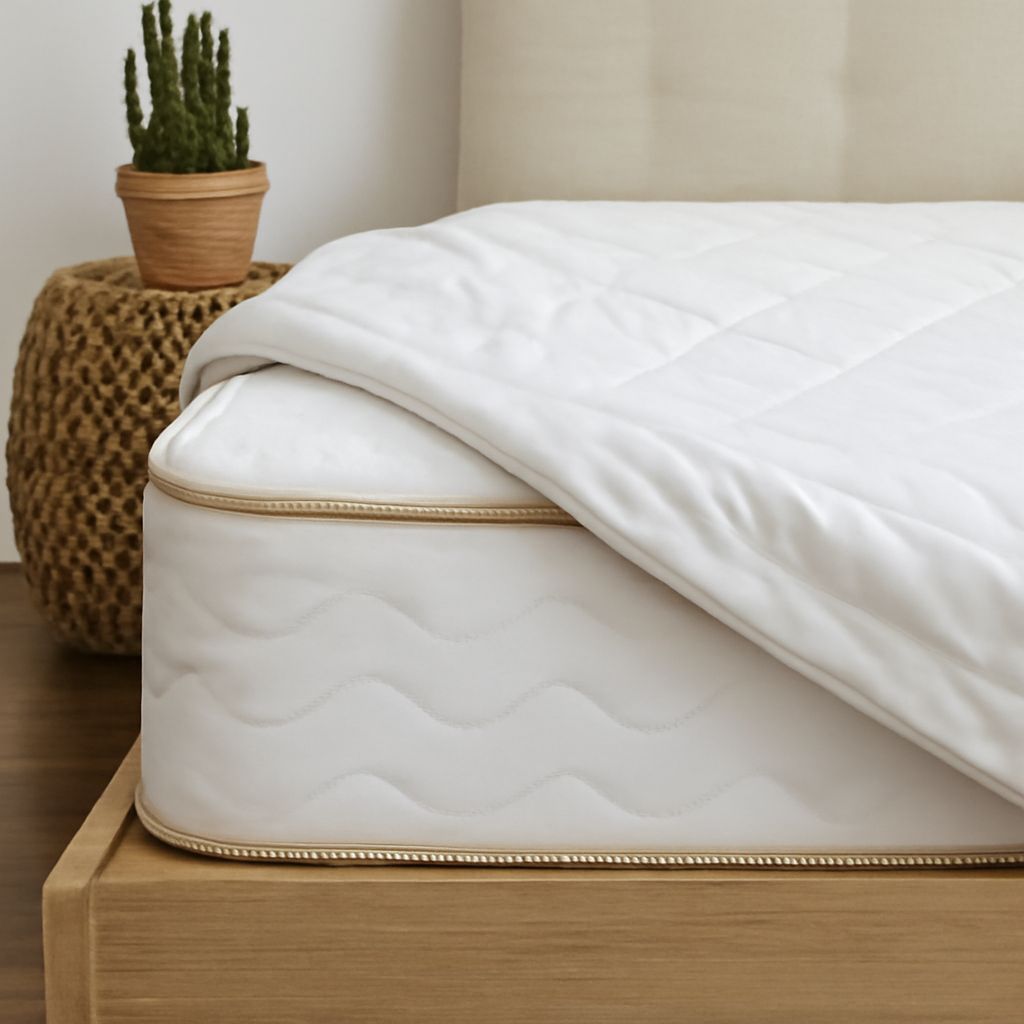
A waterproof sleep safe mattress protector prevents fluid penetration that creates the warm, moist environment mites require. TPU (thermoplastic polyurethane) laminate protectors offer full waterproofing with breathability ratings of 3,000–8,000 grams of moisture vapor transmission per square meter per 24 hours (MVTR). This compares favorably to older PVC-backed protectors, which trap heat and cause sweating that — paradoxically — worsens the sleep disruption they are meant to prevent.
Allergen barrier certifications, including OEKO-TEX Standard 100 and the Asthma and Allergy Foundation of America (AAFA) certification, indicate that the protector has been independently tested for chemical safety and allergen containment. For people with documented dust mite allergy, an encasement-style protector covering the entire mattress — not just the top surface — reduces allergen exposure by up to 80% compared to no protection. This level of reduction can meaningfully decrease nighttime symptoms and improve the ability to sleep soundly through the night.
Choosing Between a Sleep Air Mattress, Sleep Therapy Mattress, and Standard Protector Options
A sleep air mattress — adjustable air-chamber beds like those produced by Sleep Number — requires a fitted protector compatible with the mattress’s flex points. Standard foam-backed protectors can inhibit the chamber’s pressure adjustment range. The manufacturer typically recommends a stretch-knit cover with 30–40% elasticity to allow the sleep air mattress to adjust firmness from 25 to 100 on its proprietary scale without creating wrinkles that generate pressure points.
A sleep therapy mattress, designed for people with back pain, pressure injuries, or circulatory issues, often requires a thin, non-insulating protector to preserve the therapeutic surface properties. Low-profile protectors of 0.5–1 cm thickness maintain the contouring characteristics of memory foam and latex cores while still providing the allergen and moisture barrier needed for hygiene. Thick quilted protectors can add 2–3 cm of surface height and significantly alter the feel of a sleep therapy mattress — potentially negating its clinical benefit.
Cotton-terry top protectors are the most comfortable option for temperature-neutral sleepers and work well over innerspring and hybrid mattresses. They provide moderate waterproofing through tight weave and treatment but may not be adequate for people with incontinence or young children. Bamboo-derived viscose top layers add softness and modest moisture-wicking properties but should not be confused with full waterproofing — they slow fluid penetration rather than prevent it.
Fitting matters as much as material. A protector that fits snugly without bunching — typically achieved by deep pocket sizing of 12–18 inches for modern mattresses — prevents the surface irregularities that disrupt sleep posture alignment. Check pocket depth against the current mattress height, including any existing topper, before purchase.
Replacement intervals depend on usage and care. A quality sleep safe mattress protector washed monthly at 60°C retains its barrier properties for three to five years. Signs of replacement include visible cracking of waterproof laminate, persistent odors after washing, or loss of fitted elasticity that causes the protector to shift during the night.
Pro tips recap: Match the protector type to the mattress system — stretch-knit for a sleep air mattress, low-profile for a sleep therapy mattress, and full-encasement for severe allergy. Wash monthly at 60°C to maintain allergen barrier properties. Look for OEKO-TEX or AAFA certification to ensure chemical safety alongside performance.