Side Effects of CPAP Pressure Too High: What They Mean and How to Fix Them
The side effects of CPAP pressure too high are specific and recognizable — aerophagia, central apnea events, and a sensation of fighting the machine on exhalation are the most common. These differ from the sleep apnea machine side effects caused by mask fit or humidity issues, which tend to produce skin irritation and dry mouth rather than respiratory discomfort. Concerns about lung damage from cpap machine use circulate online, but clinical evidence places this risk in a narrow category of patients with pre-existing lung conditions and very specific machine configurations. CPAP chest pain is real and warrants attention, but it typically reflects over-pressurization rather than structural damage. Long-term CPAP lung damage from correctly prescribed and titrated therapy has not been established in peer-reviewed literature.
Understanding what each symptom indicates — and whether it points to a pressure problem, a mask problem, or an underlying medical issue — is the starting point for addressing CPAP discomfort systematically.
What High Pressure Actually Does to the Airway
Aerophagia and Central Apnea Events
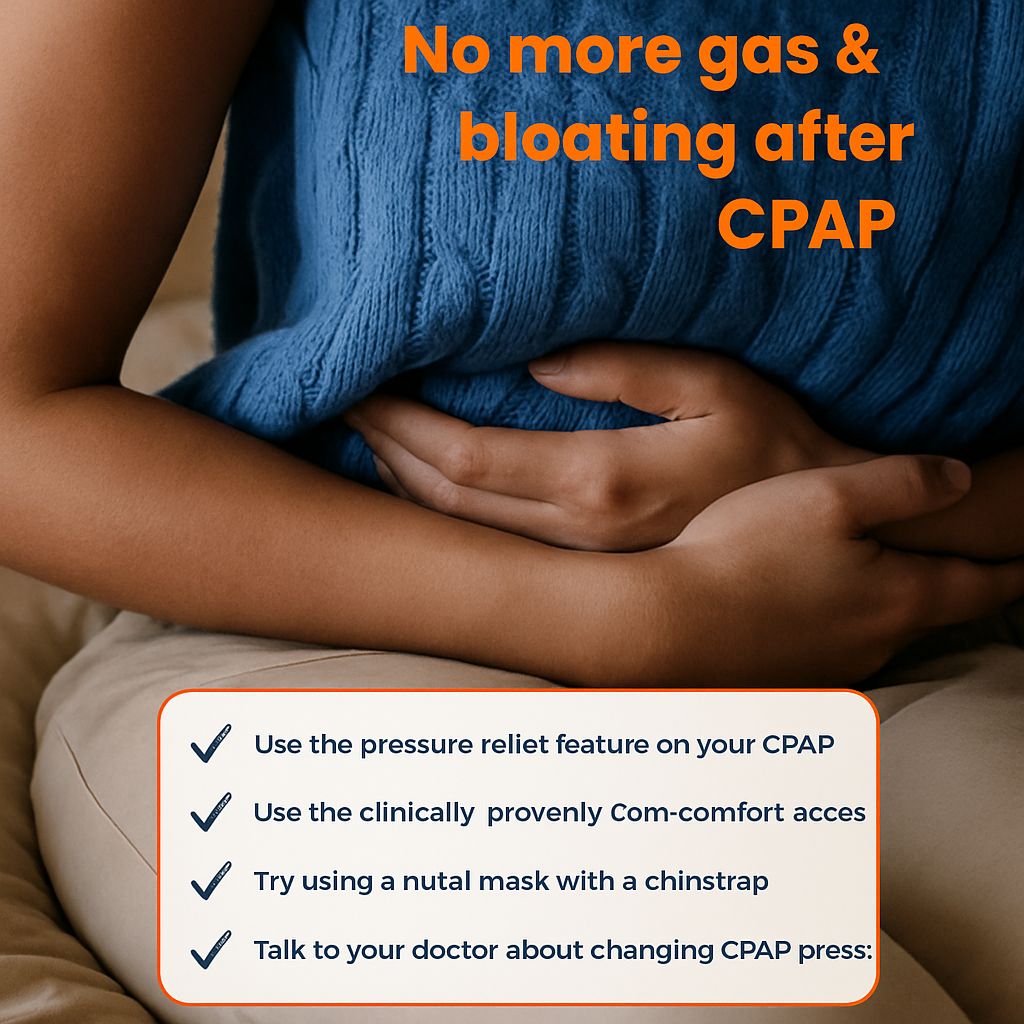
Excessive pressure drives air past the upper esophageal sphincter and into the stomach, producing bloating, belching, and abdominal distension on waking. This condition — aerophagia — is one of the clearest indicators that CPAP pressure may be running above the therapeutic threshold for a particular patient. It occurs most commonly in patients prescribed a fixed-pressure device at a setting that was titrated during a sleep study but may not reflect their current airway anatomy after weight change or postural adjustments.
Central apnea events — periods where breathing stops due to lack of respiratory drive rather than airway obstruction — can increase when CPAP pressure is set too high. The over-pressurization effectively hyperstimulates the chemoreceptors that regulate breathing, causing a pattern called treatment-emergent central sleep apnea. This appears in compliance data as a residual AHI that does not improve despite consistent mask use, or that contains a high proportion of central rather than obstructive events. Switching to bilevel therapy (BPAP) or an adaptive servo-ventilation (ASV) device resolves most treatment-emergent central apnea cases.
Chest Tightness, Pressure Checks, and When to Adjust
Chest tightness or CPAP chest pain during or after therapy generally indicates one of three things: over-pressurization causing excessive tidal volume; mask leak forcing the machine to ramp pressure upward; or an independent cardiac or pulmonary issue that warrants medical evaluation regardless of CPAP. The distinction matters because pressure-related chest tightness resolves within one to three nights of pressure reduction, while a structural cardiac issue does not.
Checking compliance data for 95th-percentile pressure readings gives a practical measure of where pressure is actually running. Many AutoPAP (APAP) machines set a pressure range rather than a fixed point, and the 95th-percentile reading captures what the device is delivering during the most demanding portion of the night. If this number exceeds the prescribed maximum by more than 2 cm H2O, or if the patient experiences symptoms at any pressure above 12 cm H2O, a prescriber-supervised pressure review is appropriate.
Lung tissue itself is not at measurable risk from standard CPAP pressures in patients without severe COPD or air-trapping conditions. Research examining long-term CPAP lung function in patients treated for 5 to 10 years shows no decline in FEV1 or diffusing capacity attributable to therapy. Patients with bullous emphysema — large air sacs in the lung tissue — require specialist supervision because high pressure can cause those sacs to expand, but this is a specific contraindication, not a general risk.
Patients who experience recurrent morning chest tightness, shortness of breath during therapy, or compliance data showing high leak events alongside elevated pressure readings should contact their prescribing physician before self-adjusting settings. Many APAP machines allow app-based pressure range adjustment; changing settings without data to support the decision often trades one problem for another.
Bottom line: High CPAP pressure side effects are real, identifiable, and fixable with a pressure review and, when needed, a device change to bilevel or ASV therapy. Structural lung damage from properly titrated CPAP therapy is not a documented risk in otherwise healthy patients. Chest pain that persists after pressure correction warrants independent cardiac evaluation.