Best CPAP Machine: What Separates Good Devices from Great Ones
Identifying the best CPAP machine requires matching device features to the patient’s specific therapy profile — fixed pressure versus auto-adjusting, humidification needs, travel requirements, and data access preferences. The category of best CPAP machines encompasses both fixed-pressure CPAP and AutoPAP (APAP) devices that automatically adjust pressure breath-by-breath within a prescribed range. Finding the best sleep apnea machine for a specific patient involves reviewing the residual AHI the device achieves on current therapy, how well the humidifier handles the user’s ambient climate, and whether the compliance data integrates with the prescribing physician’s monitoring system. Reviews of top rated CPAP machines that focus purely on noise levels or price miss the most clinically important variables. The top CPAP machines on the market share a short list of non-negotiable features: reliable auto-ramp, heated humidification, cellular or SD-card data reporting, and a pressure range that covers the entire therapeutic window prescribed.
This guide covers the features that actually matter for therapy effectiveness and long-term compliance, and explains what to look for when comparing models across the major manufacturers.
AutoPAP vs. Fixed Pressure: Which Category to Choose
Why AutoPAP Outperforms Fixed Pressure for Most Patients
Fixed-pressure CPAP delivers the same pressure all night regardless of whether the patient is sleeping supine or lateral, in REM or non-REM sleep, or after alcohol consumption. This simplicity works well when a patient’s apnea events are consistent in severity and position, but most OSA patients have variable apnea severity — worse during REM sleep, worse when supine, and worse after alcohol. AutoPAP addresses this variability by monitoring airflow waveforms in real time and delivering only the pressure required to prevent obstruction at each moment, typically resulting in a lower average delivered pressure, less aerophagia, and better compliance.
The major manufacturers in the AutoPAP category — ResMed and Philips Respironics — use different algorithms to detect obstruction. ResMed’s AutoSet algorithm analyzes flow limitation, snoring, and apnea events; Respironics’ A-Flex system focuses on flow contour analysis. In head-to-head comparisons, both perform within a clinically equivalent residual AHI range for the majority of patients. The practical difference often comes down to humidifier design, noise level, and app ecosystem rather than algorithm performance.
Humidification, Noise, and Data Access
Heated humidification is a standard feature on all major CPAP platforms and meaningfully reduces the mucosal dryness and nasal congestion that causes mask removal during the night. The differentiation between devices lies in how well the humidifier handles different ambient climates. ResMed’s Climate Control (available on AirSense 10 and AirSense 11 models) uses an algorithm to adjust temperature and humidity automatically based on room conditions, virtually eliminating rainout. Devices without this feature require manual humidifier adjustment across seasons, which many patients do not do consistently.
Noise level matters most for bed partners and light sleepers. Modern AutoPAP devices from ResMed and Respironics operate at 25 to 27 decibels at typical therapeutic pressures — quieter than a whispered conversation. Older or lower-cost fixed-pressure devices from less-established manufacturers may reach 30 to 35 decibels, which is enough to cause arousal in sensitive sleepers. Checking independent noise measurements rather than manufacturer specifications provides more reliable comparison data.
Compliance data access determines whether therapy can be monitored and optimized over time. Devices with cellular data transmission allow prescribers to review nightly AHI, leak events, and pressure data remotely without requiring a clinic visit. The ResMed myAir app and Philips DreamMapper platform make this data accessible to patients as well, which improves engagement and early problem identification. SD-card-only devices require the patient to physically bring the card to a clinic for review, which significantly reduces the frequency of data review in practice.
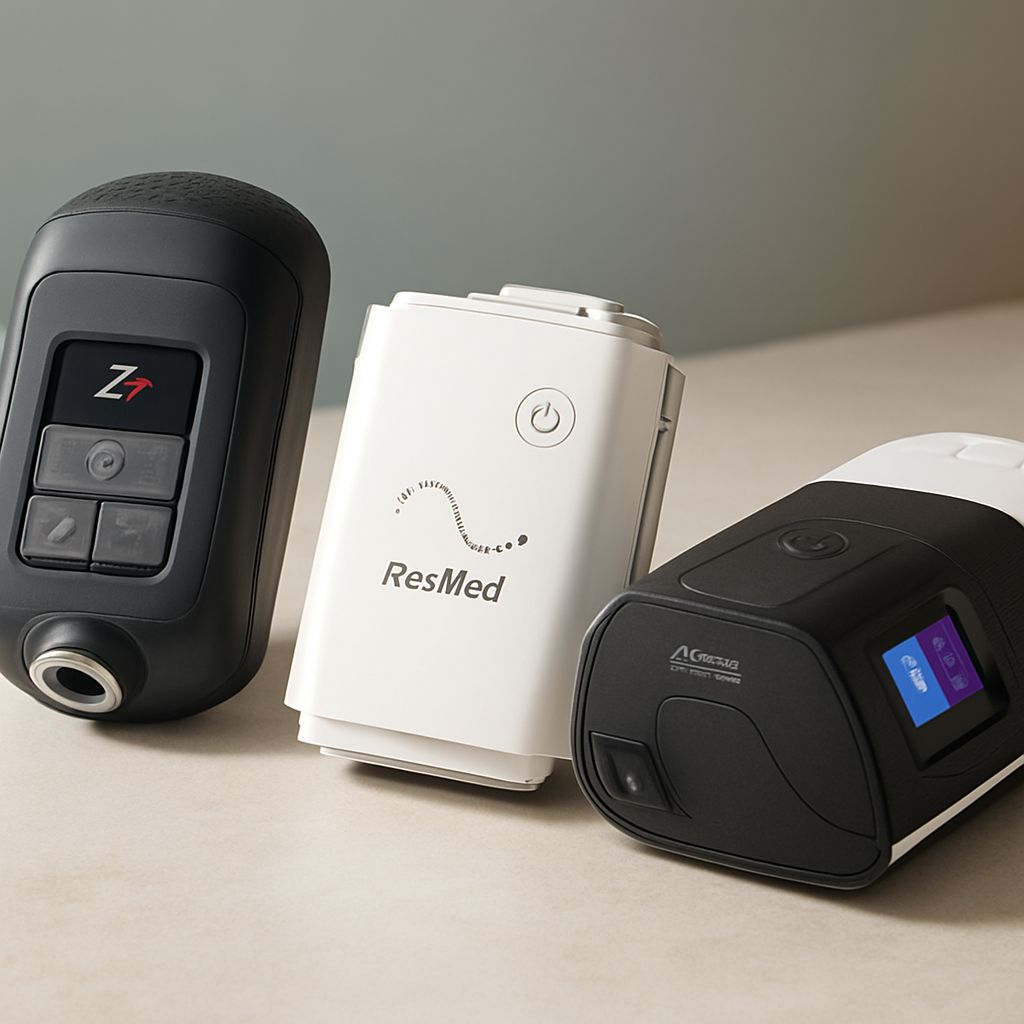
Travel-friendly models — the ResMed AirMini and Philips DreamStation Go — sacrifice some humidification capacity for size and battery compatibility. Both work with airline power adapters and are approved for in-flight use. Patients who travel frequently benefit from a travel device that uses the same mask system as their primary unit, avoiding the need to carry two mask types.
Key takeaways: The best CPAP machine for most patients is an AutoPAP with Climate Control humidification, cellular data reporting, and a pressure range that covers the full prescribed window. Compliance and therapy effectiveness data matter more than price or brand loyalty when selecting between devices. Confirm device compatibility with the prescriber’s remote monitoring system before purchasing.