Best CPAP Mask for Side Sleepers: How to Choose One That Stays Put
Finding the best CPAP mask for side sleepers addresses a specific problem that upright-fit masks create: a seal that holds during a clinical fitting can fail when the face presses into a pillow and the headgear shifts relative to the face. The best CPAP masks for side sleepers share a short list of design features — low-profile frames, directional elbow joints that route the hose away from the face, and cushion materials that maintain seal geometry under lateral compression. The search for the best nasal CPAP mask for side sleepers often leads to nasal pillow designs because their small contact area means less surface area to disturb when the face contacts a pillow. However, best CPAP masks for side sleepers evaluation must also account for pressure level — nasal pillows can cause inner-nostril soreness at pressures above 12 cm H2O, making nasal cushion designs more appropriate for higher-pressure therapy. The category of CPAP nasal masks for side sleepers has expanded significantly, with several manufacturers now offering side-sleeper-specific models with angled connections and slimmer profiles explicitly designed for lateral sleeping positions.
This guide covers what to look for by mask type and explains which design features matter most for consistent seal quality across different sleep positions during the night.
Nasal Pillow Masks: Low-Profile Design and Side-Sleeping Advantages
When Nasal Pillows Work Best and When They Fall Short
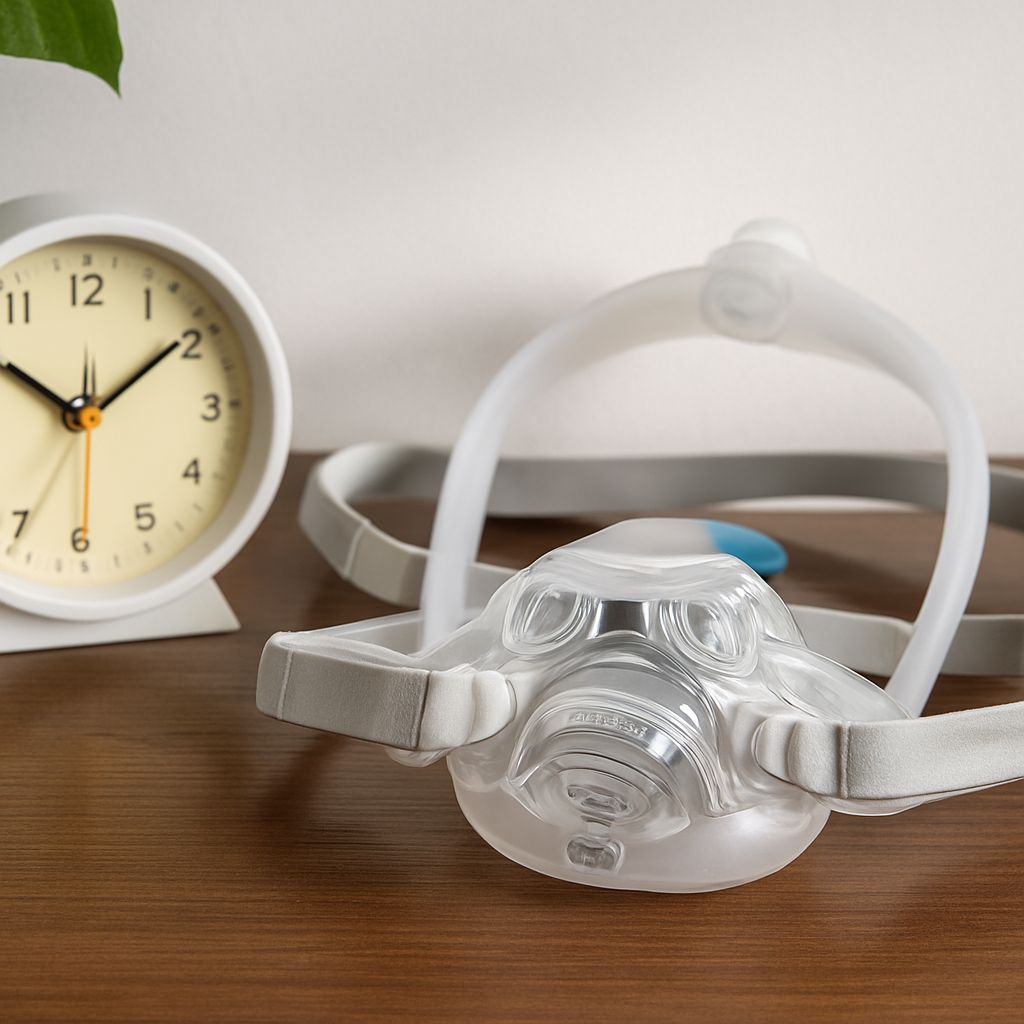
Nasal pillow masks use small oval inserts that fit directly into the nostrils, eliminating the face-contact area that causes traditional nasal cushion masks to leak when pressed against a pillow. The minimal frame means there is less rigid structure to be displaced by pillow contact. Models including the ResMed AirFit P10 and Fisher & Paykel Brevida route the hose to the top of the head, keeping it away from the side of the face during lateral sleeping and reducing the torque that causes headgear to creep during position changes.
The limitation of nasal pillow designs for side-sleepers becomes apparent at pressures above 12 cm H2O: the concentrated airflow through small inserts creates a high-velocity stream that causes inner-nostril irritation and sometimes produces a blowing sensation that causes arousal. Side-sleepers whose prescribed pressure — or whose AutoPAP 95th-percentile pressure — runs above this threshold consistently report better comfort and compliance with nasal cushion masks than with pillow masks, despite the larger contact area.
Nasal Cushion Masks and CPAP Pillows for Side-Sleepers
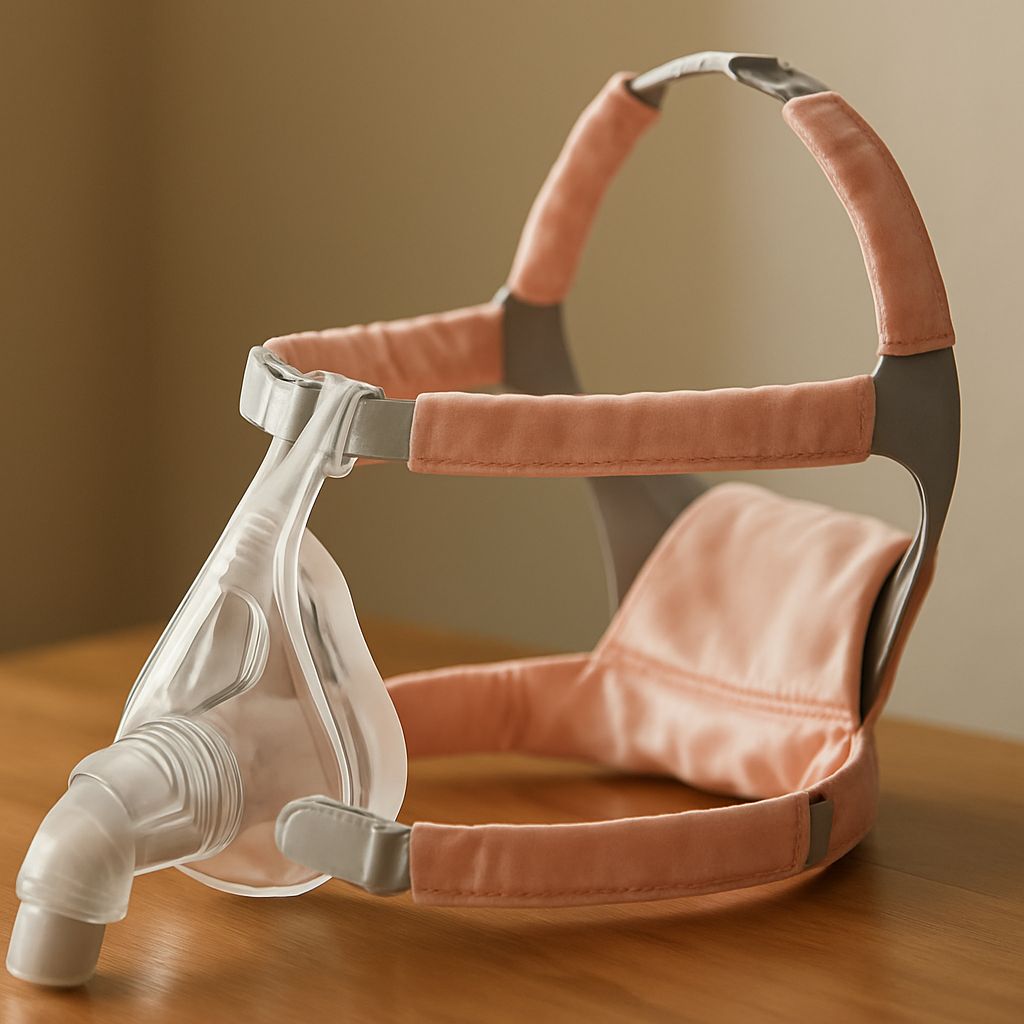
Nasal cushion masks designed for side-sleeping use flexible silicone domes that maintain seal shape under light lateral compression. The ResMed AirFit N20 and the Respironics DreamWear nasal in-frame design both achieve this through different engineering approaches: the N20 uses a spring-leaf frame that moves with the face; the DreamWear routes the hose to the top of the head and uses a hollow frame that acts as a secondary air channel, distributing pressure across the frame rather than concentrating it at the nasal cushion junction.
CPAP pillows — specialty pillows with cutouts or channels that accommodate the mask and hose — address the seal disruption problem at the source. A CPAP pillow allows a standard mask to maintain its fitted geometry even when the face is in contact with the pillow surface, because the cutout prevents the pillow from pressing against the mask frame. This approach allows side-sleepers to continue using their preferred mask style rather than switching styles because of a sleeping position preference.
The mask frame profile matters as much as the cushion design for side-sleepers. Masks with minimal cheekbone contact — those where the frame sits well below the cheekbone line on both sides — are less prone to displacement than masks with upper cheek contact points that encounter pillow pressure during side-sleeping. Checking fit in the actual lateral sleeping position, not just upright, is the standard guidance from most sleep equipment providers and catches displacement issues before they become a nightly compliance problem.
Side-sleepers who move frequently between left and right sides during the night — as most do — benefit from top-of-head hose routing regardless of mask type, because it accommodates both lateral positions without requiring the sleeper to manage hose position consciously on turning. Swivel elbow adapters attached between the mask and hose allow the hose to move freely without creating torque on the mask frame during position changes.
Key takeaways: The best CPAP mask for side sleepers prioritizes low-profile frame design, top-of-head hose routing, and a cushion material that maintains seal geometry under lateral pillow pressure. Nasal pillow masks work best at pressures below 12 cm H2O; nasal cushion masks with flexible frames suit higher-pressure therapy and active position-changers. A CPAP pillow can make any mask more compatible with side-sleeping without switching mask styles.