Sleep Yoga: Poses, Timing, and What the Facts About Insomnia Say
Sleep yoga refers to a class of gentle, low-effort physical practices performed in the hour before bed with the specific goal of lowering physiological arousal and making sleep onset easier. Unlike a morning vinyasa sequence that elevates heart rate and core temperature, pre-sleep yoga targets the parasympathetic nervous system through slow breathing, sustained low-intensity stretches, and deliberate body-scan attention. The practice is distinct from nidra, which is a guided meditation done while lying down, though the two are sometimes combined.
Yoga poses for sleep work by activating the relaxation response through three overlapping mechanisms: mild reduction of cortisol, gentle lengthening of the hip flexors and hamstrings that accumulate tension during prolonged sitting, and paced nasal breathing that directly stimulates the vagus nerve. Research supporting yoga for better sleep includes a systematic review of 19 trials showing that regular yoga practice reduced sleep latency by an average of seven minutes and improved subjective sleep quality scores. The insomnia facts behind this effect suggest that cognitive-arousal reduction, not physical exertion, is the primary driver of improvement. Facts about insomnia consistently show that hyperarousal rather than sleep insufficiency is the core mechanism in the most common form of the disorder, which is why sedating practices are more effective than sedating medications for long-term management.
Yoga Poses for Sleep: A Pre-Bed Sequence
A practical pre-sleep yoga sequence runs 15 to 20 minutes and requires no equipment beyond a mat or a carpeted floor.
- Legs up the wall (Viparita Karani): Lie on the back with the legs extended vertically against a wall. Hold for 5 to 10 minutes. This position reverses lower-limb venous pooling from standing or sitting all day, lowering blood pressure slightly and promoting the physical warmth shift associated with sleep onset.
- Reclined bound angle (Supta Baddha Konasana): Lie on the back with the soles of the feet together and the knees falling open. Hold for 3 to 5 minutes. This posture gently opens the hip flexors and inner groin without any active muscular effort.
- Seated forward fold (Paschimottanasana): Sit with legs extended and fold forward without forcing range. Hold for 2 to 3 minutes. The compression on the anterior torso stimulates the vagus nerve through pressure on the abdominal organs.
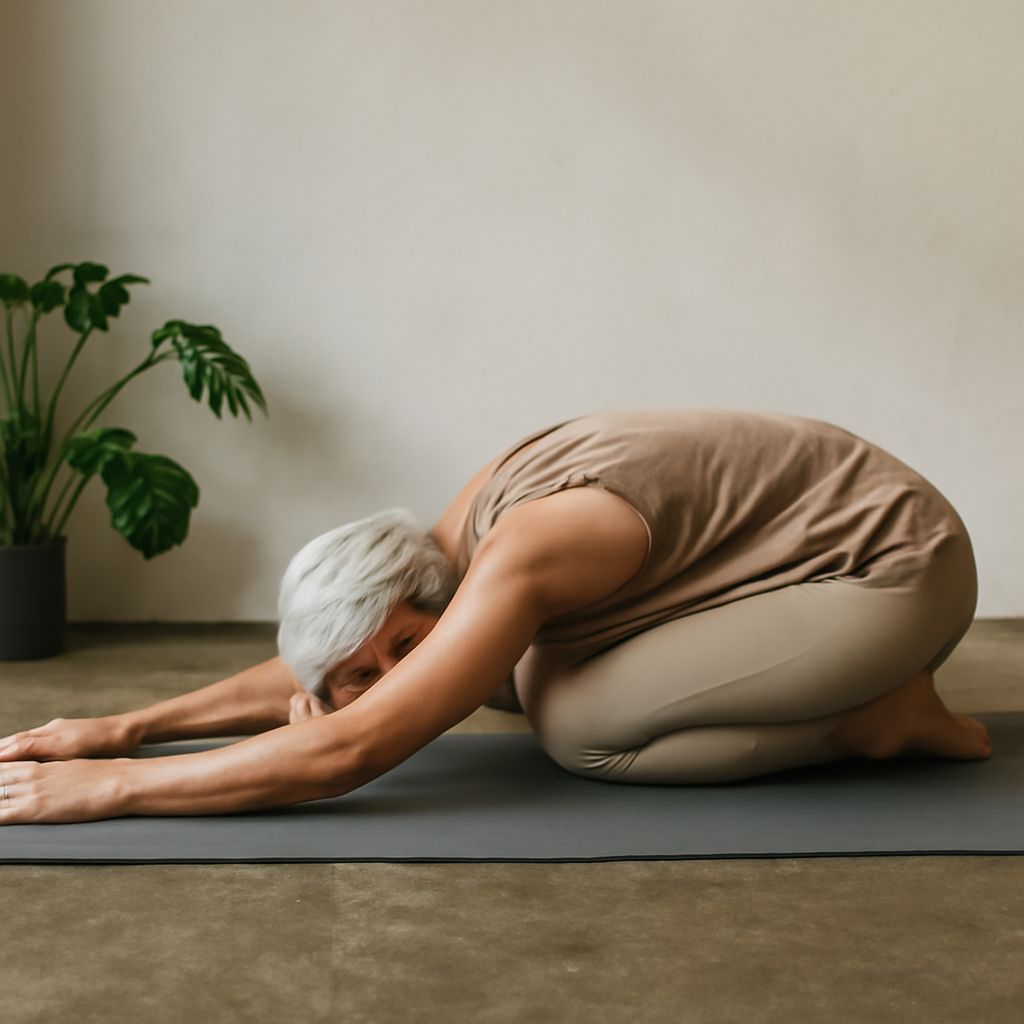
- Child’s pose (Balasana): Kneel and fold the torso forward over the thighs. Hold for 2 to 3 minutes. Forehead contact with the floor or a folded blanket produces light pressure on the frontal cortex that many practitioners find grounding.
- Corpse pose (Savasana): Lie flat on the back with arms at the sides. Scan each body region from the feet upward, releasing muscular tension consciously. Hold for 5 minutes, breathing at six breaths per minute.
Timing and Intensity Rules
The sequence should end at least 20 minutes before the intended sleep time, not immediately at lights out. The body requires a short interval between the end of a practice and the moment of lying down in bed so that the transition cue of getting into bed remains clearly associated with sleep rather than with the practice itself. This matters because one of the insomnia facts consistently repeated across CBT-I literature is that bed-activity associations drive conditioned hyperarousal; sleep yoga is most useful as a pre-bed activity in a different room, not as an in-bed relaxation method.
What Insomnia Research Says About Yoga’s Limits
Yoga for better sleep is not equally effective across insomnia subtypes. Psychophysiological insomnia, the most common form, responds well because the practice directly addresses both cognitive and somatic arousal. Circadian rhythm disorders, such as delayed sleep phase, do not improve with yoga because the timing of melatonin onset is determined by light exposure, not muscular tension. Hypersomnia disorders like narcolepsy require medical management and are not addressed by any form of sleep yoga.
Facts about insomnia from large epidemiological studies show prevalence rates of 10 to 15 percent for chronic insomnia disorder, with women affected at roughly twice the rate of men. Yoga poses for sleep are well-suited as a component of a broader behavioral program rather than a standalone cure, particularly when practiced consistently for at least three to four weeks before evaluating effect.
Safety recap: Yoga poses for sleep are generally safe for healthy adults, but individuals with uncontrolled hypertension should avoid prolonged legs-up-the-wall postures that may temporarily elevate central venous pressure. Those with recent hip or knee surgery should modify floor-based poses to avoid joint loading beyond surgical clearance, and anyone with a spinal fracture should consult their clinician before practicing forward folds.