Sleeping Upright With Sleep Apnea: Does It Help?
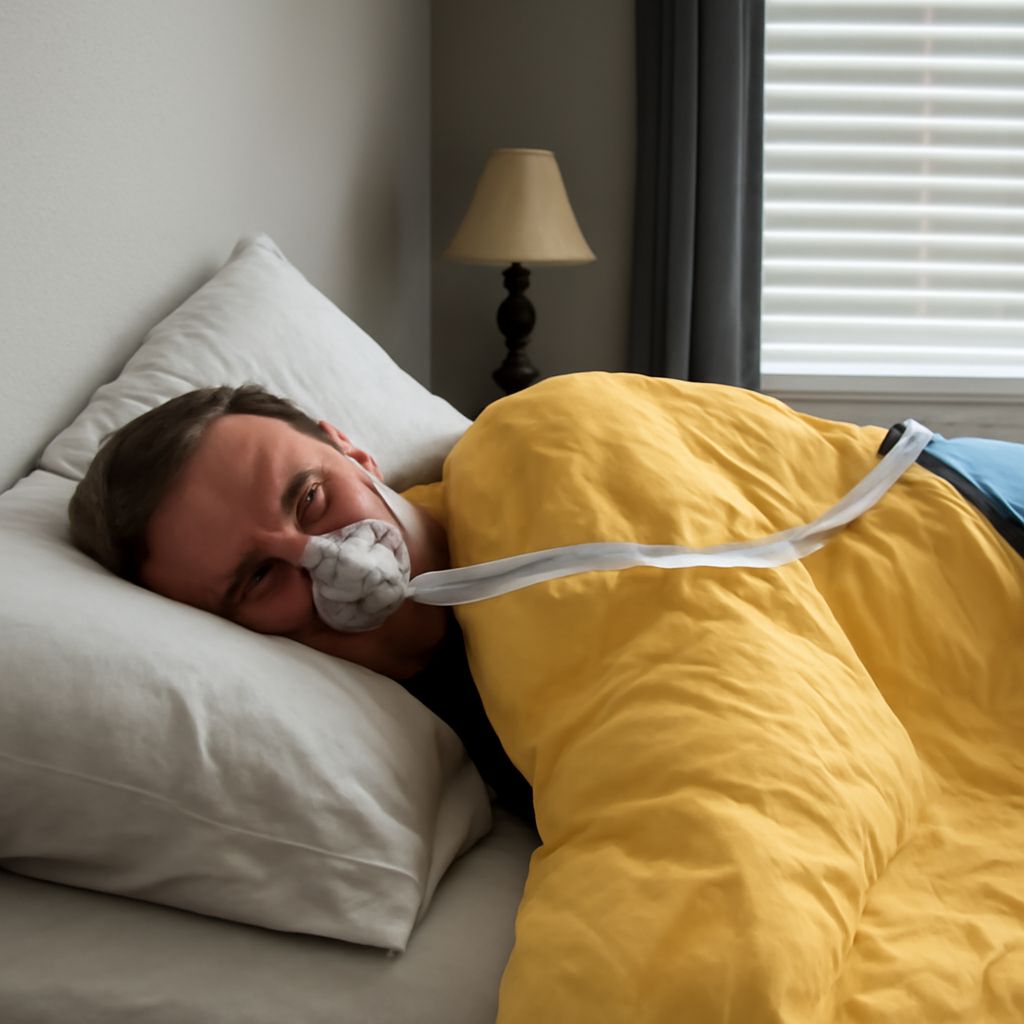
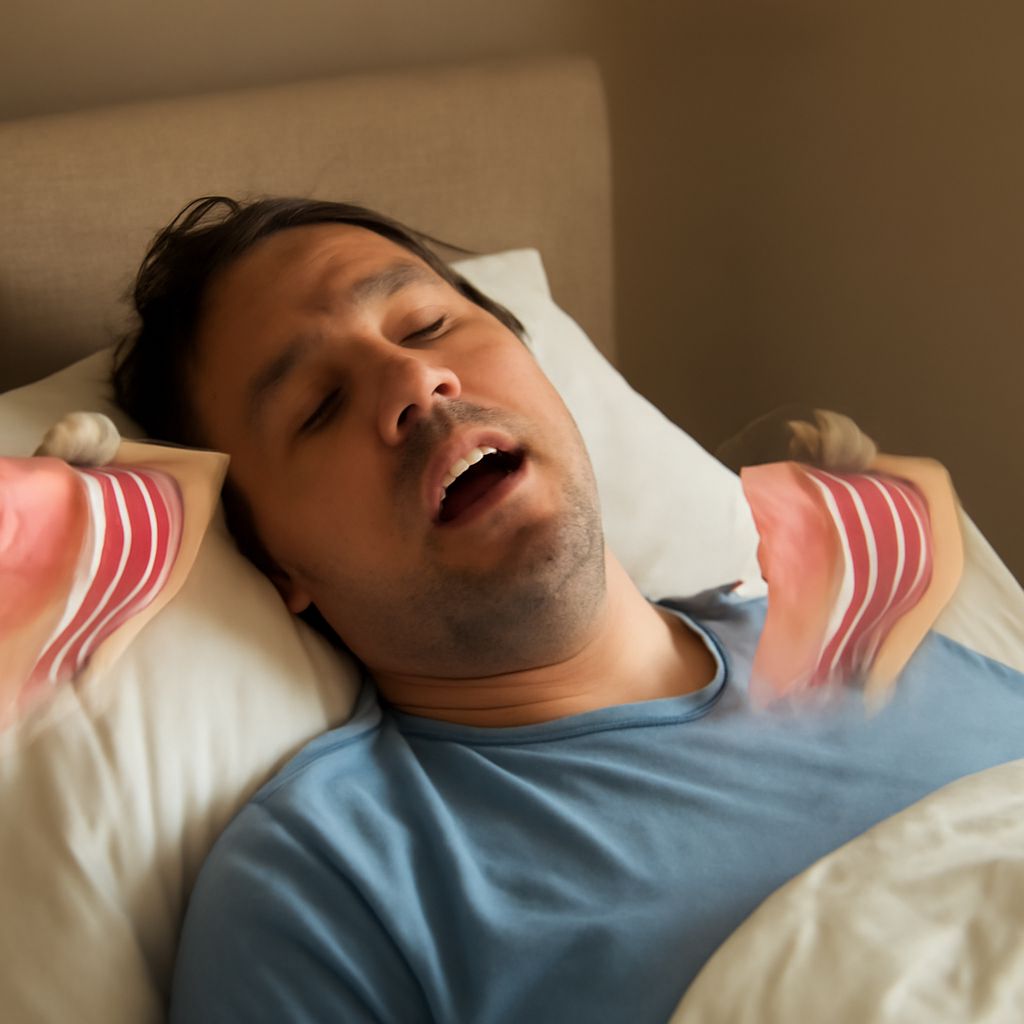
Sleeping upright or in a reclined position can measurably reduce obstructive sleep apnea severity in some patients by using gravity to keep the tongue and soft palate from collapsing into the airway as extensively as they do in flat supine sleep. Sleep upright positions are not a replacement for CPAP therapy in moderate to severe obstructive sleep apnea, but they can reduce the AHI enough in mild cases to make positional therapy a viable primary intervention. Celebrities with sleep apnea who have discussed their diagnoses publicly include Shaquille O’Neal, Rosie O’Donnell, and Regis Philbin, each of whom has referenced the condition in interviews — a fact that has increased public awareness of the disorder across demographics where it is underdiagnosed. Sleeping sitting up sleep apnea reduction is most pronounced in patients with positional OSA, defined as an AHI in the supine position at least twice as high as in non-supine positions. Sleeping upright with sleep apnea in a recliner or wedge-elevated setup benefits the approximately 50 to 60 percent of OSA patients whose apnea is significantly position-dependent.
This guide covers the physiology of positional sleep apnea, how elevation affects airway geometry, and when upright sleeping is useful.
How Body Position Affects Airway Collapse
Gravitational Effects on Airway Anatomy
In flat supine sleep, gravity pulls the tongue, jaw, and soft palate posteriorly toward the back of the pharynx. The retropalatal and retroglossal airway segments narrow, increasing upper airway resistance and making partial or complete collapse more likely during the reduced muscle tone of NREM and REM sleep. In patients with borderline airway anatomy — common in obesity, brachycephalic facial structure, or enlarged tonsils — this gravity-driven narrowing is sufficient to produce obstructive events.
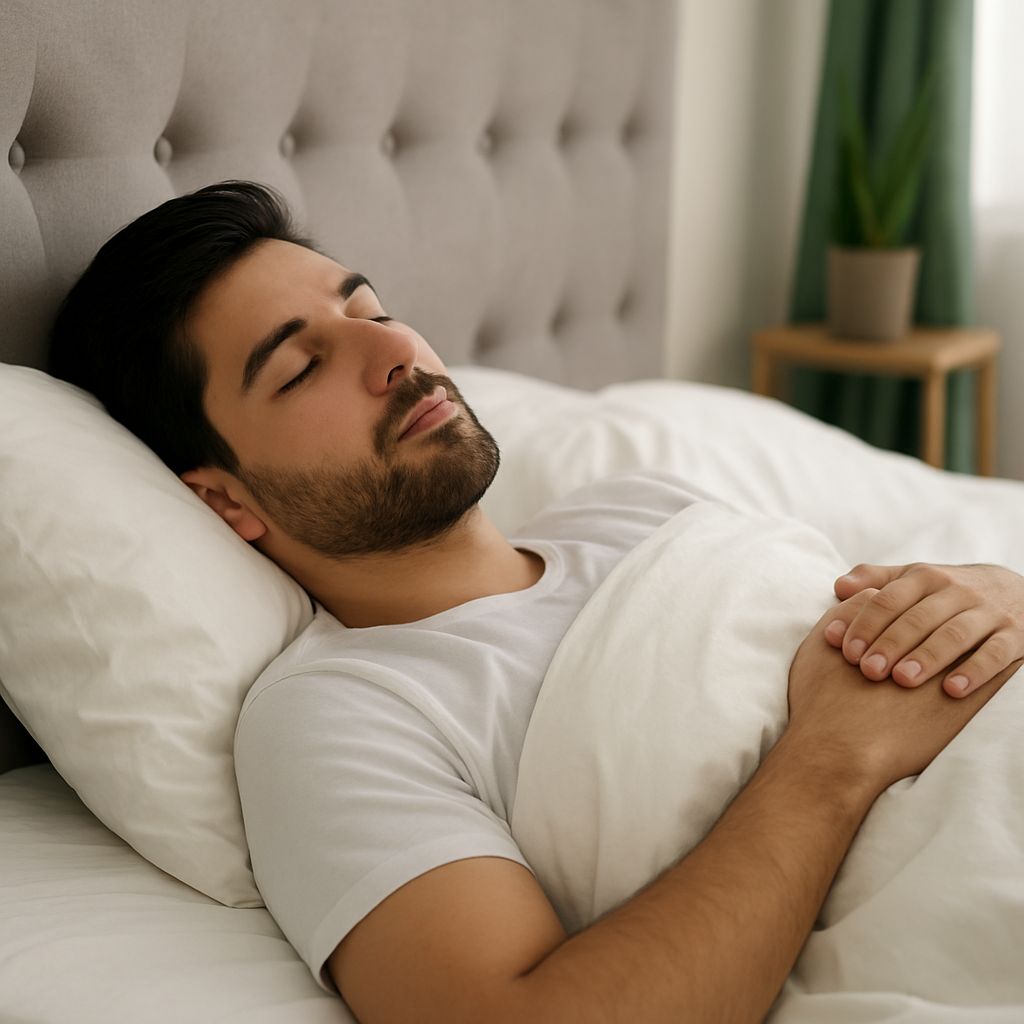
Elevating the head of the bed to 30 to 45 degrees, or sleeping upright in a recliner chair, shifts the gravitational vector so the tongue base and soft palate fall slightly anteriorly rather than posteriorly. The change in tongue position reduces retropalatal airway resistance by a measurable amount: studies using acoustic pharyngometry have shown a 10 to 20 percent increase in retropalatal cross-sectional area when moving from 0 to 30 degrees of head elevation.
Positional vs Non-Positional OSA
Positional OSA affects roughly half of all OSA patients and is most common in mild to moderate severity cases. The standard definition is an AHI in the supine position at least twice the AHI in lateral positions. For positional OSA patients, positional therapy — either sleeping upright, side-only positioning devices, or vibrating position sensors that wake the patient from supine — can reduce the overall AHI to below the clinical threshold of 5 events per hour.
Sleeping sitting up sleep apnea reduction is most reliable in patients with mild positional OSA (supine AHI under 20) and less reliable in patients with severe positional OSA or with non-positional components where the airway collapses in all positions. A home sleep test in both supine and non-supine positions, or a full polysomnogram with positional data recorded, provides the data needed to determine whether positional therapy alone is sufficient.
Practical Upright Sleeping Setups
A wedge pillow of 12 inches height achieves approximately 30 degrees of head elevation when placed under the torso from hips to head. Recliner chairs that lock at 45 degrees are favored by some patients over wedge pillows because they require no special mattress and maintain position passively. Purpose-built sleep wedges with memory foam top layers reduce pressure redistribution issues that occur with firm foam wedges during shoulder-heavy side sleeping.
Sleeping upright in a standard chair or armchair is not recommended for full nights of sleep because the neck typically falls forward after deep sleep onset, producing cervical hyperflexion and compressing the airway at the larynx — worse than flat supine sleeping for some patients. A recliner or wedge setup that supports the neck at neutral through full trunk recline avoids this.