CPAP Strap Covers, Mask Pads, and Bedside Table Setup
CPAP strap covers address one of the most common comfort complaints in CPAP therapy: headgear straps that leave red pressure marks or cause skin irritation at contact points on the cheeks, temples, and forehead after 6 to 8 hours of wear. Cpap mask pads work alongside strap covers by adding soft padding directly to the mask frame contact areas, particularly the nasal bridge and cheek contact zones where narrow silicone components press into skin throughout the night. Setting up a cpap table — whether a dedicated bedside cpap unit or a repurposed cpap bedside table — organizes the machine, tubing, humidifier fill, mask, and cleaning supplies within arm’s reach in a way that promotes consistent therapy adherence. A cpap night stand with a designated arrangement reduces the friction of setup and breakdown each night, which matters because patients who find CPAP setup inconvenient are more likely to delay putting the mask on or remove it early. Together, strap covers, mask pads, and an organized cpap table setup address the three most common reasons for early therapy abandonment: skin discomfort, pressure marks, and inconvenient access.
This guide covers each product category and provides practical organization recommendations for the bedside CPAP setup.
CPAP Strap Covers and Mask Pads
Strap Cover Materials and Sizing
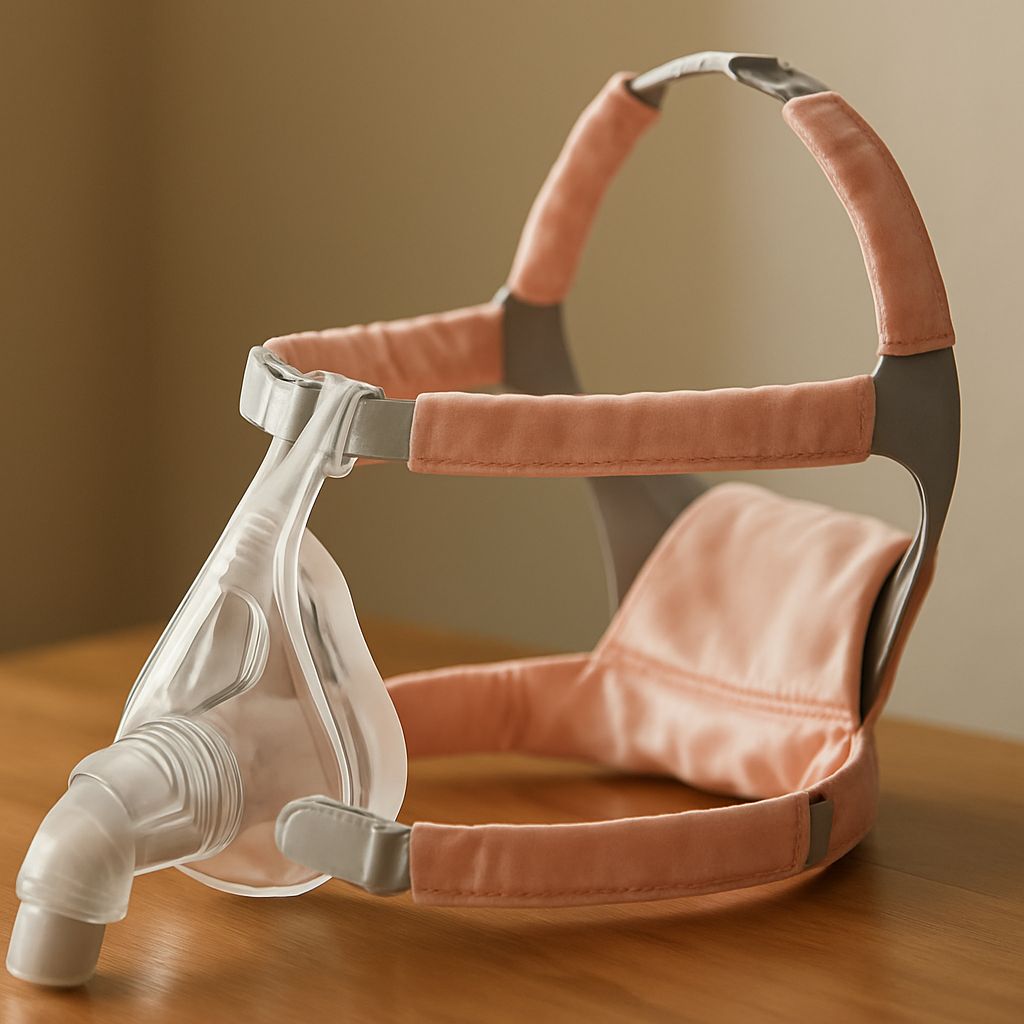
CPAP strap covers are fabric tubes or wraps that slide over headgear straps, replacing skin-on-elasticized-nylon contact with skin-on-fabric contact. The most effective materials are plush velour and bamboo-cotton blends, both of which reduce friction more than microfiber. Strap cover widths range from 0.5 to 1.5 inches to match different headgear strap widths; measuring the headgear strap width before ordering prevents a poor fit that allows the cover to bunch and slide out of position during sleep.
CPAP mask pads, such as those sold under the Pad-A-Cheek brand, use a similar fabric approach applied directly to the cushion contact area. They adhere via small silicone grips or are pressed against the mask body without adhesive. The pad thickness, typically 2 to 4 mm, reduces peak pressure at bony contact points including the nasal bridge and zygomatic arch without altering mask positioning or seal geometry when sized correctly.
Bedside CPAP Table Organization
A dedicated cpap bedside table does not require a specialty product — a standard bedside table with 2 to 3 drawers of adequate depth works well. The primary requirement is that the table surface provides enough space for the machine and humidifier without requiring the hose to cross the edge at a sharp angle, which accelerates hose wear at the machine connection point.
Practical organization for a cpap table layout: machine and humidifier centered at the back of the table surface, hose running directly to the sleeping position without draping over the table edge, mask resting face-up on a small hook or mask hanger on the side of the table between sessions, and a 500 ml bottle of distilled water within reach for easy humidifier refilling. A small tray or shallow box drawer dedicated to mask wipes, filter replacements, and extra cushions prevents these items from being in a different room when a quick change is needed.
A cpap night stand with a lower shelf for the humidifier water supply and cleaning materials reduces countertop clutter. Cord management matters more than most users anticipate: a loose power cord that the user steps on during nighttime bathroom trips is a tripping hazard that disrupts sleep and occasionally damages the power supply connection. Cable clips mounted to the side of the nightstand keep the cord flat against the furniture.
Bottom line: cpap strap covers and mask pads cost under $30 combined and address the most common physical comfort barriers to therapy adherence; a well-organized cpap bedside table reduces setup friction enough to support the habit consistency that drives long-term therapy benefits.