The Perfect Sleep Chair and Better Sleep Pillow Options
The perfect sleep chair is a specific product category — a fully reclining lift chair that allows users to sleep in a fully reclined position while also providing powered assistance to stand, marketed primarily to seniors and post-surgical patients who cannot easily rise from a flat bed or standard chair. Sleep better pillow options address a related but distinct need: optimizing cervical alignment and surface comfort for people who sleep in beds but want to reduce neck pain, stiffness, or poor sleep quality caused by inadequate head support. A better sleep pillow is not defined by brand name but by whether the fill material, loft height, and firmness match the sleeper’s weight, shoulder width, and preferred sleep position. The perfect sleep in a clinical or marketing context refers to sleep that delivers adequate slow-wave and REM time without fragmentation — an outcome that depends on both the sleep surface and the sleeper’s behavioral and physiological factors. The sleep chair category sits at the intersection of mobility aid and sleep furniture, and understanding its specifications matters for caregivers and patients making post-surgical or age-related accommodations.
This guide covers both the sleep chair product category and evidence-based pillow selection.
Sleep Chairs: Design, Features, and Use Cases
Lift Mechanism and Recline Positions
A perfect sleep chair uses an electric lift mechanism that tilts the entire seating surface forward to assist the user from seated to standing. The recline function on full-sleep models extends to a nearly flat position — typically 170 to 175 degrees — allowing full supine sleep. This contrasts with standard recliners that stop at 135 to 150 degrees, which is insufficient for flat sleep without neck strain.
The sleep chair models marketed specifically for overnight use include features that standard recliners lack: heat and massage settings to reduce muscle stiffness during prolonged static positioning, padded headrests that support neutral cervical alignment in the flat position, and wider armrests that prevent arm slippage. Weight capacity ratings vary from 300 to 500 pounds across manufacturers; verifying that the chair’s rated capacity exceeds the user’s weight by at least 20 percent extends mechanical lifespan.
Better Sleep Pillow Selection by Position
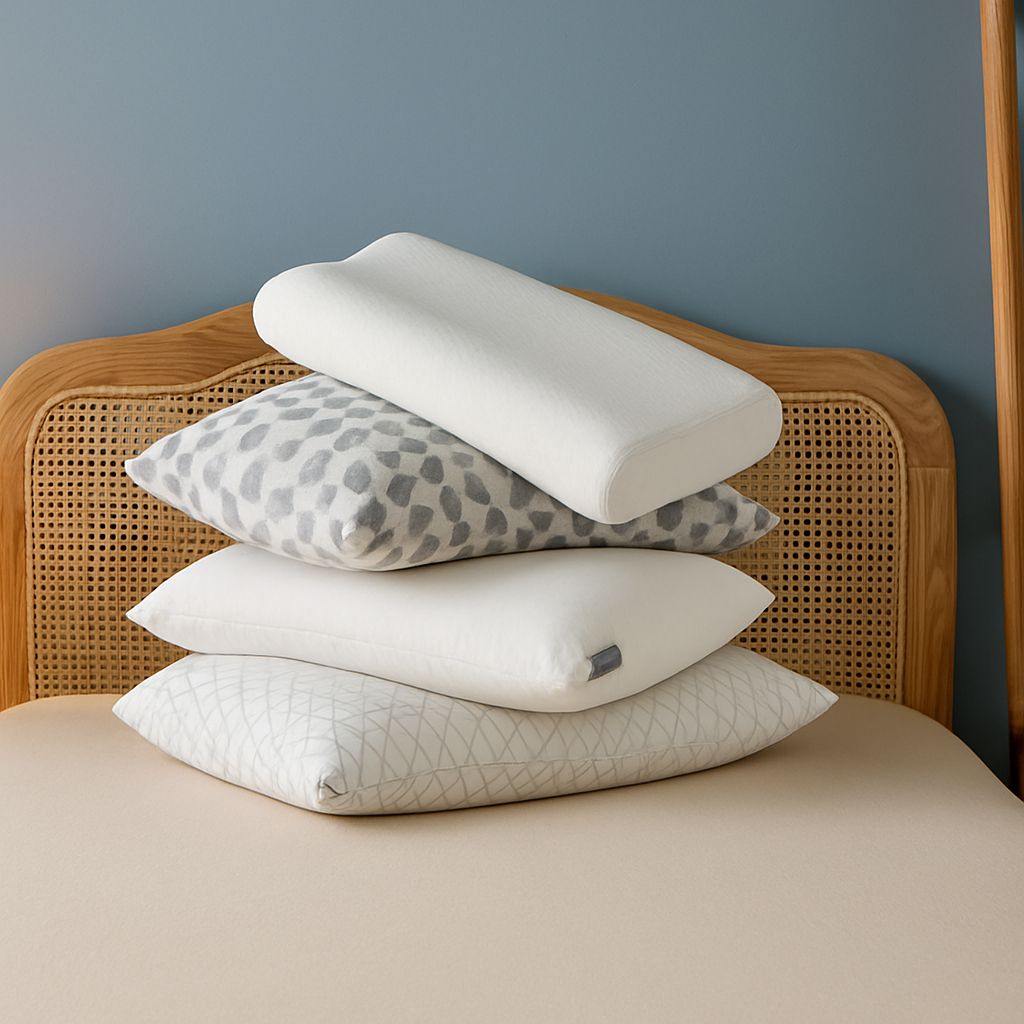
A better sleep pillow for side sleepers requires 4 to 6 inches of loft to fill the gap between the ear and the mattress surface at the shoulder width. A pillow below 4 inches loft causes the head to drop toward the mattress, straining the ipsilateral cervical muscles over several hours. Memory foam pillows in this category maintain loft consistently; down and polyester-fill pillows compress during the night and may need fluffing to restore height.
Back sleepers need a lower loft pillow of 2 to 4 inches that supports the natural cervical lordosis without pushing the chin toward the chest. A pillow that is too firm for back sleeping extends the neck into mild hyperextension, which compresses the posterior cervical structures. Medium-density latex provides the best combination of support and conforming for back sleepers.
Stomach sleeping puts the cervical spine into rotation for sustained periods; a very thin pillow (under 2 inches) or no pillow is recommended for stomach sleepers to reduce rotation angle and avoid prolonged cervical muscle loading. The better sleep pillow for stomach sleepers is the thinnest option that still provides enough cushioning to prevent direct face-to-mattress contact.
Pro tips recap: for a sleep chair purchase, verify the full recline angle reaches 170 degrees minimum, check the weight capacity rating, and confirm the heat and massage settings can be turned off independently if heat sensitivity is a concern. For pillow selection, measure shoulder width to estimate loft need for side sleeping, then trial the pillow for 30 days before judging fit — neck muscle adaptation to a new pillow profile takes 2 to 3 weeks.